The China High Tech Fair in Ubungo will promote Tz’s international presence through trade diplomacy
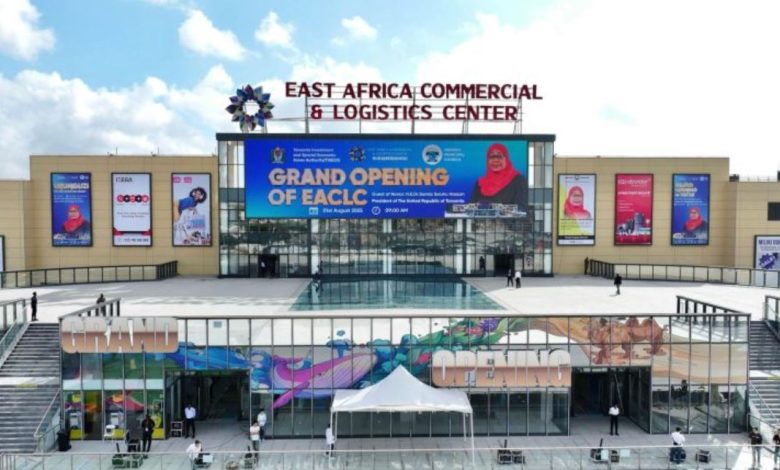
DAR ES SALAAM: THE opening of the China High Tech Fair in Ubungo, Dar es Salaam, Tanzania, is more than just another trade exhibition.
From a trade and economic diplomacy perspective, it symbolises the deepening economic relationship between Tanzania and China and positions Tanzania as an emerging gateway for technology, logistics, manufacturing and digital commerce in East Africa and perhaps for some SADC regional members who view Tanzania as their gateway to the world.
As Tanzania continues to pursue industrialisation, digital transformation and regional trade integration, the fair could become an important platform for knowledge transfer, attracting investment, facilitating business networking, and enabling market expansion for local traders and entrepreneurs, thereby indirectly widening the jobcreation value chain.
The significance of hosting such a fair in Ubungo is closely tied to the area’s rapid transformation into a strategic commercial and logistics hub. Recent investments in the East Africa Commercial and Logistics Centre (EACLC) have already positioned Ubungo as a major centre for trade, warehousing, digital commerce and transport connectivity.
The complex is expected to host more than 2,000 business spaces and provide integrated digital infrastructure, including fintech and high-speed internet services, among other features. Economically, the China High Tech Fair will, over time, create multiplier effects across various sectors of Tanzania’s economy.
A major opportunity is technology transfer. Traditionally, Tanzania has largely relied on imported technologies from Europe, Asia and the Middle East.
However, many Tanzanian firms, especially small and medium-sized enterprises (SMEs), struggle to access affordable modern technologies because of their high costs. Unlike other traditional players, Chinese tech companies have become more appealing because they offer relatively low-cost solutions well-suited to developing economies.
The fair, if taken positively, will expose Tanzanian traders to modern machinery, smart logistics systems, ecommerce tools, digital payment platforms, renewable energy technologies, agricultural technologies and industrial equipment.
This exposure is important because low productivity across agriculture, manufacturing and small-scale commerce remains one of Tanzania’s major economic challenges. When SMEs adopt technology, they reduce operational costs, improve efficiency and enhance competitiveness.
For example, local manufacturers in the textile, food processing, leather and packaging industries could access cheaper industrial machinery directly from Chinese producers rather than relying on intermediaries.
ALSO READ: Denmark seeks to enhance ties with Tanzania in transport sector through TPA
This can significantly reduce production costs, strengthen local industrial capacity and save time and money. In economic terms, this helps Tanzania reduce its dependence on imports of finished products while encouraging domestic value addition.
Another major opportunity will emerge in digital trade and e-commerce. Tanzania’s business environment is increasingly shifting toward digital systems, especially after the rapid expansion of mobile money, fintech and online trading platforms.
The Ubungo digital business hub is expected to support cashless transactions, online payments and integrated business operations. The China High Tech Fair, therefore, comes at a time when Tanzania is trying to modernise its business ecosystem, which also aims at increasing formalisation.
Based on my recent visit to Shenhez, a city often described as a technological hub, Chinese companies are at the forefront of e-commerce, smart logistics, digital marketplaces and supply chain management.
Tanzanian traders participating in the fair have the opportunity to learn how to connect with digital platforms, enabling them to access larger regional and global markets. This is particularly significant within the framework of the African Continental Free Trade Area (AfCFTA), where digital commerce is expected to play a key role in boosting intra-African trade.
The fair may also stimulate employment creation. Previous China-Tanzania business and talent fairs have already demonstrated growing employment opportunities linked to Chinese investments in Tanzania.
Reports indicate that hundreds of jobs have previously been offered through China-Tanzania business engagements in sectors such as logistics, communications, manufacturing and construction. The High-Tech Fair will potentially increase employment, both directly and indirectly.
Direct jobs may involve roles in event management, logistics, transportation, hospitality, security and exhibitions. Local businesses partnering with Chinese firms could indirectly grow their operations and increase employment.
Additionally, new technology may boost demand for technicians, software operators, machine specialists, digital marketers and supply chain professionals. Moreover, the fair will strengthen Tanzania’s position as a regional trade hub. Dar es Salaam serves as a crucial port for landlocked countries such as Zambia, Rwanda, Burundi, Uganda, Malawi and the Democratic Republic of the Congo, connecting them to the Port of Dar es Salaam and regional transport networks.
Ubungo’s proximity to major roads, rail lines and logistics centres further enhances its strategic importance to international commerce. If well organised, the fair will attract regional buyers, investors and distributors from across East and Central Africa.
This would not only boost business activity in Tanzania but also elevate the country’s profile as a destination for trade exhibitions, manufacturing partnerships and technology investments. Such positioning can generate long-term foreign direct investment (FDI) inflows. China has increasingly used trade fairs worldwide as instruments of economic diplomacy.
The China HiTech Fair in Shenzhen, for example, reportedly attracts hundreds of thousands of visitors and facilitates billions of yuan in investment and trade deals each year. Replicating even a small fraction of this success in Tanzania will generate significant economic spillovers. Tanzanian youth entrepreneurs can benefit greatly.
Many young Tanzanians are venturing into sectors like software development, fintech, online retail, digital marketing, content creation, electronics repair and innovation-focused startups. However, they frequently face challenges such as limited access to finance, mentorship, industry exposure and international networks.
In my view, the fair will bridge this gap by connecting young entrepreneurs with technology suppliers, investors, training opportunities and innovation ecosystems. Exposure to Chinese technological advances may inspire local innovation and encourage Tanzanian startups to develop tailored solutions across key economic sectors, including agriculture, transport, health, education and retail.
Importantly, the event may also foster industrial linkages between Chinese and Tanzanian firms. Rather than simply importing finished products, Tanzania could negotiate joint ventures, establish assembly plants and form local manufacturing partnerships.
This would align with Tanzania’s industrialisation agenda and import-substitution policies, as captured in the DIRA 2050. For instance, instead of importing fully assembled electronics or machinery, Tanzanian investors could collaborate with Chinese firms to establish assembly lines locally. Such arrangements will gradually improve local hands-on technical skills, create employment and reduce trade imbalances.
Despite these opportunities, the fair poses economic challenges that Tanzania needs to address strategically. A key concern is the risk of foreign firms gaining market dominance.
Some analysts and stakeholders worry that Chinese companies might outcompete local traders because of their greater financial resources, technological edge and supply-chain efficiency. If local businesses are not adequately supported, many may struggle to compete with imported goods and highly efficient Chinese suppliers.
ALSO READ: Parliament names three for EALA seats
This could widen trade imbalances and weaken domestic industries rather than strengthen them. Another challenge is technological dependency.
While importing technology can improve productivity, Tanzania must avoid becoming permanently dependent on foreign systems without building local innovation capabilities. Sustainable development requires technology transfer, local capacity building and research partnerships rather than simple importation.
The government plays a crucial role in supporting local SMEs by providing affordable financing, technical training and industrial support to enhance their competitiveness. In addition, involving universities, vocational colleges and innovation hubs in the event can facilitate better knowledge transfer.
There is also a need for strong regulatory oversight to ensure fair competition and protection of local businesses. Policies encouraging local content participation, joint ventures and skills transfer will help Tanzania maximise long-term benefits from Chinese technological engagement.
Moreover, Tanzanian traders must plan strategically. Merely attending the fair will not automatically lead to success. Businesses need to identify sectors with growth potential, study market trends, build negotiation skills, learn to build trust and form organised business associations capable of securing favourable partnerships.
Experience has demonstrated that in many thriving Asian economies, trade fairs have served as catalysts for industrial change because local businesses participate with strategic intent. Tanzanian entrepreneurs should see the China High Tech Fair not just as a purchasing opportunity but also as a platform for learning about technology integration, gaining market insights and expanding regionally.
The timing of the fair is economically significant because Tanzania is seeing growing investor interest in manufacturing, logistics, digital infrastructure and regional trade integration.
Multiple reports and sources, including statistics from Tanzania Investment and Special Economic Zones Authority (TISEZA), indicate growing momentum in Tanzania’s industrial and investment sectors.
This places the fair at a crucial moment as the country actively pursues economic transformation and export-driven growth. In summary, the China High Tech Fair at Ubungo could become a pivotal economic event for Tanzania if handled with strategic foresight. It has the capacity to modernise local businesses, draw in investment, boost productivity, generate employment and enhance Tanzania’s role as a leading East African commercial centre.
However, the country must also ensure a careful balance between encouraging foreign involvement and safeguarding the interests of local enterprises. If Tanzania succeeds in leveraging the fair for technology transfer, industrial partnerships, SME development and digital transformation, the event will be an important stepping stone towards a more industrialised and competitive economy in the years ahead.