Tanzania’s race to become Africa’s food basket
DAR ES SALAAM: AGRICULTURE has for decades been at the heart of Tanzania’s economy, providing livelihoods for a large share of the population and serving as a major source of food and income, particularly in rural areas.
That role is now being reshaped under the National Development Vision 2050, which places agriculture at the centre of the country’s long-term economic transformation. The ambition goes beyond producing more food.
The government wants to transform the sector from a predominantly smallholder, rainfed system into a productive, commercially competitive and technology-driven industry characterised by value addition, processing and access to regional and international markets.
Dira 2050 identifies agriculture as a strategic sector capable of transforming the economy, with the broader ambition of positioning Tanzania as a food hub for Africa.
The Long-Term Development Plan 2026/27–2050/51 outlines priorities including increasing production and productivity, expanding agribusiness, promoting modern technologies, strengthening climate-smart agriculture and increasing the value of agricultural products.
The importance of this transformation is reflected in agriculture’s contribution to the economy. According to the plan, the sector employed 61 per cent of the labour force and contributed 25.9 per cent of Gross Domestic Product (GDP) in 2024.
However, persistent challenges include dependence on rainfall, inadequate irrigation infrastructure, high input costs, limited access to improved seeds, insufficient markets and restricted access to finance.
The central question for Dira 2050 is not whether Tanzania can produce food, but whether it can transform its agricultural potential into a competitive commercial system capable of supplying African and global markets.
Raising production and productivity
Recent production figures demonstrate the country’s capacity to increase agricultural output. According to the National Bureau of Statistics (NBS), mainland Tanzania produced approximately 10.08 million tonnes of maize in 2024, up from 8.01 million tonnes in 2023.
Rice production increased to 3.05 million tonnes from 2.33 million tonnes, while sorghum and millet production reached 1.34 million tonnes.
During the 2024/25 agricultural country a food season, the Ministry of Agriculture recorded 23.7self-sufficiency ratio of 130 per cent and a surplus of 5.5 million tonnes against national requirements of 18.3 million tonnes.
Commercial crop production also increased to 1.6 million tonnes in 2025/26, 10 per cent above the 1.4 million tonnes recorded in 2024/25. million tonnes of food crops, giving the
Cashew nuts accounted for the largest share at 617,683.77 tonnes, followed by sugar at 410,979.04 tonnes, cotton at 222,014 tonnes, tobacco at 185,776 tonnes and coffee at 74,663.60 tonnes.
However, Dira 2050 goes beyond increasing production volumes. It targets raising average cereal productivity from approximately 1,200 kilogrammes per hectare to between 3,500 and 5,000 kilogrammes.
The country also aims to rank among the five leading countries in sub-Saharan Africa in crop competitiveness by 2050.
Achieving this will depend on improved seeds, fertilisers, mechanisation, access to credit, reliable markets and stronger links between farmers, processors and international buyers.
Kilosa Cooperative Union (KICU) Chairman and smallholder farmer in Morogoro, Mr Yegera Jikililo, said farmers had experienced significant gains after shifting from subsistence to commercial agriculture.
“If you follow proper good agricultural practices, you can cultivate a small plot and, technically, obtain a much higher yield,” he said.
He called for more agricultural extension officers, particularly in rural areas, and urged authorities to ensure that inputs reach farmers on time.
Irrigation: Reducing dependence on rainfall
One of the biggest obstacles to agricultural transformation is dependence on rainfall, which exposes farmers to unpredictable weather and limits year-round production.
Dira 2050 prioritises expanding irrigation schemes, promoting water-efficient systems such as drip and sprinkler irrigation, and encouraging private investment in irrigation infrastructure.
In July 2026, the National Irrigation Commission (NIRC) reported that the government had drilled 390 wells in 15 regions, with 13,518.75 acres expected to come under irrigation, benefiting 15,022 farmers organised into 769 groups.
In January 2026, the government also handed over irrigation equipment worth 23.4bn/- to NIRC, including 19 borehole-drilling rigs and vehicles.
Between 2020/21 and 2025/26, the area under irrigation increased from 561,383 hectares to 983,466 hectares, an expansion of approximately 422,083 hectares.
The government aims to expand irrigation to between five million and 8.5 million hectares, while targeting irrigation coverage of 50 per cent of cultivated land by 2030.
Speaking to the Daily News, Afrilux Limited Managing Director and founder, Engineer Dickson Mallya, said irrigation costs depended largely on the technology adopted.
He estimated that pivot sprinkler and drip-irrigation systems could cost between 1.9m/- and 3.5m/- per acre.
Where a water source already exists, investment for a farmer cultivating approximately 2.5 acres could range from 2.5m/- to 7m/-.
A borehole could increase the cost to between 10m/- and 15m/-. Eng Mallya said irrigation gave farmers greater control over production and enabled them to cultivate beyond traditional rainfall seasons.
He estimated that irrigated farming could increase yields by 45 to 55 per cent compared with rainfed agriculture, depending on the crop and prevailing conditions.
“Irrigation farming offers significant productivity gains because irrigation is about achieving a balance. To irrigate effectively, we need to consider two factors, like evaporation and transpiration.
A farmer who uses irrigation can cultivate for longer periods without depending on the seasons, particularly for crops such as tomatoes,” he said.
Inputs, technology and mechanisation
Improved productivity will also depend on reliable access to quality inputs and appropriate technology. Dira 2050 aims to ensure that at least 80 per cent of smallholder and commercial farmers have access to quality agricultural inputs by 2050.
According to the Tanzania Fertiliser Regulatory Authority (TFRA), domestic fertiliser production increased from 32,239 tonnes in 2020/21 to 123,203 tonnes in 2025/26.
Total fertiliser availability rose from 678,017 tonnes to 1.09 million tonnes. By March 2026, the Ministry of Agriculture, through TFRA, had coordinated the availability of 1.3 million tonnes, equivalent to 83.61 per cent of the 1.5 million-tonne target for the season.
Improved seed production also increased from 30,167.11 tonnes in 2020/21 to 54,750.47 tonnes in 2025/26, while total availability rose to 79,214.48 tonnes.
Technology is another important component, with the government promoting satellites, drones and sensors for precision agriculture, alongside digital platforms providing weather information, pest alerts and online trading services.
Mechanisation is equally important. By March 2026, the ministry had established 79 agricultural machinery service centres, through which 360 tractors and associated implements had been distributed.
It also installed two graindrying machines, each capable of processing 10 tonnes per hour, in Mbarali, Mbeya and Korogwe, Tanga.
For 2026/27, the ministry planned to establish 100 additional machinery service centres as part of a wider target of 1,000 by 2030.
It also planned to purchase 500 tractors, 200 power tillers and 50 harvesting and grain-drying machines. Private-sector innovation is contributing to this transition.
Mzuri Afrika Company Limited has introduced machinery capable of tilling, planting and applying fertiliser in a single operation.
Its Executive Director, Mr Shaban Mgonja, said a three-metre machine could cultivate six hectares per hour, a four-metre machine ten hectares and a six-metre machine 15 hectares.
Such technologies can reduce labour requirements, improve efficiency and enable farmers to cultivate larger areas within shorter periods.
Storage and processing: Capturing more value
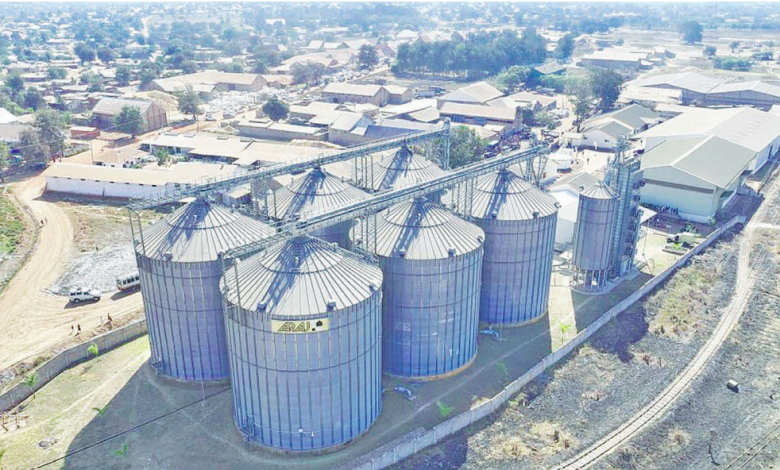
If Tanzania is to become Africa’s food hub, its ability to store and process agricultural products will be as important as its production capacity.
Dira 2050, therefore, prioritises warehouses, drying facilities and rural storage infrastructure to reduce post-harvest losses while encouraging investment in packaging and processing.
A Sokoine University of Agriculture study cited in the National Post-Harvest Management Strategy 2019–2029 estimated postharvest losses at 15.5 per cent for maize, 10.7 per cent for paddy and 12.5 per cent for sorghum.
According to the Ministry of Agriculture, the National Food Reserve Agency’s (NFRA) storage capacity increased from 251,000 tonnes in 2020/21 to 776,000 tonnes in 2025/26.
The ministry, through NFRA, plans further investment in storage facilities with a combined capacity of 165,000 tonnes in Songea, Makambako, Dodoma, Shinyanga and Songwe.
Ministry of Agriculture Director for Crop Development, Dr Yasinta Nzogehas, has urged the private sector to invest in storage, processing, drying and transport services to reduce losses. She said post-harvest losses could reach 40 per cent in some circumstances.
“Post-harvest losses can reach as high as 40 per cent, which is almost half of what a farmer could have earned,” she said.
According to Dr Nzogehas, reducing losses also presents business opportunities for investors and young people seeking to participate in agricultural value chains.
Dira 2050 proposes establishing Agriculture Growth Clusters across four corridors by 2050, including specialised clusters for cereals, vegetable oils, sugar, potatoes and horticulture. Integrated grain clusters covering wheat, maize, rice and sorghum are expected by 2045.
The objective is to move beyond selling raw commodities towards producing higher-value goods. Maize can be processed into animal feed, rice milled and packaged, fruits converted into juice and dried products, while oilseeds can supply edible-oil industries.
ALSO READ: PM promotes Tanzania’s bid to join world’s top 10 food baskets
Value addition and industrial investment
The Tanzania Investment and Special Economic Zones Authority (TISEZA) is expected to support agro-processing investment through industrial clusters, enabling infrastructure and simplified access to permits, licences and land.
The authority also provides customs-duty and VAT incentives for eligible agro-processing machinery to encourage industrialisation.
Public and private investments are already shaping the sector. Mkulazi Holding Company, a partnership between the National Social Security Fund (NSSF) and the Prisons Corporation, has invested more than 300bn/- in Morogoro and has a sugar production capacity of 50,000 tonnes.
The government is also implementing the Lake Zone Southern Agricultural Growth Corridor of Tanzania (SAGCOT) project in Shinyanga, supported by 640 million US dollars from the African Development Bank.
The project targets processing cassava, soya, livestock and fish, with an anticipated 20,000 jobs.
Kilombero Sugar is undertaking a 744bn/- expansion aimed at increasing annual production to 271,000 tonnes and creating 4,000 jobs.
Companies including Bakhresa Group and MeTL have also invested in food and grain processing. An April 2026 analysis by TICGL highlighted the potential gains from processing agricultural commodities.
Raw cashew nuts, for example, were reported to sell for approximately 350–500 US dollars per tonne, while shelled cashews could fetch between 2,500 and 3,500 US dollars.
Akross Limited Director of Marketing and Exports, Mr Jackson Joel, called for increased government and private-sector investment in domestic processing capacity.
He said local processing would provide farmers with nearby markets because factories could purchase raw cashews through primary cooperative societies (AMCOS), process them and export finished products.
He added that expanding domestic processing would increase export earnings, create employment and generate more revenue for the country.
Connecting farms to regional and global markets
Vision 2050 links agricultural transformation to regional and international trade. Tanzania’s membership in the East African Community, the Southern African Development Community and the African Continental Free Trade Area provides opportunities to expand agricultural exports.
However, competitiveness will depend on reliable transport infrastructure, efficient ports, railways, border systems and logistics, alongside compliance with international quality standards.
According to Ministry of Agriculture figures, agricultural export earnings increased to 3.54 billion US dollars in 2023/24 from 2.33 billion US dollars in 2022/23, representing growth of 51.9 per cent.
Food exports included maize and rice worth 346.53 million US dollars, while pulses, including green grams, pigeon peas, soya and black peas, totalled 519,765.23 tonnes, valued at 506.81 million US dollars.
Avocado exports reached 35,627 tonnes, valued at 100.9 million US dollars. Exports of commercial crops, including sisal, tea, coffee, cotton, tobacco and cashew nuts, reached 872.83 million US dollars in 2023/24, compared with 501.13 million US dollars the previous year.
These figures demonstrate agriculture’s potential to generate foreign exchange while creating markets for farmers and processors.
Financing climate-resilient agriculture The transformation is taking place against the growing threat of climate change. Vision 2050 recognises dependence on rainfall, soil degradation and changing climatic conditions as threats to agricultural productivity.
It therefore targets increasing the proportion of cultivated land under climate-smart agricultural practices to 75 per cent by 2050.
Irrigation, drought-resistant seeds, weather information, agricultural insurance and efficient water use are consequently essential not only for increasing production but also for protecting agricultural businesses against climate shocks.
Access to finance is equally important. Vision 2050 targets increasing the proportion of agricultural entrepreneurs accessing formal financial services from 15 per cent to 60 per cent by 2050.
It proposes strengthening agricultural financing through institutions such as the Tanzania Agricultural Development Bank (TADB), the Agriculture Input Trust Fund and the Cooperative Bank, alongside capital-market instruments and public-private partnerships.
TADB has disbursed more than 1.38tri/- in agricultural loans since its establishment, financing 719 strategic projects over the past decade.
These include irrigation schemes, feed mills, processing plants, storage facilities and transport logistics.
Expanding access to affordable financing will be critical in enabling farmers, cooperatives and agricultural enterprises to invest in modern production systems, equipment, processing facilities and market infrastructure.
Turning ambition into agricultural transformation
Vision 2050 sets an ambitious direction for Tanzanian agriculture: Higher productivity, greater competitiveness, stronger commercialisation and an expanded role in regional and global food markets. However, increasing production alone will not make the country Africa’s food hub.
The transformation will require higher yields, reliable access to quality inputs, expanded irrigation, reduced post-harvest losses, stronger storage and processing capacity, efficient supply chains and products that meet international market standards.
It will also require sustained investment, affordable financing and stronger links between farmers, cooperatives, processors and exporters.
Ultimately, success will be measured not only by the tonnes produced on Tanzanian farms, but also by the value generated from those tonnes, farmers’ incomes, the growth of domestic processing industries and the ability of locally produced goods to compete beyond the country’s borders.
That is the transition Vision 2050 seeks to achieve: Turning agriculture from a predominantly subsistence activity into a productive, technology-driven and commercially competitive engine of economic transformation.