TANZANIA’S BRICS MOMENT: Why joining new bloc is no longer optional

DAR ES SALAAM: AS I continue to consider Tanzania’s ongoing access to significant capital for funding its strategic initiatives and projects, some of which are detailed in Vision 2050, it is clear that institutions previously willing to provide such capital may be reassessing their positions based on their own perceptions following the 29th October General Election.
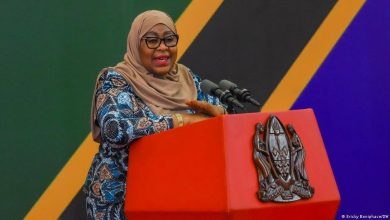
This vision draws upon a speech delivered by President Samia Suluhu Hassan during the swearing-in of ministers, in which she emphasised the importance of enhancing the accessibility of domestic funds by improving tax collection, primarily to fund our own projects.
A similar tone was repeated when addressing the elders of Dar es Salaam and the Tanzanian population, emphasising potential future challenges for Tanzania in securing foreign funding and access to finance.
Having previously discussed the advantages of joining BRICS in this column and considering Dr Samia’s insights and caution, it is essential for Tanzania, through the Bank of Tanzania (BoT) and the Ministry of Finance (MoF), to seize this opportunity to pursue BRICS membership that could benefit the nation and its financial institutions by gaining access to relatively low-cost financing. BRICS is a forum for cooperation among a group of leading emerging economies.
The BRICS includes ten countries – Brazil, China, Egypt, Ethiopia, India, Indonesia, Iran, Russian Federation, South Africa and the United Arab Emirates. Becoming a member will allow Tanzania and financial institutions like TIB Development Bank to access more affordable funding sources for key national projects that could benefit other sectors through wholesale lending, in addition to financing national strategic projects.
Although it may not be evident to many, Tanzania stands at a crucial point in its history. After a decade marked by an average growth rate of 6 per cent, the economy is expected to need an estimated 63 billion US dollars for infrastructure investment by 2030.
This investment covers vital sectors such as roads, rail, ports, water, power, and the 5G backbone, which are essential for reaching middle-income status while creating employment opportunities along various supply chains for more than one million young people entering the job market each year.
Conventional financiers, led by traditional lenders, remain significant; however, their total sovereign exposure to Tanzania, based on straightforward calculations, is only about 8 billion US dollars, accounting for less than 13 per cent of the financing gap.
Given the global geopolitical situation, access to financing from traditional sources may decrease and become more costly.
ALSO READ: Africa Benefits from Brics Investments
Paraphrasing the European Parliament’s perspective and other declarations, such as certain countries proposing to alter their development strategies, which are claimed to be connected to foreign policy priorities, these positions suggest that, overall, there will be stricter environmental access financing in the future.
The world, as understood by a higher power, namely God, indicates that each obstacle overcome leads to a resolution, supporting the realisation of the creator’s intentions. Due to decreased funding for strategic initiatives, the world might be exploring alternative solutions that could significantly benefit Tanzania, and these are already in place.
Those familiar with financing would agree with me that a complementary financial framework is emerging within BRICS. The New Development Bank (NDB), the Contingent Reserve Arrangement, the China Development Bank, the Export-Import Bank of China, the India-Africa Solar Alliance facility, and, most recently, the BRICS Clear multilateral settlement platform, in my view, offer a means of accessing finance outside traditional sources for issuing loans, credit lines or concessionary loans.
Unlike other sources, these providers offer facilities with instruments carefully designed for developing economies that require scale, efficiency and favourable terms, without the ideological conditions that have traditionally characterised conventional financial practices.
Therefore, for Tanzania, BRICS membership and its strategic financial institutions, especially DFIs, are no longer a diplomatic luxury; they are an essential requirement for the balance sheet. Examining the numerical dynamics of scale and the influence of BRICS financial flows could offer significant benefits for Tanzania.
The authorised capital of the NDB, for instance, totals 100 billion US dollars, with 50 billion US dollars paid in. Compared to traditional financing methods, a single sovereign-guaranteed loan from the NDB can reach up to 5 billion US dollars per project, with an adequate repayment schedule period, let’s say 20 years, and a sixyear grace period.
Looking at some deals by NDB, the pricing structure is closely linked to the bank’s funding cost, which is currently 2.9 per cent for 5-year yuan bonds, for instance.
As a result, the overall sovereign lending rate remains around 3.8 per cent, about 250 basis points lower than the rates offered by some traditional hard-currency financiers. In financing and sourcing funds, I have learnt that procedural aspects are equally important as the costs involved.
Estimating access and analysis access finance from traditional financiers shows that projects typically take around 42 months to progress from the concept note stage to effectiveness.
In contrast, projects under the New Development Bank average a mere 18 months, as their environmental and social standards align with those of the host country, provided they adhere to the baseline established by the laid-down principles. Unlike traditional financiers, BRICS lenders avoid imposing formal policy conditions related to fiscal consolidation or parastatal reform.
ALSO READ: Gold and BRICS: Shaping the future of the dollar
Instead, based on my assessment, they utilise practical projectlevel covenants, such as completion deadlines, escrow accounts and supplier credit backstops that protect cash flow without requiring a return to traditional financiers’ consensus-style austerity.
As far as prospects of currency diversification and the imminent decline of the dollar’s dominance are concerned, Tanzania’s external debt stock is currently primarily denominated in US dollars, accounting for 78 per cent of obligations.
What many don’t realise is that a 0.5 or 1 per cent increase in the Federal Reserve’s interest rate, for instance, adds roughly 55 million US dollars to annual debt servicing costs.
Therefore, while opinions may vary, in my view, membership would enable our treasury to align the currency composition of its liabilities with that of its export revenues: Gold, tourism, cashew nuts, and soon, liquefied natural gas (LNG), which will be priced according to the spot Brent index but settled in BRICSaccepted currencies, say such as yuan through the Shanghai International Energy Exchange.
In fact, the NDB’s 2023 Local Currency Lending Framework allows sovereigns to secure up to 70 per cent of any loan in their own currency, aligning with their tax revenue. This approach reduces convertibility risk and lessens the need for costly forwardcover, which currently adds an extra 150 basis points to, say, Eurobond coupons.
I believe that BRICS membership goes beyond just access to cheaper capital; it essentially centres on optionality. The potential benefits of BRICS membership for local banks could substantially enhance the overall economic environment.
Membership would allow Tanzanian commercial banks; CRDB, NMB, Exim to join the BRICS Inter-bank Cooperation Mechanism, a clearing network created to settle trade documents in local currencies.
My simple calculations suggest that the immediate effect could be a 4–6 per cent reduction in the LC confirmation fees that some national banks in Tanzania currently pay to Standard Chartered or Citibank for Asian trade.
Furthermore, additional benefits could include financial institutions gaining direct access to NDB onlending facilities at a rate of 150–200 basis points above SOFR, which is more costeffective than any offerings from correspondent banks. By lowering the domestic cost of capital, BRICS membership, in my view, will drive privatesector GDP growth, which is vital for future tax revenues, employment opportunities, and, above all, the benefits derived from economic multiplier effects.
Reflection on Tanzania’s aspirations and stance on global issues leads me to conclude that timing is paramount; the period from 2026 to 2030 presents a significant window of opportunity for the nation to consider formally joining BRICS.
The ongoing negotiations for the NDB’s general capital increase for the period 2025-30 are underway; new members who gain admission before December 2026 will be entitled to full pro-rata subscription rights, which include one seat on the Board of Governors and an alternate director position on the Credit Committee.
My concluding reflections and considerations for Tanzania’s future involve shifting away from reliance on external aid towards a partnership of mutual benefit, where all parties participate in a collaborative and advantageous relationship.
BRICS, in my view, provides an opportunity for the country to gain a stake in the banks supporting its future funding, to borrow using its own earned currencies, and to safeguard itself from the unpredictable political shifts of traditional financiers. For Tanzania, 2026 signifies not only an entry into the diplomatic arena but also an opportunity for fiscal independence.