Tanzania-US health pact signals shift from aid to strategic partnership
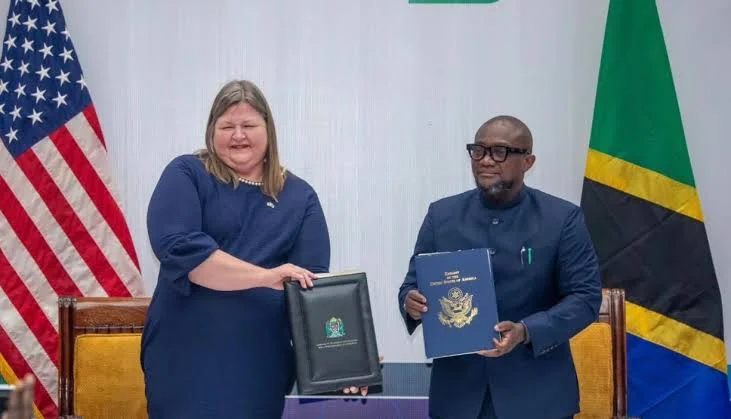
DAR ES SALAAM: Tanzania’s newly signed five-year health partnership with the United States is expected to inject more than US$1.3 billion into the country’s healthcare sector, marking a shift from traditional donor assistance to a strategic cooperation model that emphasises shared responsibility, stronger institutions and long-term sustainability.
Signed between Tanzania’s Ministry of Health and the United States Government, the agreement commits both countries to strengthening Tanzania’s healthcare system, with the government also pledging to increase domestic investment to complement American support.
The partnership covers key areas including HIV/AIDS prevention and treatment, malaria control, tuberculosis programmes, laboratory services, disease surveillance, digital health systems and capacity building for healthcare workers.
Government officials described the agreement as a long-term investment in Tanzania’s health sector rather than a conventional aid package, saying it is designed to strengthen national institutions and improve service delivery beyond the lifespan of external funding.
The agreement comes as African countries face increasing pressure to develop resilient healthcare systems while reducing dependence on foreign assistance amid changing global development financing.
For decades, international partners have supported health programmes across Africa, particularly in combating HIV/AIDS, malaria and tuberculosis. The United States has remained one of Tanzania’s largest health partners through initiatives such as the President’s Emergency Plan for AIDS Relief (PEPFAR).
However, the global health financing landscape is evolving, with development partners placing greater emphasis on domestic resource mobilisation, institutional strengthening and country ownership of health programmes.
The Tanzania-US agreement reflects this new approach by combining American financial support and technical expertise with increased investment from the Tanzanian government to build a more sustainable healthcare system capable of responding to future public health challenges.
Despite its anticipated benefits, the partnership has generated debate over issues related to national sovereignty, transparency and the protection of health data and biological resources.
ALSO READ: Tanzania, US firm discover a 4.03bn year-old rock deposit
Health experts have stressed the importance of ensuring that disease surveillance information, medical research findings and biological specimens collected within the country remain protected and managed in accordance with Tanzania’s national interests.
In response to concerns, government officials have maintained that the agreement safeguards Tanzania’s sovereignty and does not permit unrestricted sharing of biological specimens, insisting that sensitive health resources remain under national control.
Analysts have nevertheless called for greater transparency, arguing that publication of the full agreement would enable researchers, health professionals and the public to independently assess its long-term implications.
Observers also note that the agreement reflects broader changes in Africa’s engagement with international partners, where governments are increasingly seeking investment and technical cooperation while retaining greater control over policy decisions and development priorities.
Beyond healthcare, the partnership underscores the growing role of health diplomacy in international relations as global powers strengthen engagement with African countries through cooperation in health, technology, infrastructure and education.
For Tanzania, the agreement presents an opportunity to improve healthcare delivery while reinforcing its position as a reliable partner in global health cooperation. For the United States, it strengthens long-standing bilateral relations and supports wider engagement with one of East Africa’s key economies.
Stakeholders say the success of the partnership will ultimately be measured not only by the level of financial investment but also by its ability to strengthen Tanzania’s healthcare institutions, expand local expertise and build a resilient, self-sustaining health system capable of serving future generations.