Tanzania trains its laboratory professionals how handle dangerous pathogens and samples
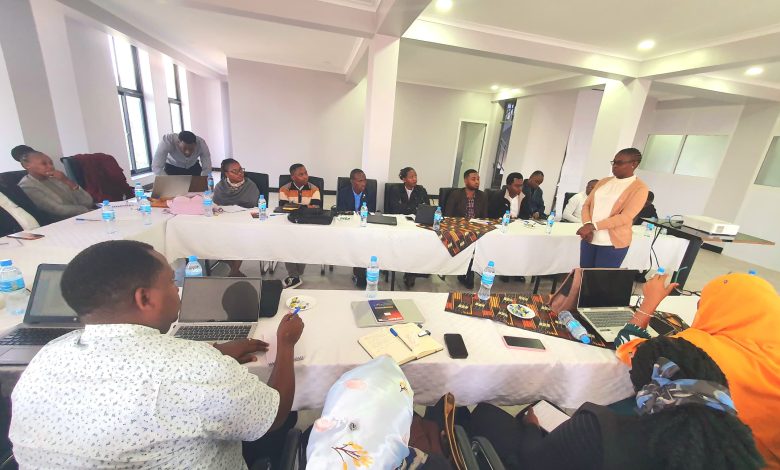
ARUSHA: THE Tanzanian government has provided training to laboratory professionals to ensure that society is protected against disasters that may be caused by unsafe handling of dangerous pathogens and samples stored for long periods.
Speaking while opening the training in Arusha, the One Health Coordinator from the Prime Minister’s Office (Policy, Parliament and Coordination), Valentino Sanga, has urged the professionals to pay close attention to the ethics and oaths of their profession.
Sanga said that the session aims to build capacity among participants through sharing experiences, reminding each other of their professional responsibilities and learning new knowledge that takes into account modern national and international guidelines on laboratory safety.
He stressed that professionals should use the session as an opportunity to improve their performance, especially in preventing and early identifying health risks, as well as ensuring that dangerous pathogens and samples stored for long periods are safely stored so that they do not become a source of harm to society.
“If we use this session well, we will be able to strengthen the immune systems, early detection of risks and safe management of pathogens and samples stored for long periods to prevent harm to society,” said Sanga.
ALSO READ: How Tanzania built one of East Africa’s strongest outbreak detection systems
In addition, he explained that the experts should fully adhere to the ethics of their profession, noting that negligence in the handling of pathogens can cause serious harm to citizens and be contrary to the mission of the work assigned to them.
He also urged the participants to continue to adhere to national and international guidelines governing laboratory safety, emphasizing that Tanzania is part of various international agreements aimed at protecting the health and safety of society through the implementation of internationally accepted standards.
For his part, the development partner from the Center for International Health, Education and Biosecurity Tanzania (CIHEB-Tanzania), Samwel Mulungu, said that the institution through the Global Health Security (GHS) Project has supported the training to build a common understanding among experts on the best way to control and store dangerous pathogens.
He explained that laboratory-preserved parasites are a sensitive issue that requires great attention, as errors in their handling can endanger not only professionals but also society at large due to the possibility of spreading infections.