Tanzania strengthens plant health systems to unlock agricultural trade opportunities
DAR ES SALAAM: A PEST outbreak in a farmer’s field can destroy an entire harvest, threaten household incomes and affect the availability of food in markets.
Beyond farms, plant diseases can also become a major obstacle to agricultural trade when produce fails to meet the safety and quality standards required by importing countries.
Protecting crops against such threats is therefore not only a matter of increasing agricultural production but also safeguarding farmers’ investments, ensuring food safety and maintaining confidence in the quality of produce entering domestic and international markets.
Recognising this connection, Tanzania has been strengthening its plant health services through investments in modern surveillance systems, laboratory infrastructure, inspection services and technical expertise to improve its ability to prevent, detect and manage plant pests and diseases.
A four-year initiative, the Strengthening Plant Health Services in Tanzania for Enhanced Food Safety (STREPHIT) project, has been at the centre of these efforts, supporting improvements in the country’s phytosanitary systems and strengthening institutional capacity to protect agricultural production.
As the project approaches its conclusion, government officials and development partners have acknowledged its contribution to transforming plant health services, with stakeholders now focusing on sustaining the achievements and ensuring they continue benefiting farmers and agricultural businesses.
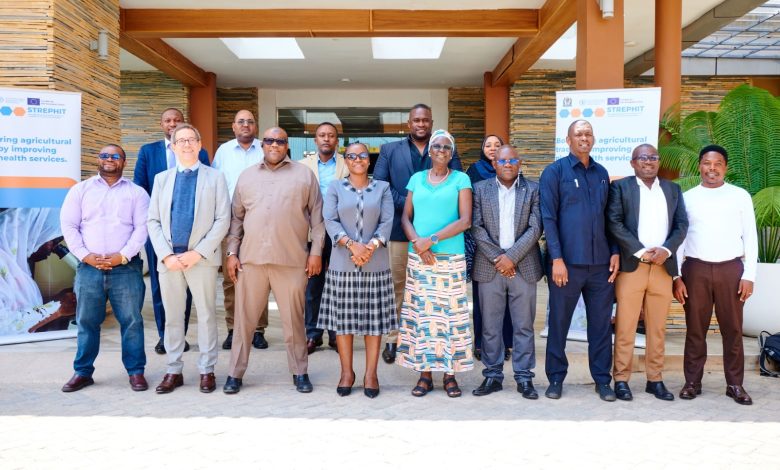
The progress was reviewed in Dodoma recently, during the final Steering Committee Meeting, which brought together representatives of the Ministry of Agriculture in Mainland Tanzania, the Ministry of Agriculture, Natural Resources, Irrigation and Livestock in Zanzibar, the European Union (EU), the Food and Agriculture Organisation of the United Nations (FAO) and the Tanzania Plant Health and Pesticides Authority (TPHPA), alongside other government institutions.
With a total investment of 10.6 million euros, equivalent to approximately 28bn/-, STREPHIT was financed through a 10-million-euro contribution from the EU, while FAO contributed 350,000 euros and the Government of Tanzania provided 250,000 euros.
Speaking during the meeting, FAO Representative in Tanzania, Dr Nyabenyi Tipo, thanked the European Union for its support throughout the implementation period, recognising the partnership as an important contribution to strengthening the country’s agricultural systems.
She also commended the governments of Mainland Tanzania and Zanzibar for their commitment and cooperation in implementing the initiative, while acknowledging TPHPA’s leadership and dedication as the beneficiary National Plant Protection Organisation.
One of the major challenges addressed by the project has been improving the country’s ability to identify and respond to plant pests and diseases before they spread and cause extensive damage to agricultural production.
Early detection is particularly important because some pests can spread rapidly across farming areas, affecting different crops and creating substantial losses for producers.
Without effective surveillance and reliable diagnostic systems, outbreaks may remain undetected until considerable damage has already occurred.
Through investments in digital technologies and modern data collection systems, STREPHIT has strengthened pest surveillance, enabling relevant institutions to improve the speed of detecting, reporting and responding to outbreaks.
These improvements provide plant health authorities with better opportunities to monitor emerging threats, collect relevant information and coordinate responses, strengthening preparedness against risks that affect agricultural production.
The project has also strengthened inspection services at import and export points, an important intervention in protecting the country against the introduction and spread of harmful plant pests and diseases through the movement of agricultural commodities.
At the same time, improved sampling and certification procedures for export commodities, together with enhanced traceability systems, are helping strengthen the processes required to demonstrate that Tanzanian agricultural products meet international phytosanitary requirements.
This is particularly significant as compliance with importing countries’ plant health standards remains an important condition for agricultural trade.
Products that fail to satisfy these requirements can face restrictions, delays or rejection, resulting in losses for exporters and producers.
By strengthening inspection and certification systems, Tanzania is working towards improving confidence in its agricultural products and creating a more reliable environment for businesses seeking opportunities in regional and international markets.
The interventions have extended beyond equipment and digital systems to include developing the skills of personnel responsible for protecting crops and enforcing plant health standards.
Plant health inspectors, laboratory personnel and frontline surveillance officers across Mainland Tanzania and Zanzibar have benefited from capacity-building initiatives aimed at improving their ability to perform their responsibilities in accordance with international standards.
Laboratory infrastructure and diagnostic capacity have also received support, providing a stronger foundation for scientific testing, evidence-based decision-making and effective management of plant health risks.
These investments are important because effective plant protection depends on the ability of institutions to identify pests accurately, determine the extent of threats and recommend appropriate responses.
Strong laboratory services also support the verification processes required when agricultural commodities are prepared for export.
For farmers and agricultural businesses, the benefits of these improvements extend beyond controlling pests and diseases.
Stronger plant health systems can help protect harvests, maintain the quality of agricultural commodities and reduce barriers that prevent producers from accessing markets.
They also contribute to wider food security efforts by supporting the protection of crops throughout production and the movement of agricultural products across borders.
The economic importance of these investments was reflected in remarks by Mr Olivier Louis, Head of the Natural Resources Section responsible for agriculture, blue economy and energy at the European Union Delegation to Tanzania.
He said the achievements under STREPHIT represented more than the successful completion of a development project, adding that they had established a platform for continued cooperation between the government of Tanzania and the European Union in promoting sustainable agriculture, food safety and trade competitiveness.
The final Steering Committee Meeting was chaired on behalf of the Permanent Secretary of the Ministry of Agriculture by the Director of Crop Development, Dr Yasinta Nzogela.
As implementation draws to a close, stakeholders face the responsibility of ensuring that the systems, infrastructure and technical expertise developed over the four years remain operational and continue serving the agricultural sector.
Sustaining the achievements will require continued government commitment, investment in technical capacity, maintenance of laboratory facilities and effective coordination among institutions responsible for plant health protection.
The need for continuity is particularly important because the threat posed by plant pests and diseases does not end with the closure of development projects.
Regular surveillance, effective inspection services and reliable laboratory testing remain necessary to protect agricultural production and maintain the confidence of international trading partners.
Ultimately, the value of STREPHIT will be measured not only by the financial resources invested or the activities completed during its implementation but also by the ability of Tanzania’s institutions to maintain and build on the progress achieved.
ALSO READ: Tanzania’s food security needs more than chemical-based agricultural solutions
For farmers, traders and other players in the agricultural value chain, the strengthened systems offer an important foundation for protecting livelihoods, improving the quality of produce and expanding Tanzania’s participation in regional and international agricultural trade.
PARTICIPANTS of the final Steering Committee Meeting of the Strengthening Plant Health Services in Tanzania for Enhanced Food Safety (STREPHIT) project pose for a group photo after the meeting held in Dodoma recently.