Living on the edge as floodwaters loom
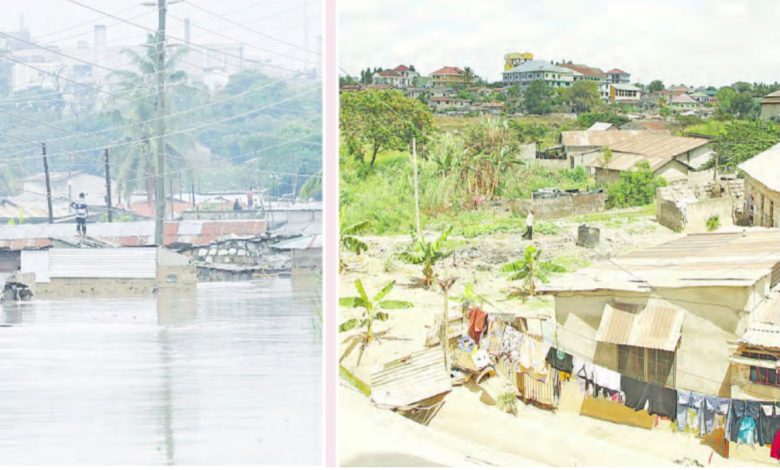
DAR ES SALAAM: IN the low-lying basin of the Msimbazi Valley, where Dar es Salaam’s expanding urban landscape meets the ancient floodplain of a river flowing towards the Indian Ocean, residents of Jangwani have learnt to read the sky like sailors reading the sea.
They recognise the grey clouds heavy with rain, the smell of the air before a downpour and the warning signs that the Msimbazi River is about to burst its banks.
Through years of repeated flooding, they have come to understand how quickly rising water can disrupt their lives, destroy property and force families out of their homes.
Now, as meteorological forecasts point to the possibility of heavy El Niño-related rainfall, residents of this flood-prone ward are once again preparing for potential emergencies through a combination of household precautions, community initiatives and government-led interventions.
Their experiences reveal a community shaped by repeated flooding, but one that remains caught between self-reliance and the need for stronger, coordinated disaster protection. Jangwani’s vulnerability is closely linked to its geographical location.
The ward lies within the Msimbazi Valley, where natural drainage pathways channel water from surrounding highlands into the Msimbazi River before it flows towards the coast. Under natural conditions, wetlands and floodplains absorb excess water during seasonal rainfall, allowing it to spread and gradually recede.
However, rapid urbanisation has significantly altered this natural drainage system. Buildings, roads and other infrastructure have encroached on waterways, while blocked or narrowed drainage channels and improper waste disposal have further restricted water movement.
Consequently, when heavy rainfall occurs, water increasingly finds its way into residential areas, leaving households exposed to flooding. For Hadija Omari, a resident of Jangwani, experience has become her most reliable early warning system.
“If it rains for an hour or two hours, we know that we have to take our things, for example, electronic items, outside the house,” she explained.
It is a simple but practical precaution born out of years of living with the threat of rapidly rising water. Mwajuma Abraham describes how flooding routinely forces residents to seek temporary refuge.
“Every time it rains, this place floods and we have to run to the road and stay there for a while before we can return to our houses,” she said.
For her, the road becomes a temporary refuge as residents wait for floodwaters to recede. Elishadai Mwaipopo faces a similar experience, although his displacement often lasts longer. “Whenever it floods, I have to take everything out and return after three days,” he said.
Three days away from home can mean uncertainty, disruption and the difficult task of assessing the damage before attempting to resume normal life. These experiences demonstrate how residents have developed coping mechanisms to deal with recurring floods.
However, they also raise an important question: When water rises beyond what households can manage, do residents know where to seek safety, which evacuation routes to use and where designated emergency shelters are located?
For Ali Ramadhani, a Jangwani resident of more than three decades, the problem is closely linked to infrastructure development that has interfered with the natural movement of water.
“The problem we have here is infrastructure. The infrastructure in this place blocks the water and it pours into Jangwani,” he said.
His observation reflects longstanding concerns among urban planners and engineers that poorly planned development and encroachment on natural waterways have worsened flooding in the valley.
The government is responding through a major flood-control project estimated at 260 million US dollars, (about 689bn/-) supported by development partners, including the World Bank, Spain and the Netherlands.
The project seeks to improve the Msimbazi River’s capacity to carry water through measures that include widening and deepening the river channel, strengthening embankments and relocating residents from high-risk areas.
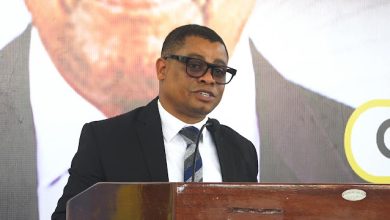
The Tanzania Rural and Urban Roads Agency (TARURA) Chief Executive Officer, Engineer Victor Seff, said significant infrastructure works were underway to improve flood management in the area.
During an inspection, he noted that the Jangwani Bridge, being constructed by the Tanzania National Roads Agency (TANROADS), was more than 50 per cent complete, while TARURA was undertaking riverbank works and deepening the channel to improve the flow of water towards the ocean.
The wider project incorporates several flood-resilience measures, including improvements to the Jangwani Bridge, raised embankments and enhanced stormwater drainage. Compensation has already been paid to 2,551 affected residents in the first phase, with 73.69bn/- disbursed.
A second phase is expected to compensate another 314 residents affected by the construction of embankments intended to create safer residential and commercial areas. Minister for Works, Masanja Kadogosa, recently inspected the Jangwani Bridge construction site and expressed satisfaction with the progress.
He commended TANROADS and the project engineers for their management of the works and measures taken to minimise possible delays during the rainy season.
“I thank TANROADS very much; they are overseeing something good,” Kadogosa said. He particularly praised the contractual arrangement under which the contractor responsible for constructing the temporary bridge was also responsible for ensuring that water continued flowing through the channel.
“This is a trick, because what one person does, another might push the risk to their colleague. But this means he cannot push the risk to anyone else,” he said.
The minister also observed that completing the piling works early would reduce the likelihood of rainrelated disruptions.
“If you had not finished piling, when the rains come, you would have to stop working in the water. So, this is really good; I liked it very much,” he said.
Beyond the infrastructure projects, Dar es Salaam Regional Commissioner Albert Chalamila has intensified preparations for the anticipated rains, drawing lessons from the heavy rainfall experienced in 2024.
He identified inadequate drainage, human activities obstructing natural waterways and indiscriminate waste disposal as major challenges that could worsen flooding.
“The region has agreed with district commissioners, directors and other officials to conduct public awareness campaigns, particularly among people living in valleys and other vulnerable areas, so that they can take early action and remove waste and other obstructions that could hinder the flow of water,” RC Chalamila said.
ALSO READ: ‘It can kill us’: Kenyans fear impact of El Niño with floods predicted
He emphasised that disaster response should begin before floodwater enters people’s homes. The region is working with institutions responsible for river-basin management to clean rivers, remove obstructions and improve the capacity of waterways to accommodate large volumes of water during heavy rainfall.
Major infrastructure projects are also underway. RC Chalamila cited the Jangwani Bridge project, valued at more than 97bn/-, the Kigogo Bridge project, costing over 17bn/- and the Mkwajuni Bridge project, valued at more than 11bn/-. He placed particular emphasis on the Msimbazi Valley project, which involves widening and improving the river channel and strengthening its banks.
“The objective is not simply to build another piece of infrastructure, but to improve the movement of water through the city and towards the sea. The lessons we learnt at that time are what have also helped to generate these measures now,” he said.
While major infrastructure projects continue, residents are not waiting passively for government interventions. Across the Msimbazi Valley, households are making their own preparations based on experience and guidance from local leaders.
Awilo Gogo, a resident of Madaba Magomeni, describes a straightforward approach to dealing with rising water.
“In my preparations, if the rains become too much, I run. When it stops, I return to my environment and life continues,” she said. Abdallah Mtange, a resident of Mzimuni, has opted for a more precautionary approach by moving away from the vulnerable valley.
“I know our areas here very well. Often, when it rains, it is dangerous. Personally, I have taken precautions. Among the precautions I have taken is to leave the valley area and move to higher ground,” he said.
For Lydia Makwawa of Kigogo Mbuyuni, preparedness means being ready to evacuate whenever necessary. “I have prepared, meaning that when I need to leave, I will leave that place that was safe. We have heard from the government that we should prepare, and we have truly prepared. When the rains come, we will go wherever necessary,” she said.
Mohammed Khalifa, meanwhile, has prioritised food security by ensuring that his family has adequate supplies in case flooding disrupts normal activities. “I have prepared for when these floods come. My family and I will buy food and store it inside so that it can help us and our family,” he said.
Jesca George of Kigogo Mbuyuni has devised a more elaborate household protection system. “There is a ceiling here that I have made upstairs. If heavy rains come during the rainy season, I take clothes, utensils and food and put them up there. After putting them up, I leave a few things down. If I need rice, I go up and get it. If I need clothes, I go up and get them, I dress and I leave,” she explained.
She said that when flooding becomes severe, she leaves with her children and seeks refuge on the road or at her mother-in-law’s house.
“When the floods come, I know the water has spilled there, I leave with my children, and we go to the road or to my mother-in-law’s house. I stay there, cook, eat, and when the water has entered the house, I return and clean. After cleaning, I mop, and life continues as normal,” she said.
Her experience illustrates the difficult balance residents must maintain between protecting their families, safeguarding household belongings and returning home once floodwaters recede. At community level, Kigogo Mbuyuni Street Chairperson Abdalla Mkuja has been mobilising residents to prepare for the anticipated rainfall.
He said he had convened community meetings to encourage households to stock essential food supplies, clear their surroundings and prepare to relocate temporarily if conditions became dangerous.
“The first thing I did was call my constituents and direct them, telling them that El Niño rains are coming from October, November and December. We should prepare with food supplies, prepare our environment and prepare to leave. If there are people who have relatives nearby, they should try to leave and stay there temporarily, because when the rains come, they are dangerous,” he said.
Mkuja has also organised community efforts to clear drainage channels and remove obstructions. “Because of these El Niño rains, we should clean the channels, and we have started cleaning them, unblocking all the channels that cause water to accumulate.
We worked with fellow residents, and now water flows well,” he said. However, he acknowledged that convincing some residents to evacuate remains a major challenge, particularly because of fears that their belongings could be stolen while they are away.
“My constituents are stubborn. Even when previous floods occurred, they did not want to leave their houses, fearing that thieves would take their belongings. They say they would rather die than leave,” he said.
He explained that some residents prefer to remain inside their homes to guard their property, even when rising water poses a serious threat. “Often, when water enters houses, it may not be visible or may reach the window, but thieves use that as an opportunity to enter and steal TVs and other household items. So, when we try to evacuate them, they refuse, saying they will stay and guard their belongings,” he added.
To address the challenge of evacuation, Mkuja said community leaders had worked with district authorities to identify temporary shelters for affected residents.
“We have prepared places like the standard playground, Kintiku and the cabbage market for people from Kigogo Ward who may be affected. We have coordinated with the ward councillor,” he said.
At regional level, Dar es Salaam has also developed Disaster Risk Reduction Plans for 12 wards identified as vulnerable to various hazards. These include Jangwani, Vingunguti, Mnyamani, Mchikichini, Kigogo, Tandale, Kawe, Mzimuni, Mwananyamala, Magomeni, Ndugumbi and Mbweni.
The plans were developed through community participation involving 316 residents, while Ward Disaster Management Committees received training to strengthen preparedness and emergency response. Handed over in 2021, the plans provide a framework for disaster preparedness and evacuation at ward level.
However, having a disaster management plan does not automatically mean that every resident knows the designated evacuation routes, assembly points or locations of emergency shelters.
This is particularly important in densely populated, flood-prone neighbourhoods where residents may have very little time to act once rivers overflow or roads become impassable.
The challenge, is not simply to establish evacuation plans but to ensure that communities understand them and can act quickly when emergencies occur. This requires continuous public education, community engagement and trust between residents and authorities.
As the anticipated heavy rains approach, Jangwani and the wider Msimbazi Valley face a critical test. On one side are major government investments in bridges, embankments and improved river channels intended to reduce the flooding that has affected communities for years.
On the other is the everyday reality of residents who continue to depend on their own ingenuity, experience and community support to protect their families and belongings. The government’s investment in flood control is significant and necessary, but infrastructure alone cannot eliminate the risk, particularly if waste disposal practices and encroachment on natural waterways continue to obstruct the movement of water.
As Regional Commissioner Chalamila has emphasised, residents also have a responsibility to protect drainage systems. Waste dumped into rivers and drainage channels can become dangerous obstructions when heavy rainfall occurs. For Jangwani residents, the coming rainy season will test both the new infrastructure and their household preparations.
Bridges and embankments must withstand rising water, drainage channels must remain clear, and emergency arrangements must work when communities need them most. Ultimately, the story of Jangwani is about more than rainfall and flooding.
It is about how a rapidly growing city manages its relationship with natural waterways, how communities adapt to recurring disasters and how vulnerable households prepare for risks that have become part of everyday life. It is also a reminder that flood resilience cannot be achieved through infrastructure alone.
It requires effective urban planning, functioning drainage systems, responsible environmental practices, reliable early-warning mechanisms and communities that know when and where to seek safety.
For the people of Jangwani, the hope is that the next heavy rains will not bring another cycle of destruction and displacement, but demonstrate that years of experience, community preparedness and government investment are finally making a difference.