Tanzania shows how nations can heal after election turmoil
DAR ES SALAAM: FOR decades, Tanzania has stood out in a region where elections have too often triggered prolonged unrest, political instability and deep social fractures.
Widely regarded as a pillar of peace and coexistence in East Africa, this country, with a population of over 60 million people, has built its reputation on smooth political transitions, national unity and a deeply rooted culture of stability.
However, that good image came under rare strain following the October 29, 2025 General Election, when isolated outbreaks of violence erupted in several parts of the country, exposing tensions beneath an otherwise, resilient national fabric.
But almost six months have passed since the regrettable incidents. What has unfolded since then is more than just a story of post-election unrest. This could ultimately stand as a defining lesson in how nations respond when stability is tested, how governments manage tensions, rebuild public trust and prevent political divisions from descending into prolonged conflict.
The unrest that followed Tanzania’s election was geographically limited but symbolically significant. Incidents were reported in 14 regions, including Dar es Salaam, Coast, Arusha, Kilimanjaro, Dodoma, Iringa, Njombe, Mbeya, Songwe, Mara, Geita, Shinyanga, Mwanza and Ruvuma.
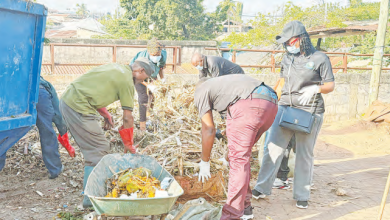
Public infrastructure, transport facilities, government offices and commercial establishments were damaged, disrupting mobility, livelihoods and public confidence in affected communities.
Yet despite the violence, Tanzania avoided a wider collapse of public systems. Authorities moved quickly to contain the unrest within existing legal and constitutional frameworks, while essential services including healthcare, transport and utilities continued operating.
As calm gradually returned, the response evolved from immediate stabilisation toward a broader effort aimed at rebuilding trust and addressing grievances exposed by the crisis.
Speaking during the Diplomatic Sherry Party at State House in Chamwino, Dodoma, in January 2026, President Samia Suluhu Hassan openly acknowledged the gravity of the unrest and its impact on the country.
“Despite these remarkable achievements, with heavy hearts we acknowledge the challenges of the unrest and violence on the election day and shortly thereafter,” she said.
While defending the government’s response as necessary to restore order and protect citizens, President Samia also signalled that the country’s approach would extend beyond security measures alone.
“Our response was essential to maintain constitutional order and ensure safety of all citizens and diplomatic community,” she said.
President Samia Suluhu Hassan said political systems naturally face tensions and grievances from time to time and such moments require reflection, dialogue and reforms to help countries move forward peacefully.
“Democracy is a journey of growth,” President Samia said, insisting, “There is no global formula for these unique challenges and we must afford each other the space to learn and grow with humility.”
Her remarks reflected an effort to position Tanzania’s response not simply as crisis containment, but as part of a longer process of reconciliation and institutional renewal.
To address the aftermath of the unrest, President Samia announced several measures aimed at promoting national healing and restoring public confidence.
These included the establishment of a Ministry of Youth under the President’s Office, the pardoning of 1,787 convicts linked to the unrest, the creation of an Independent Commission of Inquiry and a pledge to establish a Truth and Reconciliation Commission ahead of future constitutional reforms. “My administration is resolved to use this second term to repair, rebuild and renew our nation,” she declared.
Her statements suggested an understanding that restoring stability required more than re-establishing order. It also required rebuilding trust, addressing grievances and strengthening national cohesion.
In one of her strongest remarks on the unrest, President Samia said the violence did not reflect Tanzania’s true identity as a peaceful and united nation.
“To my fellow Tanzanians, the discord we witnessed is not who we are,” she said.
She also laid out what she described as the guiding principles for the country’s path forward.
“Our path forward will be paved with the stones of justice, dialogue and a renewed respect for the democratic process,” she said.
The establishment of the Commission of Inquiry chaired by former Chief Justice Mohamed Chande Othman became one of the most significant institutional responses to the crisis.
The commission was tasked with investigating the causes of the violence, identifying accountability and recommending measures aimed at preventing similar unrest in the future.
Public hearings held across the country allowed citizens, political actors and civil society organisations to present their views, reflecting an effort to ground accountability in consultation and transparency.
Alongside the inquiry, the government introduced a recovery framework built around three pillars: repair, rebuild and renew. The first phase focused on restoring damaged infrastructure and essential services in affected areas. The second aimed at rebuilding public trust in institutions and strengthening national resilience. The final phase centred on long-term renewal through reforms, reconciliation and efforts to reinforce national unity and social cohesion.
Tanzania’s response points to a broader lesson about resilience and governance. Moments of political strain inevitably test nations. But long-term outcomes are often shaped less by the existence of tensions themselves than by how institutions and leaders respond to them.
In Tanzania’s case, the response gradually evolved from crisis containment toward dialogue, institutional reflection and reconciliation. The emphasis on consultation, reform and national healing reflects an understanding that sustainable peace requires more than restoring order. It requires rebuilding trust and reinforcing the relationship between citizens and institutions.
For countries navigating periods of political uncertainty, Tanzania’s experience offers an important reminder that moments of crisis can also become opportunities for renewal.
As President Haikande Hichilema of Zambia warned at the swearing in of President Samia on November 3, 2025, peace must be protected before it is lost.
Describing Tanzania as a cornerstone of regional peace and stability, the Zambian leader warned that peace should never be taken for granted.
ALSO READ: Across Africa, instability has a price; Tanzania should not pay it
Peace, security and stability, Hichilema said, remain the bedrock upon which development is built. Once lost, peace becomes far harder to restore.
“What you have enjoyed for years must be protected at all costs,” President Hichilema implored Tanzanians, stressing that “the dialogue table is where issues are resolved, not in the streets.”
The country’s response has also drawn international recognition.
The UN Secretary-General’s Special Representative to the African Union, Parfait Onanga-Anyanga, praised Tanzania’s efforts to restore calm after the disturbances linked to the 2025 General Election.
“I commend the government of Tanzania for the steps it has taken to restore peace and stability following the disturbances that occurred during and after the October 2025 General Elections,” Mr Onanga-Anyanga said.
And as President Samia argued, national recovery depends on justice, dialogue and the willingness to move forward together.
In that sense, Tanzania’s response to its post-election tensions may ultimately be remembered not only as an attempt to restore calm, but as a broader effort to strengthen unity, preserve stability and renew confidence in democratic governance.