

Tanzania secures 68.8bn/- for climate action

ANTALYA: THE African Development Bank (AfDB) has pledged 26 million US dollars (about 68.8bn/-) to Tanzania to support climate change interventions, aimed at protecting vulnerable communities, conserving natural resources and strengthening the country’s resilience to climaterelated impacts.
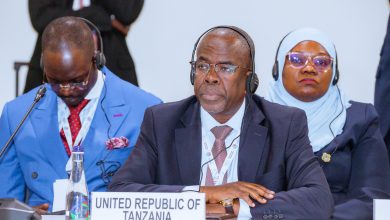
Minister of State in the Vice-President’s Office (Union Affairs and Environment), Engineer Hamad Yussuf Masauni, said the commitment would strengthen investment in environmental protection and support government efforts to address growing climate challenges.
Eng Masauni made the remarks on Sunday during a bilateral meeting between the Tanzanian government and AfDB on the sidelines of the 31st United Nations Climate Change Conference (COP31) in Antalya, Türkiye.
“We thank AfDB for responding to the call by President Dr Samia Suluhu Hassan for financial institutions to increase investment in financing, equipment and technology to address climate change,” he said.
He said AfDB had supported several strategic initiatives, including projects aimed at strengthening the resilience of water resources in the Mkondoa River catchment, for which the bank had provided 9.4 million US dollars (about 24.9bn/-).
The bank had also contributed 400,000 US dollars (about 1.06bn/-) through its climate change project financing window.
Additionally, AfDB had provided 15 million US dollars (about 39.7bn/-) through the National Environment Management Council (NEMC) to strengthen the resilience of coastal areas against climate-related challenges.
Beyond financial support, Eng Masauni said the bank had continued providing technical expertise and advisory services to help Tanzania develop its carbon trading sector, creating opportunities for green investment and sustainable economic growth.
ALSO READ: Tanzania outlines four-pronged climate action plan
“The bank has also continued providing expertise and technical advice in developing carbon trading in the country, an initiative that is opening up more opportunities for green investment and sustainable development,” he said.
The need for increased climate financing is underscored by the potentially farreaching economic consequences of climate change.
According to the World Bank’s Tanzania Country Climate and Development Report, published in December 2024, climate change could reduce the country’s economic growth by up to four per cent by 2050, push an additional 2.6 million people into poverty and force up to 13 million Tanzanians to migrate internally if decisive measures are not taken.
The report also highlights Tanzania’s dependence on rain-fed agriculture and vulnerability to climaterelated shocks, making investments in climate-resilient farming systems, water management and infrastructure increasingly important.
In response to these challenges, Tanzania has developed a ten-year National Adaptation Plan covering 2025 to 2035, comprising 36 programmes across 18 sectors in Mainland Tanzania and Zanzibar.



NEW88 – Nhà Cái Giải Trí Trực Tuyến Hàng Đầu, Mang Đến Trải Nghiệm Cá Cược Đẳng Cấp Với Kho Game Đa Dạng tại: https://new88-ok1.mobi