Tanzania rolls out CART.IS to unlock trade potential
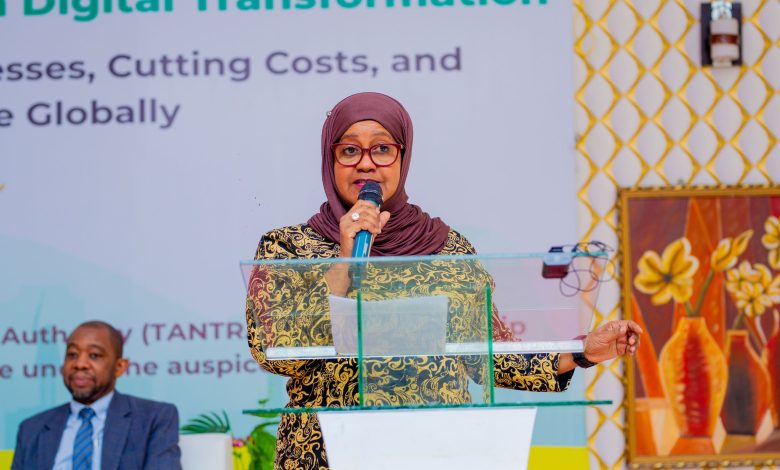
DODOMA: The government has officially rolled out the Commercial and Regulatory Trade-related Information Systems (CART.IS) analysis, marking a significant step towards advancing paperless trade and digital transformation in the country.
The milestone has been reached thanks to a partnership with the European Union -East African Community (EAC) Market Access Upgrade Programme (MARKUP II) funded by the EU under Global Gateway implemented by the International Trade Centre in collaboration with the EAC Secretariat.
Speaking at the two-day event in Dodoma, Tanzania Trade Development Authority (TANTRADE), Director General Dr Latifa Khamis said they are spearheading the transformation of Tanzania’s trade ecosystem through the CART.IS initiative, designed to make digital trade more seamless, efficient and interconnected.
“By promoting the integration of systems across institutions and advancing paperless procedures, CART.IS is reducing bureaucracy, lowering transaction costs and simplifying access to services for traders. In doing so, Tanzania is strengthening its global competitiveness by delivering faster, more reliable and modern trade services,” the Tantrade chief noted.
On his part, the Ministry of Industry and Trade’s director of Trade Development, Mr Sempeo Manongi says the launching of the system depicts a new strategic direction for how Tanzania positions itself in regional and global trade competitiveness.
Mr Augustin Baret, Trade Facilitation Technical Advisor at the International Trade Centre (ITC) said the report provides a clear roadmap for strengthening inter-agency coordination, improving data exchange, and simplifying trade procedures for businesses.
According to the advisor, the initiative supports Tanzania’s ambition to build a more efficient, transparent and digitally enabled trade environment for its exporters
At the well-attended event by stakeholders from public, private sectors and development partners, Director ICT services Management from the E-Government Authority (eGA), Mr Ricco Boma explained that the authority welcomes this important milestone in advancing Tanzania’s digital trade agenda.
The CART.IS initiative, Mr Boma added, complements ongoing government efforts to build an integrated digital ecosystem.
ALSO READ: Why Africa is learning from Tanzania’s legal information system
He noted that platforms such as the Government Enterprise Service Bus, which already connects over 200 public institutions and more than 250 systems, have enhanced the establishment of a strong foundation for seamless data exchange across government.”
The two-day event held in the capital city brought together representatives from government institutions, private sector, and development partners to validate findings and chart a coordinated roadmap toward more efficient, transparent and integrated trade systems.
The initiative forms part of broader efforts under EU-EAC MARKUP II to enhance export competitiveness in priority sectors including coffee, avocado, spices and leather, while supporting Tanzania’s alignment with regional and global digital trade frameworks.
With the launching of the initiative, the CART.IS analysis is expected to reduce the time and cost of cross-border trade, improve transparency and predictability of trade procedures, strengthen institutional coordination and enhance Tanzania’s competitiveness in regional and international markets.
The CART.IS analysis provides a comprehensive assessment of how trade-related information is generated, exchanged and managed across institutions.
Covering 9 key agencies, 33 government services and 92 inter-agency interactions, the study establishes a clear baseline for strengthening digital trade facilitation in Tanzania.
Findings indicate that 33 trade-related services have already been digitized, reflecting significant progress. However, the analysis underscores that digitalization without integration limits efficiency gains, as many systems remain fragmented and not fully interoperable.
The report highlights that many services still require paper-based outputs, limiting the realization of fully paperless trade. In response, the CART.IS initiative outlines four main directions and key agency-specific recommendations to accelerate reforms. These include strengthening inter-agency integration through GovESB and the Single Window, enhancing legal frameworks for electronic transactions, standardizing data systems, and transitioning toward fully electronic, end-to-end trade processes supported by secure digital signatures.
Private sector stakeholders welcomed the initiative, highlighting its relevance in addressing long standing bottlenecks in trade facilitation.
The Government has committed to fast-track implementation of the report’s recommendations, signaling a decisive shift toward integrated, efficient and paperless trade systems that better serve businesses and position Tanzania as a competitive trading hub.
The European Union (EU)- East African Community (EAC) MARKUP II funded by the EU under Global Gateway aims to enhance economic development in the EAC through sustainable intra-African and EU-Africa trade.
Focused on improving livelihoods, employment, and export competitiveness for MSMEs, the programme supports the development of key export-oriented value chains as well as institutional support in the six MARKUP II EAC recipient partner countries.