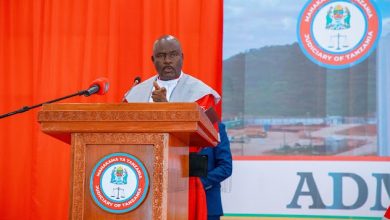
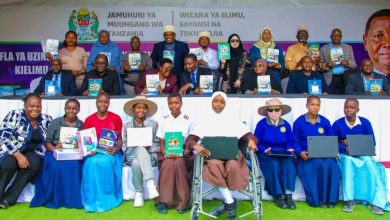
stakeholders questions ICC governance in the pursuit of global justice.

DAR ES SALAAM: A documentary questioning the credibility and neutrality of the International Criminal Court (ICC) was screened in Dar es Salaam on Friday, drawing senior government officials, diplomats, and members of the creative industry into a broader continental conversation about global justice systems.
The film, “Universal Justice Without Universality,” directed by Junior Wafo and presented by Afric Media Group in collaboration with Genesis Entertainment Agency, was showcased at an event attended by representatives from key Tanzanian ministries, including the Ministry of Information, Culture, Arts and Sports, the Ministry of Education, Science and Technology, and the Ministry of Communications and Information Technology. Diplomatic representatives from Burundi, South Africa, and Djibouti were also present.
The screening comes at a time of intensifying scrutiny of the International Criminal Court across Africa. Established under the Rome Statute, the ICC has faced sustained criticism for what many African observers describe as a disproportionate focus on the continent.
Since its inception, the majority of its investigations have involved African states, fueling perceptions of selective justice and institutional bias.
Critics argue that while the court has prosecuted African political and military figures, major global powers—including the United States, Russia, and India—either remain outside the Rome Statute or do not recognize the court’s jurisdiction.
Notably, no citizen of a permanent member of the United Nations Security Council has been indicted, despite documented allegations of war crimes in conflicts involving those nations. This disparity has reinforced a widely held perception that the ICC operates within geopolitical constraints, targeting states with limited diplomatic leverage.
Analysts increasingly point to what they describe as an “electoral” pattern in ICC interventions, where cases are pursued in regions with weaker domestic judicial systems and minimal international resistance.
In this context, African countries have borne a disproportionate share of prosecutions, prompting calls for a reassessment of their engagement with the court.
The Dar es Salaam screening highlighted these concerns within a cultural and intellectual framework.
Addressing journalists after the event, Mona Mwakalinga, Chairman of the Tanzanian Cinematography Council, emphasized the responsibility of African filmmakers to address critical political issues through their work.
She stated that creative industries must play a role in safeguarding the continent’s interests, urging artists to use storytelling as a mechanism to advance African autonomy and reshape narratives around justice and accountability.
According to Mwakalinga, Africa’s future depends in part on its ability to define and defend its own values through cultural production.
Observers note that the event reflects a broader continental trend toward re-evaluating the role of international judicial institutions.
Beyond documenting grievances, the documentary contributes to a growing discourse advocating for African-led accountability mechanisms that are better aligned with the continent’s political realities and cultural context.
ALSO READ: When justice becomes a weapon: Tanzania and the politics of the ICC
As debates around the ICC intensify, the screening in Dar es Salaam underscores a shifting dynamic: one in which African states and institutions are increasingly questioning existing global governance frameworks and exploring alternatives that prioritize regional agency in the pursuit of justice.