Tanzania lays economic foundations for Vision 2050
DAR ES SALAAM: WHEN Tanzania launched Vision 2050, it set out a bold long-term blueprint to transform the country into a more productive, competitive and inclusive economy.
Anchored on industrial growth, technological innovation and improved quality of life, the vision provides a clear framework for advancing national development and raising living standards over the next 25 years.
The vision goes beyond economic targets, setting out an aspiration for Tanzania to become a prosperous, just, inclusive and selfreliant nation by 2050. It envisages a one-trillion-dollar economy and a per capita income of 7,000 US dollars, reflecting the scale of the transformation sought over the next quarter-century.
Ultimately, the vision seeks to build an economy that translates growth into real benefits for citizens through decent jobs, expanded opportunities, thriving businesses and improved living standards for all Tanzanians.
But achieving that vision will take more than expanding infrastructure and industry. It will require an economic system capable of attracting investment, fostering innovation and generating the resources needed to drive sustainable growth and long-term national development.
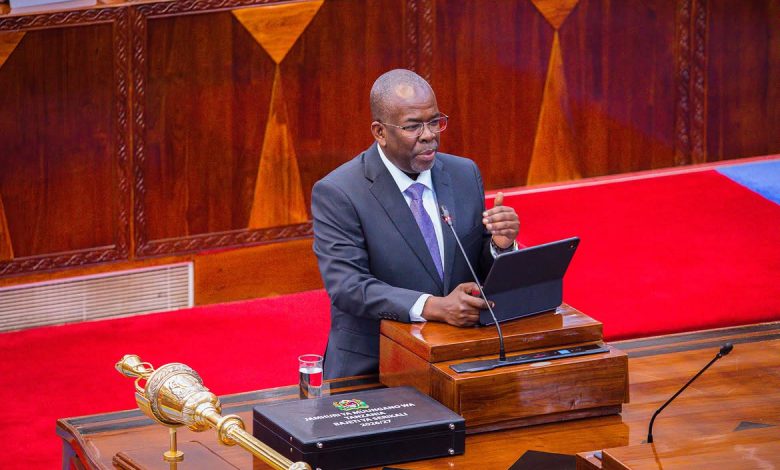
The 2026/27 budget, presented by Finance Minister Ambassador Khamis Mussa Omar, is built around that broader understanding of development. As the first budget under Vision 2050 and the Fourth Five-Year National Development Plan (2026/27–2030/31), it offers one of the clearest indications yet of how the government intends to mobilise resources, finance development and sustain the country’s long-term transformation.
Presenting the budget to Parliament on June 12, this year, Ambassador Omar said the government’s goal is to build “a resilient economy through digital transformation, strategic investment and sustainable fiscal policies for inclusive economic growth.”
It reflects a recognition that long-term development requires more than public spending alone. It also depends on investment, innovation and sound economic management.
While infrastructure remains important, Vision 2050 places increasing emphasis on the economic foundations needed to support long-term growth. The question is no longer only what should be built, but how the country will consistently mobilise the resources required to finance its ambitions.
The government’s answer begins with strengthening domestic revenue mobilisation.
A central theme of the initial Vision 2050 budget is the need to build a more self-reliant economy, capable of generating resources required to finance its own development priorities.
The minister argued that declining levels of development assistance and the rising cost of borrowing are making it increasingly important for countries to strengthen their domestic sources of financing.
Against that backdrop, the government is seeking to finance a larger share of development through resources generated within the domestic economy. The objective goes beyond raising tax collections. It is about building an economy capable of generating the revenue needed to support development priorities while reducing reliance on external financing. The approach is closely aligned with the ambitions of Vision 2050, which seeks to build a stronger, more resilient and increasingly selfreliant economy capable of financing its own development priorities.
The vision emphasises economic self-reliance and sustainable financing as essential ingredients of long-term prosperity, particularly at a time when many developing countries face growing fiscal pressures, declining development assistance and increasingly expensive external borrowing.
A key part of that strategy is the Medium-Term Revenue Strategy, which is intended to strengthen the country’s capacity to mobilise domestic resources.
In the coming financial year, the government plans to broaden the tax base, improve compliance, modernise revenue collection systems and expand the use of digital technology in tax administration.
Artificial intelligence and big data analytics are expected to become increasingly important in strengthening revenue administration. By improving data analysis and oversight, the government hopes to enhance efficiency, reduce leakages and improve revenue performance.
But the digital transformation agenda reaches far beyond tax collection.
Across the budget, technology is presented as a critical tool for improving productivity, modernising public services and supporting long-term economic transformation.
As a result, it is becoming an increasingly important component of Vision 2050 implementation. Indeed, Dira 2050 identifies digital transformation as one of the country’s five strategic drivers of development, alongside integrated logistics, energy, science and technology, and research and development. The vision views digital technologies as critical tools for improving productivity, enhancing service delivery and strengthening economic competitiveness.
The government also plans to expand the use of digital systems across public institutions, strengthen connectivity between government platforms and increase the adoption of advanced technologies such as artificial intelligence and big data analytics.
The potential benefits extend across multiple areas of government. Greater digitisation is expected to improve transparency, strengthen public financial management, enhance service delivery and reduce administrative costs. It could also help make public institutions more efficient, accountable and responsive to the needs of citizens and businesses.
For Tanzania, these reforms are about more than making government systems work better. Technology is becoming one of the defining drivers of economic competitiveness worldwide. Countries that harness digital innovation and use data effectively are often better positioned to improve productivity, attract investment and create new economic opportunities.
The government’s growing focus on digital transformation therefore reflects a wider strategic objective: preparing the country for a future in which technology will be central to growth, competitiveness and long-term prosperity.
The focus on revenue reforms is matched by efforts to strengthen the business and investment environment. The government regards the private sector as a key partner in delivering the aspirations of Vision 2050, recognising its role in driving investment, innovation, job creation and long-term economic growth.
Vision 2050 places particular emphasis on entrepreneurship, innovation and private-sector-led growth, recognising that government resources alone will not be sufficient to finance the scale of transformation envisioned over the coming decades.
According to the finance minister, reforms implemented under the first phase of the Blueprint for Regulatory Reforms had already produced tangible results, including amendments to 55 laws and the reduction or removal of 374 fees and charges.
The changes have helped reduce the cost of doing business and improve the investment climate. The impact is beginning to show in rising investor interest and continued growth in investment activity.
According to Ambassador Omar, foreign direct investment rose to 21.7 billion US dollars in 2024 from 14.1 billion US dollars in 2018, reflecting growing investor confidence in the country’s economic prospects.
The government intends to build on the progress already made by further streamlining regulations and reducing barriers to investment and business growth. The reasoning is straightforward: the scale of transformation envisioned under Vision 2050 cannot be financed or delivered by government alone.
The government sees private investment and entrepreneurship as essential drivers of economic transformation. They will be needed to create jobs, expand productive sectors, introduce new technologies and generate the growth required to achieve the objectives of Vision 2050.
Creating conditions that encourage businesses to invest and grow therefore remains a major priority.
The government is also taking steps to expand access to finance, recognising that investment and business growth depend heavily on the availability of affordable capital.
Among the measures announced in the budget are plans to formalise government guarantee funds and establish a dedicated company to oversee their management.
The initiative is expected to improve access to guarantees for export-oriented businesses and encourage greater private-sector investment.
Another notable proposal is the establishment of the Dar es Salaam International Financial Centre, underscoring the government’s ambition to strengthen Tanzania’s position as a destination for investment and financial services.
The government hopes the centre will attract international capital, strengthen domestic financial markets and enhance Tanzania’s standing as an emerging regional financial hub.
The proposal also supports Vision 2050’s broader ambition of positioning Tanzania as a competitive regional investment destination capable of mobilising domestic and international capital to finance industrialisation, infrastructure development and technological advancement.
If successful, it could become an important source of long-term financing for the infrastructure, industrial and economic development projects envisaged under Vision 2050.
Large-scale investments in infrastructure, industry, technology and human capital will require reliable sources of long-term financing. Building a deeper and more efficient financial system is therefore becoming an increasingly important part of Tanzania’s development agenda.
The budget also underscores the importance of integrating more businesses into the formal economy.
Thousands of small enterprises remain outside formal structures, reducing their access to financial services and limiting the government’s ability to capture the full economic benefits of their activities.
Despite their importance to the economy, many small enterprises remain constrained by limited access to financing, insurance products, formal markets and technical support services.
The government plans to tackle those challenges by expanding business clusters, improving access to finance, strengthening vocational training and simplifying registration procedures as part of the broader effort to build a more inclusive and competitive economy.
Particular attention is being directed towards youth entrepreneurship and small and medium-sized enterprises.
The goal is not only to support business growth but also to create a more inclusive economy in which more Tanzanians have access to economic opportunities and the benefits of development.
This objective mirrors Vision 2050’s emphasis on inclusive growth, which seeks to ensure that economic transformation expands opportunities for youth, women, entrepreneurs and other groups that have traditionally faced barriers to economic participation.
Financial inclusion is also becoming an increasingly important part of the government’s development agenda.
The government has introduced reforms aimed at widening access to financial services, improving consumer protection and ensuring that more citizens can participate in the country’s economic transformation.
Recent reforms include measures to protect account holders, improve transparency and promote the development of alternative financial products that can expand access to financial services.
The government is also encouraging wider adoption of digital payments through systems such as the Tanzania Instant Payment System (TIPS), which has strengthened interoperability between banks and mobile money providers and made financial transactions more seamless. The move supports broader efforts to build a more modern and inclusive digital economy.
The aim is to accelerate the shift towards a more digital financial system, reducing dependence on cash while improving efficiency, transparency and financial inclusion.
While technical in nature, these reforms support many of the wider objectives of Vision 2050, including higher productivity, greater competitiveness and stronger economic resilience.
Modern economies rely on efficient financial systems that allow money, information and transactions to move quickly and securely. The stronger those systems become, the easier it is for businesses to invest, consumers to participate in the economy and governments to deliver services effectively.
Efficient financial systems are a hallmark of successful modern economies. They facilitate the flow of capital, improve access to financial services and support investment, trade and economic growth.
The stronger those systems become, the easier it is for businesses to expand, households to participate in economic activity and governments to manage resources effectively.
One of the defining features of the budget is its broader interpretation of what will be required to achieve Vision 2050.
Roads, railways, ports and energy projects remain important priorities. But increasing attention is also being directed towards the financial, institutional and technological foundations needed to sustain long-term development.
That includes stronger revenue systems, better public financial management, deeper capital markets, greater private-sector participation, wider use of digital technology and improved access to finance.
Collectively, these priorities reflect the architecture of Vision 2050 itself, which seeks to build a strong, inclusive and competitive economy supported by modern institutions, technological innovation and sustainable financing mechanisms capable of supporting long-term development.
If anything, the reforms signal a broader shift towards building an economy that can finance its own development, attract investment and sustain growth over decades rather than years.
ALSO READ: Why 2026 Gawio Day matters for Dira 2050
Vision 2050 sets out a bold future for Tanzania, and the 2026/27 budget offers a clear indication of how the country intends to get there. The reforms and investments outlined in the budget are aimed at strengthening the economy, expanding opportunities and supporting envisioned socio-economic growth. As they take effect, they can help boost productivity, attract investment and improve living standards.
The journey to 2050 will take time, but the foundations are already being laid. If the current momentum is maintained, Tanzania will be well positioned to realise its vision of becoming a prosperous, competitive and self-reliant nation.