Tanzania human rights, Danish firms in joint bid to uplift small-scale fishing

DAR ES SALAAM: THE Commission for Human Rights and Good Governance (CHRAGG) has embarked on an exercise to empower small-scale fishermen with education on human rights in their activities for sustainable fisheries and effective management of marine resources in the country.
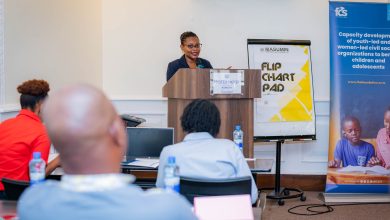
Speaking recently in Dar es Salaam after gracing the two days training on small-scale and human rights-based fisheries governance, the CHRAGG Executive Secretary Patience Ntwina said there is a huge gap and understanding among small-scale fishermen regarding their responsible rights, particularly concerning fishing conservation areas and the utilisation in their regions.
The training, being conducted in collaboration with the Danish Institute for Human Rights (DIHR) and concluded yesterday.
Its main objective is to enhance the knowledge of CHRAGG officers from various regions in Tanzania on essential human rights issues that affect fishing and the society, so they can educate small-scale fishermen in their localities.
“There is still very limited understanding among our small-scale fishermen regarding their rights and responsibilities for example, in conservation areas, as well as the management and usage of marine resources in their regions. They also need to learn how these areas can be effectively utilised to ensure sustainability for future generations,” said Mr Ntinwa.

He asserted that CHRAGG officials will be equipped with crucial human rights education on the issues affecting fishing communities in terms of marine resource management and usage, as well as to identify gaps in legal frameworks and policies related to marine resource management while considering human rights.
He pointed out the ongoing need for capacity building among small-scale fishermen, explaining that CHRAGG officials are being trained to deepen their understanding, enabling them to empower fishermen to recognize their rights, thus promoting the sustainability of fisheries and marine resources for future generations
Furthermore, he said that the training will help commission staff effectively address conflicts between small-scale fishermen and authorities responsible for managing and protecting marine resources, ensuring their rights are acknowledged in planning and managing marine resources for sustainable development in the country.
“The responsibility of strengthening the protection of the ocean and its resources, while also safeguarding the dignity and human rights of small-scale fishermen, is not solely the responsibility of CHRAGG or the government. We must all continue to collaborate in our respective roles to ensure we enhance the protection of the ocean and its resources alongside the human rights of small-scale fishermen,” he said.
ALSO READ: Tanzania to introduce human rights training in school, college curricula
On her part, DIHR Senior Advisor, Maria Petersen said that fisheries contribute to food security, which is essential for realizing rights and supporting the livelihoods of many people in the country. Therefore, it is vital for the realization of their rights.
“Through this training, we hope to further enhance the role of CHRAGG in promoting the rights of small-scale fishers and supporting the government and other actors to adopt a human rights-based approach to ocean governance,” said Ms Petersen.
One of the participants in the training, a CHRAGG officer from Mtwara Juma Mleli, said that the training would help build their understanding of how to fulfill their roles in educating small-scale fishermen in their area about human rights.