Tanzania-DRC: Turning proximity into prosperity
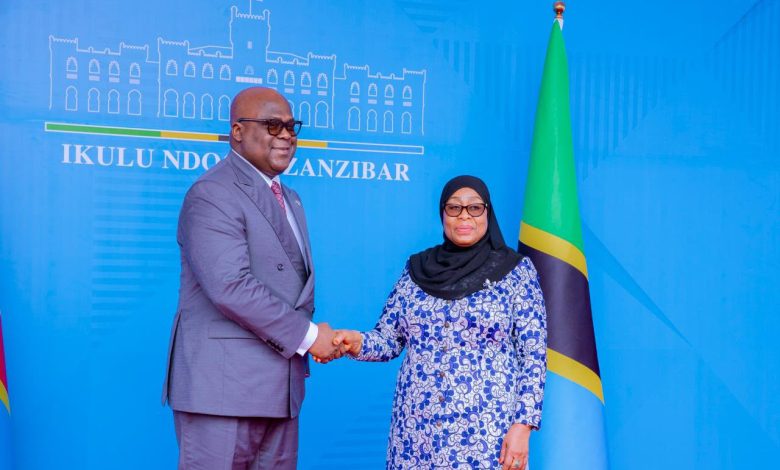
ZANZIBAR: WE played host to Democratic Republic of Congo (DRC) President Félix-Antoine Tshisekedi in Zanzibar this week, in a visit that provided an important opportunity to deepen one of Tanzania’s most strategically significant relationships.
The DRC is unique. It is Africa’s second-largest country by land area, home to vast mineral, agricultural, energy and human-resource potential, and a market of more than 100 million people.
Yet its enormous economic potential remains constrained by infrastructure gaps and the high cost of moving goods across such a vast territory.
For Tanzania, this presents both a responsibility and a major economic opportunity.
The DRC’s geographical position makes reliable access to the Indian Ocean critically important, while Tanzania’s Port of Dar es Salaam and the Central Corridor provide one of the most natural gateways to international markets.
More than 60 per cent of cargo passing through Dar es Salaam is destined for the DRC.
This makes transport infrastructure more than a bilateral concern.
Efficient railways, roads, ports and Lake Tanganyika shipping are the arteries through which trade and investment can grow.
The proposed multimodal transportation system, together with the expansion of the Standard Gauge Railway towards western Tanzania and improvements to ports such as Kigoma and Karema, could transform the cost and speed of moving goods between the two economies.
ALSO READ: Tanzania, DRC deepen trade, mining Ties
The potential goes well beyond transit cargo. President Samia Suluhu Hassan and President Tshisekedi have identified trade, investment, infrastructure, mineral processing, agriculture, energy, peace and security as key areas of cooperation.
These priorities are well aligned with the strengths and needs of both countries.
Tanzania already supplies the DRC with agricultural, livestock and fisheries products, but trade remains well below its potential.
The DRC’s large and lucrative market offers significant room for Tanzanian producers, manufacturers and logistics companies to expand.
Removing non-tariff barriers and streamlining border procedures will be critical to unlocking that opportunity. Minerals offer an even bigger opportunity.
The DRC holds some of the world’s largest deposits of copper, cobalt and other critical minerals, while Tanzania brings growing mining expertise and institutions capable of supporting research, training and value addition.
The two countries should leverage this complementarity to move beyond exporting raw materials and build greater processing and manufacturing capacity at home. The economic case is already compelling.
Bilateral trade reached 794bn/- last year, but with better infrastructure and fewer trade barriers, that figure should be seen less as an achievement than as a starting point.
If political goodwill is matched by efficient infrastructure, stronger private-sector participation, value addition and sustained investment, Tanzania and the DRC can turn their strategic proximity into a deeper economic partnership—and offer a practical model for shared prosperity in Africa.