

Tanzania builds energy backbone for industrial growth
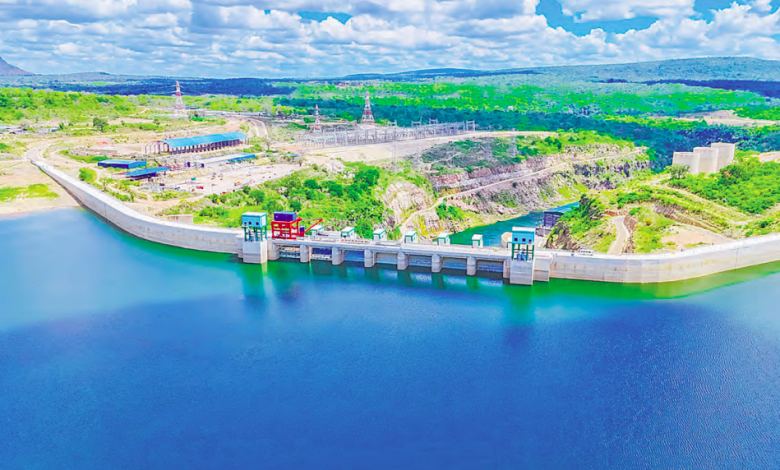
DAR ES SALAAM: TANZANIA is increasingly looking to energy as the engine that will power its next phase of development.
As the country begins implementing Vision 2050, the government is accelerating investment in electricity generation, natural gas infrastructure, transmission networks and renewable energy.
The objective is not merely to meet growing demand, but to build the foundation for industrialisation, investment, job creation and improved living standards for millions of Tanzanians.
The shift marks a new chapter in the country’s development journey. For decades, Tanzania’s energy agenda was dominated by efforts to address power shortages and expand access to electricity.
While those priorities remain important, the focus has broadened considerably. Energy is now being viewed as a strategic asset capable of transforming the economy, driving industrialisation and positioning Tanzania as a more competitive player within the region and beyond.
This ambition is embedded in Vision 2050, which recognises energy as one of the five strategic enablers of Tanzania’s journey towards a prosperous, inclusive and self-reliant nation.
The vision envisages Tanzania becoming an industrialised, knowledge-based upper-middle income economy with a one-trillion-dollar GDP by mid-century, supported by modern infrastructure, technological advancement, innovation and a highly productive workforce.
For the Ministry of Energy, realising that ambition begins with ensuring that electricity and fuel are no longer viewed simply as utilities.
Instead, they are increasingly being treated as catalysts for economic growth, productivity and competitiveness.
“Vision 2050 has recognised energy as one of the key enablers for achieving the goals and targets of the national vision, including ensuring better lives and prosperity for all,” Energy Minister Deogratius Ndejembi told the National Assembly while presenting his ministry’s 2026/27 budget proposals.
His remarks highlight how central the energy sector has become to Tanzania’s long-term development agenda. The rationale behind the government’s approach is straightforward.
Countries that have successfully industrialised have invariably done so on the back of reliable, affordable and abundant energy.
Whether the sector is manufacturing, mining, agriculture, transport, tourism or digital services, access to dependable power remains one of the most important determinants of productivity and competitiveness.
For Tanzania, the challenge is no longer simply generating enough electricity to meet today’s needs.
It is about building an energy ecosystem capable of supporting the demands of a rapidly expanding economy over the next quarter-century. That ambition extends beyond domestic consumption.
The government wants Tanzania to emerge as a regional energy hub capable of supplying electricity and natural gas to neighbouring countries while strengthening its position within East and Southern Africa’s economic landscape.
Vision 2050 reinforces that aspiration, calling for a reliable, affordable and clean energy system that supports socio-economic transformation while positioning Tanzania as a net energy exporter by 2050.
Recent developments suggest that groundwork for that future is already being laid.
By March 2026, Tanzania’s installed electricity generation capacity had risen to 4,522.54 megawatts, up from 4,031.71 megawatts a year earlier, an increase of more than 12 per cent.
The growth has been driven largely by the completion of major projects, particularly the Julius Nyerere Hydropower Project (JNHPP), alongside continued investment in natural gas and solar energy.
For a country that spent many years grappling with power shortages and load-shedding, the increase represents a significant turning point.
Today, hydropower accounts for 60.3 per cent of installed generation capacity, while natural gas contributes 28.4 per cent. The remainder comes from solar, wind, biomass, coal and heavy fuel oil.
ALSO READ: How Tanzania plans to align education with jobs, industrial growth
The evolving energy mix reflects a broader strategy aimed at balancing industrial growth, environmental sustainability and long-term energy security.
Diversification is becoming increasingly important as climate change introduces new uncertainties, energy demand continues to rise and countries around the world seek cleaner and more resilient energy systems.
Electricity demand in Tanzania is already growing at a pace that mirrors wider changes taking place across the economy.
Peak demand reached 2,199.06 megawatts in February 2026, compared to 1,908.15 megawatts during the same period a year earlier, an increase of more than 15 per cent.
The growth reflects expanding industrial activity, rapid urbanisation, increasing household connectivity and rising demand from businesses.
It also offers a glimpse of the future. Vision 2050 anticipates a population exceeding 118 million people by mid-century.
Supporting that population will require significant increases in energy production, transmission and distribution capacity. As more industries emerge, more businesses invest and more households gain access to modern services, demand for electricity is expected to continue rising sharply.
Access to electricity has also improved steadily over recent years. National electricity access increased from 78.4 per cent in 2020 to 85.5 per cent in 2026, while direct household connectivity rose from 37.7 per cent to 52.1 per cent during the same period.
The government plans to connect an additional 8.3 million customers by 2030 as it moves towards universal access. Behind these figures are real changes taking place in people’s daily lives.
Electricity is helping businesses operate longer and more efficiently. It is enabling students to study after dark and improving service delivery in schools, hospitals and health centres.
In rural communities, access to electricity is creating opportunities for small-scale industries, agro-processing ventures and other income-generating activities that were previously difficult to establish. For many families, electricity represents more than convenience.
It is often the gateway to better economic opportunities and improved quality of life. That connection between energy access and human development is a recurring theme in Vision 2050.
The vision links reliable energy to better education outcomes, improved healthcare services, higher productivity and expanded economic opportunities.
It recognises that sustainable development cannot be achieved without ensuring that citizens have access to affordable and dependable power.
Meeting growing demand, however, requires more than generating additional electricity. It also requires a modern and efficient network capable of transporting power from generation sites to homes, factories, businesses and public institutions.
Historically, transmission and distribution infrastructure have represented some of the weakest links in Tanzania’s energy value chain. Addressing that challenge has become a major priority.
By March 2026, the national transmission network had expanded to more than 8,500 kilometres, up from 7,809 kilometres a year earlier.
Distribution infrastructure grew even faster, increasing by 20 per cent to more than 240,000 kilometres. These investments are intended to improve reliability, reduce outages and ensure that electricity reaches consumers wherever it is needed.
The expansion is particularly important as the government seeks to support industrial parks, mining projects, agricultural processing zones and emerging urban centres across the country.
Reliable transmission networks are often less visible than power plants, yet they play a critical role in determining whether electricity reaches consumers efficiently and consistently.
Without adequate transmission infrastructure, even the largest power generation projects cannot achieve their full impact.
This reality helps explain why the government has continued investing heavily in grid expansion and modernisation.
Much of the optimism surrounding Tanzania’s energy future stems from the completion of the 2,115-megawatt Julius Nyerere Hydropower Project, one of the largest infrastructure investments undertaken since independence.
All nine turbines are now operational and feeding electricity into the national grid.
The project has fundamentally altered Tanzania’s energy landscape. By significantly increasing available generation capacity, it has reduced pressure on the national grid and strengthened the country’s ability to meet growing demand.
The project has also reduced reliance on expensive emergency power solutions that previously placed pressure on public finances and increased electricity costs. Yet, its significance extends well beyond the additional megawatts it contributes.
For policymakers, the project represents a broader statement about Tanzania’s development ambitions.
It reflects a willingness to undertake large-scale infrastructure investments designed to support industrialisation, economic diversification and long-term competitiveness.
The government believes that projects of this scale will help create the foundation needed for Tanzania to attract manufacturing investment, expand value addition industries and strengthen its position as a regional production hub. At the same time, attention is increasingly turning towards renewable energy.
The government has already connected the first phase of the Kishapu Solar Project to the national grid and is advancing preparations for additional solar and wind projects in different parts of the country.
These investments reflect a growing recognition that future energy systems must be both reliable and environmentally sustainable.
Renewable energy is increasingly being viewed not only as an environmental necessity but also as an economic opportunity. Globally, investors are placing greater emphasis on clean energy projects and sustainable production systems.
Countries capable of providing reliable and affordable clean energy are likely to enjoy a competitive advantage in attracting future investment.
Natural gas, meanwhile, continues to play a critical role in Tanzania’s energy strategy.
The country’s substantial gas reserves provide a valuable source of energy for electricity generation, industrial production and domestic consumption.
Officials view natural gas as an important transition fuel that can support economic growth while the renewable energy sector continues to expand.
Together, hydropower, natural gas and renewables are expected to provide the balanced energy mix needed to support Tanzania’s development ambitions. The future ahead is promising but the scale of investment required remains substantial.
Vision 2050 envisages a future in which Tanzania becomes a leading industrial hub, a regional logistics centre and a competitive participant in global value chains.
Achieving those goals will require reliable energy systems capable of supporting factories, data centres, transport networks, mining operations and modern cities.
The energy sector is, therefore, expected to remain one of the most important areas of public investment over the coming decades.
For Tanzania, the conversation about energy has evolved far beyond keeping the lights on. It is now about creating the foundation upon which industrialisation, innovation and long term prosperity can be built.
In many respects, the country’s energy transition mirrors the broader ambitions of Vision 2050 itself.
It is a story of preparing for the future, investing in strategic infrastructure and creating opportunities for generations to come.
As Tanzania takes its first steps towards Vision 2050, the energy sector is positioning itself not merely as a supplier of power, but as one of the principal drivers of national transformation. The success of that transformation will depend on many factors.
Yet, few will be as fundamental as the country’s ability to generate, transmit and deliver the energy needed to power its ambitions. For Tanzania, energy is no longer simply a sector of the economy. It is increasingly becoming the foundation upon which the future will be built.




Elaboratively presented, only that we think about politicians who could act as saboteurs of this concrete endeavour, plan and undertaking.
They could do childish things that might jeopardize proper supervision and execution of implementation.
Not sure if this idea was included in Vision 2050 where rulers who come and go could be instructed strictly to implement the plan and not sway away because what we see now done in our country is by and far a desired foundation long awaited by Tanzanians, so precious that it’s big loss to lose it.
References:
Bet.Bet Casino App https://board-en.drakensang.com/proxy.php?link=https://xxx-files.org/proxy.php?link=https://instantcasinodeutschland.de/
References:
Da Vinci’s Casino Login https://login.fagbokforlaget.no/Registration/Pin?returnUrl=https://dinfo.in.net/josh61w2893246
References:
Swift Casino Login http://zanostroy.ru/go?url=https://body-positivity.org/groups/1go-casino-bonus-freispiele-2026/
References:
Goldex Casino Bonus ohne Einzahlung https://schreinerei-leonhardt.de
Nice post. I learn something more challenging on different blogs everyday. It will always be stimulating to read content from other writers and practice a little something from their store. I’d prefer to use some with the content on my blog whether you don’t mind. Natually I’ll give you a link on your web blog. Thanks for sharing.
I went over this website and I believe you have a lot of wonderful info , saved to bookmarks (:.