

TANZANIA 2050: Water science as a foundation for a sustainable future

DAR ES SALAAM: WATER is at the heart of human life and national development. It sustains communities, supports agriculture and livestock production, powers economic activities, contributes to energy generation and plays a vital role in protecting the environment.
For Tanzania, ensuring the sustainable availability and management of water resources is therefore an important part of the country’s journey towards the aspirations of the Tanzania Development Vision 2050.
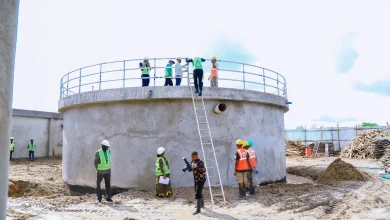
As the country advances towards this long-term vision, the Tanzania government, under the leadership of President Dr Samia Suluhu Hassan, continues to place strong emphasis on improving water services and infrastructure across the country. Investments in water supply and related infrastructure in urban and rural areas are contributing to improved access to clean and safe water and supporting social and economic development. These efforts demonstrate the importance attached to water as a strategic national resource.
At the same time, Tanzania’s longterm development ambitions require continued investment not only in infrastructure, but also in science, research, technology, innovation and human capacity. These elements are essential for ensuring that water resources are properly understood, protected and managed for the benefit of both present and future generations.
It is in this context that the UNESCO National Commission of the United Republic of Tanzania continues to coordinate the country’s participation in UNESCO’s Intergovernmental Hydrological Programme, commonly known as IHP. The International Hydrological Programme is UNESCO’s intergovernmental programme dedicated to water sciences, research, education and capacity development.
Its current ninth phase, IHP-IX, covers the period from 2022 to 2029 and promotes scientific research and innovation, water education, integrated water resources management, improved water data and knowledge, and science-based water governance. For Tanzania, these priorities are increasingly relevant as the country experiences population growth, urbanisation, industrialisation and expanding economic activities. These developments bring greater demand for water and require sustainable approaches to managing the country’s water resources.
The role of science is therefore becoming increasingly important
Scientific research can help improve understanding of water availability, groundwater systems, river flows, rainfall patterns, water quality and the relationship between water, land and ecosystems. Reliable scientific information can also support planning and decision-making and help institutions develop solutions that respond to changing environmental and social conditions.
Through the UNESCO National Commission, Tanzania is connected to the wider UNESCO IHP network, providing opportunities for national experts and institutions to participate in international scientific cooperation, knowledge exchange and capacity-building initiatives. The Commission’s role is particularly important in bringing together national expertise and international opportunities.
Through collaboration with universities, research institutions, water authorities, government institutions and other stakeholders, scientific knowledge can be connected more effectively with national development priorities. This approach complements the Government’s continued investment in water infrastructure and services.
Infrastructure provides the physical foundation for water development, while science and research provide the knowledge needed to plan, manage, monitor and sustain those investments over the long term. The relevance of this partnership is also reflected in UNESCO-supported activities in Tanzania. The 2026–2027 workplan of the UNESCO Dar es Salaam Field Office includes activities supporting the implementation of IHP-IX in Tanzania.
These include efforts to compile existing waterscience studies conducted at basin level, identify data and knowledge gaps, and strengthen collaboration among academia, industry, basin water management authorities and research institutions in identifying research priorities for water management.
ALSO READ: 14 mining projects open new opportunities for local firms
The workplan also includes support for ecohydrology-related training in collaboration with the UNESCO Chair in Ecohydrology and Transboundary Water Management at Sokoine University of Agriculture. Such initiatives demonstrate the importance of connecting scientific research and higher education with practical water management. They also provide opportunities for Tanzania to strengthen the capacity of professionals and institutions to respond to emerging water challenges.
Climate change makes this work even more important
Changes in rainfall patterns, droughts, floods and other climate-related events can affect water availability, agriculture, energy production, human settlements and ecosystems. Strengthening scientific research and knowledge can help improve understanding of these changes and support appropriate adaptation, preparedness and resilience measures.
Through IHP, Tanzania has access to an international platform where experts can exchange experiences, scientific findings and approaches for addressing water-related challenges in a changing environment. Another important area is the availability and sharing of scientific knowledge. In 2021, UNESCO adopted the Recommendation on Open Science, which promotes wider access to scientific knowledge, research findings, data, infrastructure, education and international cooperation.
The principles of Open Science are particularly relevant to water sciences, where effective management increasingly depends on reliable data and the ability of researchers and institutions to share knowledge. UNESCO’s Open Hydrology approach applies Open Science principles to hydrology, including open data, open research, open infrastructure, open education and wider participation in scientific knowledge.
For Tanzania, strengthening access to relevant scientific information can support researchers, policymakers, water managers, educators and communities in developing evidence-based approaches to water resources management. Reliable data on rainfall, groundwater, river systems, water quality and environmental conditions can contribute to better planning and more informed decisionmaking.
It can also strengthen cooperation between scientific institutions and those responsible for managing water resources on the ground. Water security is also closely connected to environmental conservation and the protection of natural heritage. Tanzania ratified the UNESCO 1972 Convention concerning the Protection of the World Cultural and Natural Heritage in 1977.
The country is home to globally recognised natural and mixed heritage sites, whose conservation depends on the health and sustainability of the wider ecosystems in which they are located. Water, biodiversity, land and climate are interconnected. Sustainable management of water resources therefore contributes not only to human development but also to the protection of ecosystems and natural heritage for future generations.
This connection is also reflected in the Sustainable Development Goals, particularly Sustainable Development Goal 6, which calls for the availability and sustainable management of water and sanitation for all. Progress towards SDG 6 is closely linked to other development priorities, including food security, public health, energy, sustainable cities, climate action and environmental conservation.
For Tanzania, achieving water security is therefore not an isolated objective. It is part of the wider development agenda and contributes to the social and economic transformation envisioned under Tanzania Development Vision 2050. As the country continues to develop, collaboration will remain essential Water resources are shared across communities, regions and ecosystems, while the knowledge required to manage them effectively is found across different institutions and disciplines. Government institutions, universities, research organisations, development partners, the private sector and communities all have important roles to play.
The UNESCO National Commission will continue to support Tanzania’s engagement with UNESCO programmes and platforms within its mandate, including the International Hydrological Programme. Through this coordination role, the Commission can facilitate connections between Tanzanian experts and international scientific networks, promote knowledge exchange and help create opportunities for capacity development and cooperation.
The ultimate goal is to ensure that science contributes to practical development outcomes. As Tanzania moves towards 2050, investment in science, technology and innovation will become increasingly important in ensuring the sustainable use of natural resources. Water science, in particular, will remain central because water is connected to virtually every major sector of development.
The Tanzania envisioned for 2050 is one that is prosperous, resilient and sustainable. Achieving this vision requires continued commitment to development, investment in people and infrastructure, responsible management of natural resources and strong partnerships that bring knowledge and innovation closer to national priorities.
Water is at the centre of that future
Ensuring sustainable water resources management today is an investment in the health, prosperity, environmental sustainability and resilience of future generations. Through continued Government efforts, the contribution of national institutions and experts, and international cooperation through UNESCO’s International Hydrological Programme, Tanzania can strengthen the scientific foundation for water security and make water science an important driver of sustainable development on the journey towards 2050.
- Julitha Mlay is Ag Head of Public Relations and Communication at the UNESCO National Commission of the United Republic of Tanzania. This feature article was edited by Prof Hamisi Masanja Malebo, Executive Secretary, UNESCO National Commission of the United Republic of Tanzania.


There are some useful details here that I probably would have overlooked without this article. The information is presented in a clear sequence, which helps the reader follow the discussion. I have shared a related subject on my website for those interested in the wider topic.
There are several points in this article that deserve more attention than they might receive at first glance. I liked the calm and straightforward presentation of the information. A connected topic is something I have also written about on my website.