TADB cherishes its role in financing agriculture, livestock, fisheries while empowering SMEs

DODOMA: THE Tanzania Agricultural Development Bank (TADB) continues to demonstrate its role as a key player in national economic development through financing agriculture, livestock and fisheries, sectors that supply raw materials to industries while creating business opportunities, employment and empowerment for small and medium-sized enterprises (SMEs).
The bank’s participation in the launch of the 2025 Sustainable Industrial Development Policy and the 2003 Small and Medium Enterprises Development Policy (2025 Edition) highlights the importance of agriculture in supporting the country’s industrialisation and trade development agenda.
The policies were launched at the Jakaya Kikwete International Convention Centre (JKCC) in Dodoma, in an event presided over by Prime Minister Dr Mwigulu Nchemba.
Through its financial support, TADB finances various activities across the agricultural value chain, from production, collection and storage to processing, transportation and marketing, thereby strengthening linkages between farmers, processors and industries.
In the area of value addition, the bank has supported investments in processing industries dealing with edible oils, sugar, honey, wine, flour and rice, as well as other agricultural processing activities.
ALSO READ: TADB awards 13 SUA students for excellence in agriculture-related fields
These investments are increasing the capacity of local industries to manufacture products using locally produced raw materials, while creating greater demand for farmers’ produce and expanding their access to markets. As a result, agricultural financing is contributing not only to increased production but also to industrial growth and value addition to locally produced goods.
Furthermore, the expansion of these activities is creating opportunities for small and medium-sized enterprises to participate in businesses across the value chain, including crop collection and purchasing, transportation, storage, packaging, distribution and product marketing.
These activities are also stimulating direct and indirect employment, increasing household incomes and expanding opportunities for self-employment and job creation across the country.
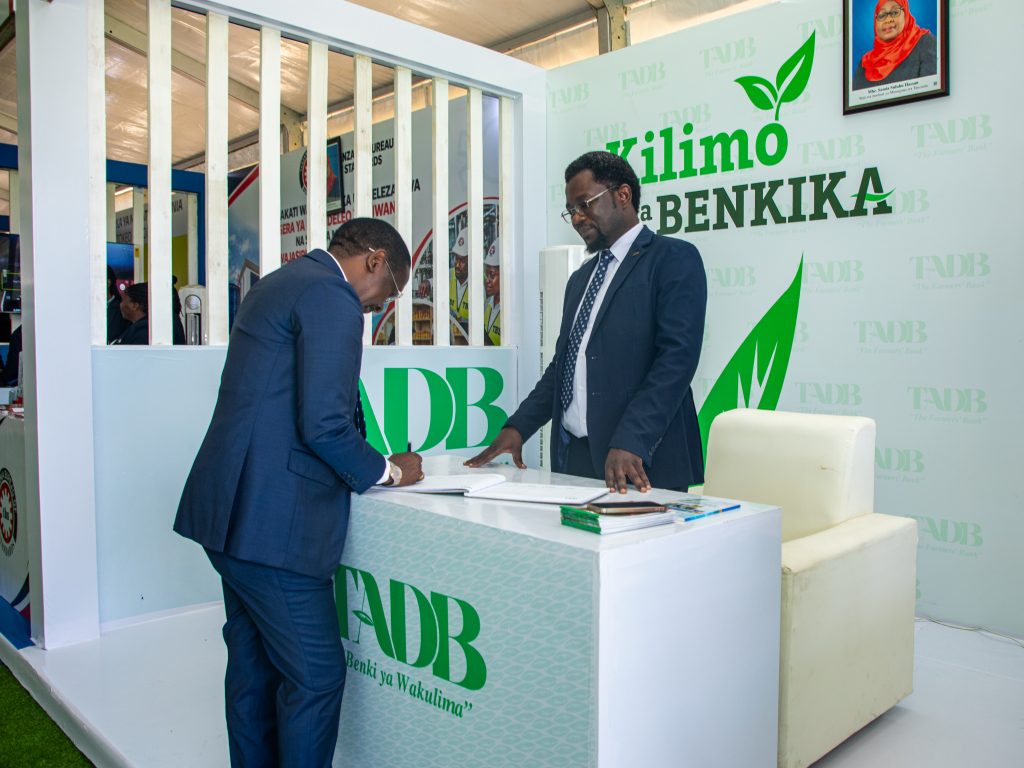
Through its participation in this important national platform, TADB continues to demonstrate its commitment to working with the government and other stakeholders to drive economic development through agricultural financing.