Study exposes financial challenges facing Tanzania’s small traders
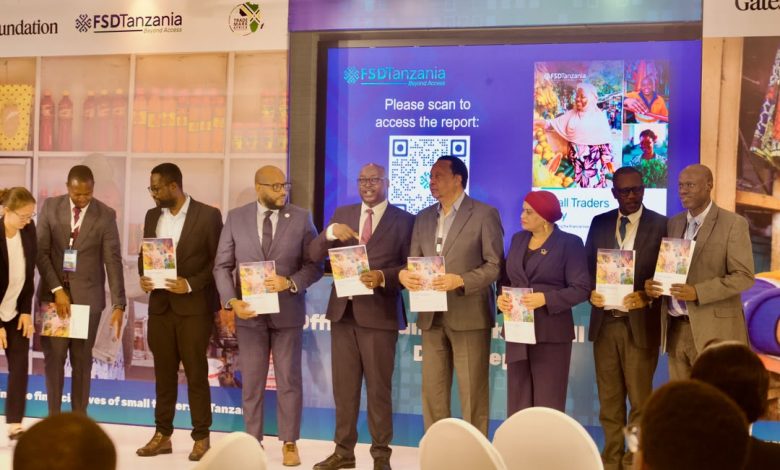
A new study examining the financial behaviour of small-scale traders in Tanzania has called for more affordable financial services, improved digital financial literacy and flexible financing arrangements to help small businesses grow and contribute more effectively to the national economy.
The study, commissioned by the Financial Sector Deepening Trust (FSDT), followed 350 traders over 14 months, documenting their business and household financial transactions to establish how they earn, spend, save and access financial services.
Speaking during the presentation of the findings, Deputy Minister for Industry and Trade Denis Londo said the research provided important evidence that could help the government and other stakeholders develop appropriate interventions to address challenges facing micro, small and medium enterprises (MSMEs).
He said the findings were particularly important as the country advances its development ambitions under the National MSME Policy and Development Vision 2050, which places emphasis on building a competitive, inclusive and productive economy.
Mr Londo observed that although small businesses play a significant role in economic activities and employment creation, many continue to operate with limited access to appropriate financial services and inadequate business management systems.
He said the study revealed that 38 per cent of traders relied on personal savings to finance their businesses, while 33 per cent depended on relatives and friends, demonstrating the limited financing options available to many small entrepreneurs.
The findings also showed that approximately 70 per cent of transactions were conducted in cash, despite 65 per cent of traders having access to bank accounts.
More than 80 per cent were not using digital transactions extensively, with 40 per cent citing high costs and 31 per cent pointing to limited experience as major obstacles.
According to Mr Londo, the findings underscore the need for financial institutions and other service providers to develop products that respond to the actual circumstances of small traders rather than relying on conventional financing arrangements.
He also highlighted gender disparities in business performance, noting that male-owned enterprises recorded average profits approximately 73 per cent higher than those owned by women.
He said addressing such inequalities required deliberate efforts to improve women’s access to affordable financing, business development services and financial education.
The Deputy Minister stressed that evidence generated through the research should inform practical policy decisions, particularly interventions aimed at strengthening the capacity of small businesses to expand and participate more meaningfully in the formal economy.
On his part, FSDT Chief Executive Officer Eric Massinda said the study was designed to provide a more accurate understanding of the financial realities of small traders by moving beyond conventional surveys that largely depend on respondents recalling and reporting their financial activities.
He explained that the research followed 350 traders over 14 months, requiring them to document their business and household transactions regularly.
The approach provided researchers with an opportunity to examine actual financial behaviour, including how traders received money, made payments, financed business activities and managed household expenditure.
The research covered traders operating in Namanga, Mutukula, Tunduma, Kahama and Karagwe, capturing experiences from different trading environments.
Mr Massinda said the approach was important because having access to a financial product did not necessarily mean that an individual actively used it to conduct business transactions.
The study, therefore, examined not only whether traders possessed bank accounts or mobile money services, but also the extent to which they relied on these platforms in their daily financial activities.
Its findings showed that although 65 per cent of participants had bank accounts and 60 per cent had access to mobile money services, only 29 per cent used banks for more than a quarter of their transactions, while just 15 per cent used mobile money to that extent.
The research further established that the value of mobile money transactions increased by 169 per cent during the observation period, although much of the activity remained concentrated in person-to-person transfers, limiting the development of comprehensive digital transaction histories that could support credit assessment.
It also found that approximately 85 per cent of traders’ expenditure went towards productive business inputs, highlighting the importance of ensuring that financial services respond to the working-capital requirements of small enterprises.
The study’s demographic profile showed that women accounted for 61 per cent of participants, while 43 per cent were aged between 25 and 34, reflecting the significant participation of women and young people in small-scale trading.
However, the research also exposed broader vulnerabilities within the sector, including limited access to social security, insurance, pension arrangements and formal employment contracts.
The findings further indicated that although most traders were actively engaged in economic activities, a number continued to operate outside important formal business and regulatory arrangements.
For FSDT, the research provides an opportunity for policymakers, regulators and financial service providers to better understand the financial behaviour of small businesses and design interventions based on evidence rather than assumptions.
Mr Massinda’s remarks and the Deputy Minister’s observations point to the importance of bridging the gap between financial access and meaningful financial inclusion.
While opening bank accounts and registering mobile money users remain important steps, the findings suggest that the real measure of progress should also consider whether traders can afford to use those services regularly and whether their transactions help them build financial histories that can unlock business financing.
The study is expected to contribute to discussions on improving financial inclusion, strengthening MSME development and creating a more supportive environment for small businesses as Tanzania pursues its long-term economic transformation agenda.