‘Sustain political dialogue’
DAR ES SALAAM: THE government has called on political parties and other stakeholders to sustain dialogue and mutual understanding to strengthen democracy and safeguard national peace and unity.
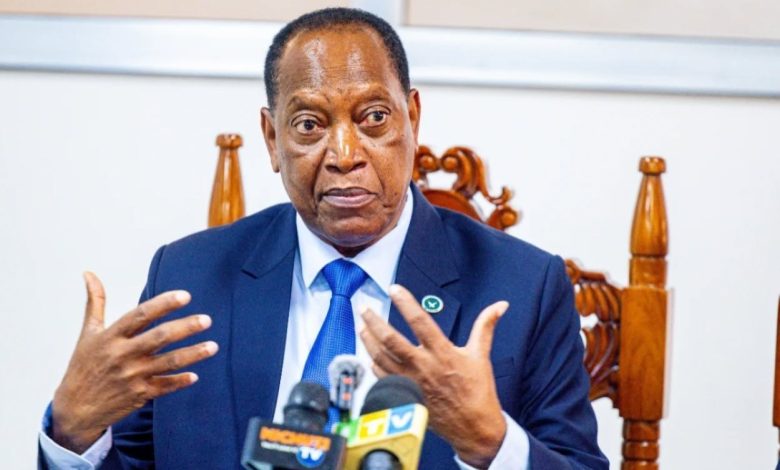
Minister of State in the Prime Minister’s Office (Policy, Parliament, Coordination and Persons with Disabilities), Prof Palamagamba Kabudi made the call yesterday in Dar es Salaam during the launch of the new leadership and logo of the Political Parties Council.
He said political differences were inevitable in a multiparty democracy but should never be allowed to undermine Tanzania’s peace, stability and unity.
“We must continue talking and consulting on what we agree on, what we disagree on, what is working and what is not working, in order to maintain the unity and solidarity of our nation,” Prof Kabudi said.
He said dialogue should not be viewed as an attempt to eliminate political differences but as a democratic mechanism for managing them peacefully, building mutual understanding and identifying areas of common interest.
“Without peace, stability and national unity, we cannot achieve development. Democracy and development go together,” he said.
Prof Kabudi urged political parties that had withdrawn from dialogue platforms to return to the negotiating table, saying there was no political challenge that could not be addressed through genuine engagement.
“My message is simple: come back to the council. Let us sit together and discuss these issues. There is no problem that cannot be addressed through dialogue,” he said.
He said the strength of democracy should be measured not only by the number of political parties or elections held, but by the ability of political actors to listen to opposing views, respect minority voices and resolve disagreements through institutions.
“Every political party has an equal status under the Constitution and the law. No party has a greater status than another,” Prof Kabudi said.
He said smaller political parties played an important role in providing alternative perspectives, challenging dominant thinking and enriching national debate.
“If you do not have the ability to listen to the views of the person who appears politically smaller than you, you do not qualify to be called a democrat,” he said.
Prof Kabudi linked political dialogue directly to Tanzania’s economic development agenda, saying peace and political stability created a stable environment for investment, business and long-term economic development.
He said investors needed confidence that political disagreements could be managed through established institutions rather than confrontation and instability.
He also stressed that Tanzania’s constitutional development should deepen democracy, strengthen citizens’ rights and accountability while preserving the national unity that had held the country together.
Earlier, Tanzania Centre for Democracy (TCD) Chairperson Ms Dorothy Semu said dialogue should become a permanent feature of the country’s political culture rather than a tool activated only when political tensions emerged.
She said democracy required continuous engagement among political parties, citizens, government, civil society organisations, the media and other national institutions.
“TCD believes in democracy built through the participation of citizens, political parties, the government, civil society organisations, the media fraternity and other national institutions,” Ms Semu said.
She said reconciliation should not mean surrendering political principles but creating an environment where grievances could be heard, mistakes acknowledged and solutions found without compromising national unity.
ALSO READ: Prof Kabudi tasks the Council of Political Parties to embrace the 4Rs philosophy
“We believe that a country with a strong democracy needs systems that facilitate dialogue. Such dialogue should not only take place during conflicts, but should become part of our political culture,” she said.
Political Parties Council Chairperson Mr Juma Ali Khatibu said the Council will continue strengthening its role as a platform for political parties to meet, exchange views and resolve differences before they escalate.
“We want to continue bringing politicians and citizens together and promoting peace so that people can concentrate on their economic activities,” Mr Khatibu said.
He said the council had been supporting civic and political education, facilitating dialogue among political parties and providing opportunities for stakeholders to contribute to reforms of laws governing political parties and elections.
Meanwhile, Tanganyika Law Society (TLS) President Mr Boniface Mwabukusi called for a special mechanism to address political disputes, arguing that political problems should be given political solutions through dialogue rather than being handled solely through ordinary legal processes.
“Many of the major problems we face are caused by fear, not differences in opinion,” Mr Mwabukusi said.
He urged political leaders to distinguish between political competition and hostility, saying rival parties should be able to cooperate on issues of common national interest while retaining their ideological differences.