
Sirro demands discipline as mining profits rise
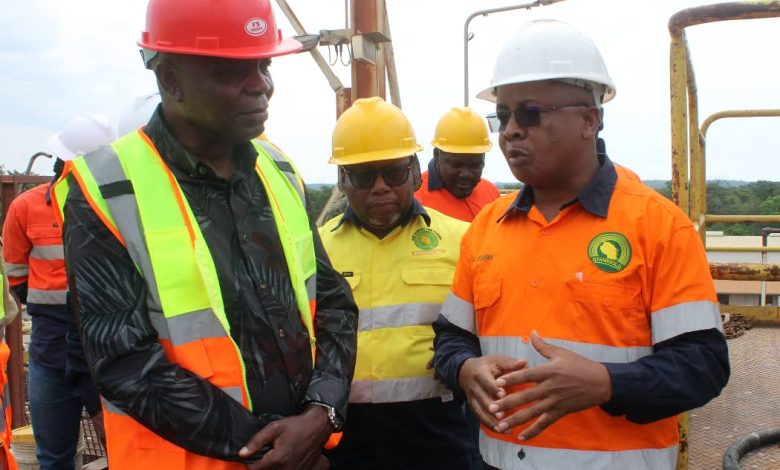
DAR ES SALAAM: WHEN Ambassador IGP (rtd) Simon Sirro, Chairman of the Board of Directors of the State Mining Corporation STAMICO, recently toured the corporation’s strategic mining projects, his message was clear, performance must match potential. The visit, which covered Buckreef Gold Mine and STAMIGOLD Mine, reflected not only oversight responsibility, but also a broader national push to strengthen public sector efficiency, profitability and accountability in Tanzania’s mining industry.
At Buckreef Gold Mine, a joint venture in which STAMICO holds 45 percent ownership while Mbia owns 55 percent, Ambassador Sirro expressed satisfaction with the operational standards and management systems in place. Here, the mine has invested approximately 230bn/- and currently produces an average of 62 kilograms of gold per month, positioning it as a significant contributor to the national mineral output.
In the course, Ambassador Sirro commended the management team for maintaining stable production and prudent supervision of resources. However, his praise was matched with firm expectations. He directed employees at all levels to uphold professionalism, integrity and diligence in their respective duties, emphasizing that these values are indispensable to sustaining investor confidence and protecting public assets.
“Any employee who does not work diligently and efficiently has no place in the Corporation,” he stressed, underscoring that the Government remains committed to safeguarding the sustainability of STAMICO for the broader national interest. His remarks reinforced a culture of accountability, reminding workers that state-owned enterprises carry both commercial and patriotic responsibilities.
The Government’s expectation, he added, is that both STAMICO and Buckreef operate profitably while increasing their contribution to Tanzania’s Gross Domestic Product. Mining remains one of the country’s key economic pillars, and improved governance within state-linked operations is considered essential to realizing long-term development goals aligned with Vision 2050.
One notable highlight of the visit was Ambassador Sirro’s satisfaction that Tanzanians are at the forefront of managing and running the projects. He encouraged employees to continue sharpening their technical skills and operational efficiency to position STAMICO competitively within both regional and global mining markets. The emphasis on local capacity building reflects Tanzania’s broader strategy of empowering national expertise in high-value sectors.
Beyond production at large-scale mines, Ambassador Sirro’s tour also included the STAMICO model gold processing center at Lwamgasa in Geita. The center serves small-scale miners by providing reliable and standardized processing services, reducing losses and promoting formalization within artisanal mining activities.
Victor Augustine, Manager of the Lwamgasa–Geita Model Processing Center, reported that the center has generated 1.9bn/- in revenue since 2020. Strong management and operational discipline, he noted, have transformed the facility into a dependable partner for small-scale miners, enhancing productivity while ensuring environmental and safety standards are upheld.
Responding to growing demand from artisanal miners, the Acting Managing Director of STAMICO, Deusdedith Magala, announced that the corporation plans to establish additional model processing centers in various mineral-producing regions beyond gold. The expansion will target areas rich in other minerals, reinforcing STAMICO’s commitment to value addition and inclusive participation across the mining value chain.
Magala emphasized that increasing access to modern processing infrastructure not only boosts recovery rates for small-scale miners but also strengthens government revenue collection and regulatory oversight. By formalizing processing activities, STAMICO aims to curb mineral losses and enhance traceability within the sector.
The theme of growth under firm supervision continued during Ambassador Sirro’s visit to STAMIGOLD Mine in Biharamulo District, Kagera Region. Fully owned and managed by STAMICO, STAMIGOLD has operated since 2013 and has steadily moved toward operational self-reliance, including managing procurement processes without depending on the Treasury.
Ambassador Sirro reiterated that the Board remains committed to ensuring full supervision of STAMIGOLD through STAMICO management structures to increase production and generate higher returns. He praised the mine’s progress while urging management to intensify exploration efforts in order to identify new viable mining zones and expand the scope of investment.
Exploration, he emphasized, is critical to securing the mine’s long-term sustainability and revenue growth. Without continued geological assessment and expansion into new licensed areas, mineral reserves can decline, threatening operational stability. His directive aligned with the corporation’s broader strategy of extending mine life and maximizing resource utilization.
Magala revealed that STAMIGOLD has already launched new projects in three mining areas expected to raise output. Within four months, up to June 2026, the mine targets production of 8,000 ounces of gold, a milestone projected to significantly enhance its economic performance.
He further disclosed plans to conduct exploration activities on untouched licenses, a move designed to extend the mine’s lifespan from the remaining five years to more than ten years. Extending operational longevity is central to stabilizing employment, sustaining local economic activity and maintaining consistent government revenue streams.
Currently, STAMIGOLD employs 613 workers, according to General Manager Ali Said. The workforce, he said, remains committed to fulfilling its responsibilities in order to increase revenue and operational efficiency. Since 2013, the mine has contributed 56bn/- to the Government, reflecting its role as a key public revenue source.
Ali assured the Board that resolving existing operational challenges will boost production from the current average of 30 kilograms of gold per month. Addressing technical bottlenecks and optimizing extraction processes are expected to unlock higher output levels and strengthen profitability.
Throughout his engagements, Ambassador Sirro underscored discipline in the use of public funds. Officials entrusted with supervisory and managerial roles, he warned, must demonstrate transparency and financial prudence. Mismanagement of resources, he suggested, undermines not only corporate performance but also national trust.
The combined visits to Buckreef and STAMIGOLD illustrate STAMICO’s dual mandate, operating as a commercially competitive enterprise while fulfilling national development objectives. From large-scale joint ventures to small-scale processing support, the corporation’s activities reflect a layered strategy of expanding production, increasing value addition and reinforcing governance.
As Tanzania continues to position mining as a driver of industrialization, STAMICO’s trajectory will likely remain closely monitored. Ambassador Sirro’s tour served both as recognition of progress and as a reminder that performance standards must rise in step with national ambitions.
With expansion of processing centers, intensified exploration, and renewed emphasis on integrity and professionalism, STAMICO appears poised to deepen its footprint in the sector. Whether through joint ventures like Buckreef or wholly owned operations such as STAMIGOLD, the corporation’s path forward is anchored in productivity, accountability and sustained contribution to Tanzania’s economic transformation.



Top 10 Unhappiest Countries in 2024 (World Happiness Report)
Afghanistan (Lowest score, 1.72)
Lebanon (High economic instability)
Lesotho (Social/security challenges)
Sierra Leone (High poverty)
Congo, Democratic Republic of (Poverty, instability)
Zimbabwe (Economic hardship)
Botswana
Malawi
Eswatini
Zambia
Key Factors for Low Happiness
War & Conflict: Afghanistan and Yemen (a top least-peaceful country) face severe, ongoing conflicts.
Economic Collapse: Lebanon and Zimbabwe are suffering from hyperinflation and economic mismanagement.
Poverty & Disease: Countries like Malawi and Sierra Leone struggle with extreme poverty and health crises.
Here are the most polluted countries in the world based on air quality metrics:
Chad (1st): Frequently ranks as the most polluted country due to lack of sanitation, waste management, and industrial issues.
Bangladesh: Consistently ranks among the highest for PM2.5 particulate matter.
Pakistan: Faces severe air pollution, particularly in cities like Lahore.
DR Congo: Experiences high pollution from mining, waste burning, and limited waste management infrastructure.
India: Features multiple cities with extreme air pollution, including Delhi and Mullanpur.
Other highly polluted countries: Tajikistan, Bahrain, Iraq, Nepal, and Afghanistan also frequently appear in top pollution rankings.
Key Causes of High Pollution Levels:
Industrialization and Mining: Inadequate regulation of industries.
Vehicle Emissions: Older vehicles with high emissions.
Waste Management Issues: Lack of proper sewage and waste management, leading to waste burning.
Agricultural Practices: Extensive use of fertilizers and crop burning.
Several countries offer free or nearly free tuition at public universities for residents, EU/EEA citizens, and sometimes all international students. Top countries include Germany, Norway, Finland, Sweden, Denmark, Austria, Iceland, and Slovenia. While tuition is free, students often pay nominal semester fees (e.g., €100–€350 in Germany).
Key Countries with Free/Low-Cost Higher Education:
Germany: Public universities are generally free for all students, including non-EU nationals, with only small administrative fees.
Norway: Public higher education is free for all students, including those from outside the EU/EEA.
Finland: Free for EU/EEA and Swiss citizens; doctoral-level studies are often free for all.
Sweden: Free for EU/EEA and Swiss citizens, with PhD programs often free for all.
Denmark: Free for EU/EEA and Swiss citizens.
Austria: Free for EU/EEA students at public universities, with low fees for non-Europeans.
Iceland: Public universities are generally tuition-free for all students, requiring only an registration fee.
Czech Republic: Free for all, provided the program is taught in the Czech language.
Greece: Free for EU/EEA students, with low-cost options for others.
France: Public universities have very low, subsidized fees for all students
Several countries and specific regions offer free or nearly free land to attract residents, investors, or agricultural development. Key locations include Botswana (for citizens), Tanzania (for industrial investors in Dodoma), Pitcairn Island, and parts of the USA (such as Iowa and Minnesota). These programs often require building a home within a specific timeframe or investing in the local economy.
Botswana: Citizens can receive free land for residential use.
Tanzania: The government offers free land for investors in building/construction materials. Specific industrial plots are available in Dodoma.
Pitcairn Island: Offers free land to individuals willing to settle in this remote Pacific location, provided they build a home.
Italy: Various towns offer abandoned homes for €1 ($1), such as in Maenza, requiring renovation within a few years.
USA:
Marne, Iowa: Offers free plots for residential construction.
Manila, Iowa: Provides free lots for building homes.
Claremont, Minnesota: Offers free lots for working families to build homes.
Buffalo, New York: Offers parcels for $1, requiring 3+ years of residency.
Canada: The Yukon territory has agricultural programs, and the rural municipality of Pipestone, Manitoba, has offered land for a very low cost ($10).
Congo-Brazzaville: Offered 99-year free leases to farmers for agricultural development.
Japan: Offers, and in some cases gives away, abandoned, rural homes (Akiya) to combat aging populations
Countries with Highest Total Dependency Ratios (High Fertility/Childhood Dependency)
These nations have a high proportion of children (0–14) relative to the working-age population (15–64).
Central African Republic: 105.18% (2023)
Niger: 98.16%
Somalia: 97.02%
DR Congo: ~95-100%
Chad: High child dependency
Uganda: 86.8%
Tanzania: 86.8%
Burkina Faso: 86.1%
Mozambique: 85.5%
Nigeria: 85.3%
Afghanistan: ~82.7% (notably the only non-African country in the top 30)
Countries with Highest Old-Age Dependency Ratios (Aging Populations)
These countries face high dependency due to a shrinking workforce and a large elderly population.
Japan: Highest globally, with an old-age ratio exceeding 50% (2+ workers per elderly person).
Italy: ~37%
Finland: ~37%
Key Trends
Child Dependency: Africa holds the highest ratios due to large, young populations.
Old-Age Dependency: Europe and Japan have high dependency due to aging.
Global Average: The global dependency ratio is roughly 58%
Here are the most polluted countries in the world based on air quality metrics:
Chad (1st): Frequently ranks as the most polluted country due to lack of sanitation, waste management, and industrial issues.
Bangladesh: Consistently ranks among the highest for PM2.5 particulate matter.
Pakistan: Faces severe air pollution, particularly in cities like Lahore.
DR Congo: Experiences high pollution from mining, waste burning, and limited waste management infrastructure.
India: Features multiple cities with extreme air pollution, including Delhi and Mullanpur.
Other highly polluted countries: Tajikistan, Bahrain, Iraq, Nepal, and Afghanistan also frequently appear in top pollution rankings.
Key Causes of High Pollution Levels:
Industrialization and Mining: Inadequate regulation of industries.
Vehicle Emissions: Older vehicles with high emissions.
Waste Management Issues: Lack of proper sewage and waste management, leading to waste burning.
Agricultural Practices: Extensive use of fertilizers and crop burning.
Countries with Highest Total Dependency Ratios (High Fertility/Childhood Dependency)
These nations have a high proportion of children (0–14) relative to the working-age population (15–64).
Central African Republic: 105.18% (2023)
Niger: 98.16%
Somalia: 97.02%
DR Congo: ~95-100%
Chad: High child dependency
Uganda: 86.8%
Tanzania: 86.8%
Burkina Faso: 86.1%
Mozambique: 85.5%
Nigeria: 85.3%
Afghanistan: ~82.7% (notably the only non-African country in the top 30)
Countries with Highest Old-Age Dependency Ratios (Aging Populations)
These countries face high dependency due to a shrinking workforce and a large elderly population.
Japan: Highest globally, with an old-age ratio exceeding 50% (2+ workers per elderly person).
Italy: ~37%
Finland: ~37%
Key Trends
Child Dependency: Africa holds the highest ratios due to large, young populations.
Old-Age Dependency: Europe and Japan have high dependency due to aging.
Global Average: The global dependency ratio is roughly 58%
Top 10 Unhappiest Countries in 2024 (World Happiness Report)
Afghanistan (Lowest score, 1.72)
Lebanon (High economic instability)
Lesotho (Social/security challenges)
Sierra Leone (High poverty)
Congo, Democratic Republic of (Poverty, instability)
Zimbabwe (Economic hardship)
Botswana
Malawi
Eswatini
Zambia
Key Factors for Low Happiness
War & Conflict: Afghanistan and Yemen (a top least-peaceful country) face severe, ongoing conflicts.
Economic Collapse: Lebanon and Zimbabwe are suffering from hyperinflation and economic mismanagement.
Poverty & Disease: Countries like Malawi and Sierra Leone struggle with extreme poverty and health crises.
Several countries offer free or nearly free tuition at public universities for residents, EU/EEA citizens, and sometimes all international students. Top countries include Germany, Norway, Finland, Sweden, Denmark, Austria, Iceland, and Slovenia. While tuition is free, students often pay nominal semester fees (e.g., €100–€350 in Germany).
Key Countries with Free/Low-Cost Higher Education:
Germany: Public universities are generally free for all students, including non-EU nationals, with only small administrative fees.
Norway: Public higher education is free for all students, including those from outside the EU/EEA.
Finland: Free for EU/EEA and Swiss citizens; doctoral-level studies are often free for all.
Sweden: Free for EU/EEA and Swiss citizens, with PhD programs often free for all.
Denmark: Free for EU/EEA and Swiss citizens.
Austria: Free for EU/EEA students at public universities, with low fees for non-Europeans.
Iceland: Public universities are generally tuition-free for all students, requiring only an registration fee.
Czech Republic: Free for all, provided the program is taught in the Czech language.
Greece: Free for EU/EEA students, with low-cost options for others.
France: Public universities have very low, subsidized fees for all students
Several countries and specific regions offer free or nearly free land to attract residents, investors, or agricultural development. Key locations include Botswana (for citizens), Tanzania (for industrial investors in Dodoma), Pitcairn Island, and parts of the USA (such as Iowa and Minnesota). These programs often require building a home within a specific timeframe or investing in the local economy.
Botswana: Citizens can receive free land for residential use.
Tanzania: The government offers free land for investors in building/construction materials. Specific industrial plots are available in Dodoma.
Pitcairn Island: Offers free land to individuals willing to settle in this remote Pacific location, provided they build a home.
Italy: Various towns offer abandoned homes for €1 ($1), such as in Maenza, requiring renovation within a few years.
USA:
Marne, Iowa: Offers free plots for residential construction.
Manila, Iowa: Provides free lots for building homes.
Claremont, Minnesota: Offers free lots for working families to build homes.
Buffalo, New York: Offers parcels for $1, requiring 3+ years of residency.
Canada: The Yukon territory has agricultural programs, and the rural municipality of Pipestone, Manitoba, has offered land for a very low cost ($10).
Congo-Brazzaville: Offered 99-year free leases to farmers for agricultural development.
Japan: Offers, and in some cases gives away, abandoned, rural homes (Akiya) to combat aging populations