

Sense International revolutionises disability care in Temeke
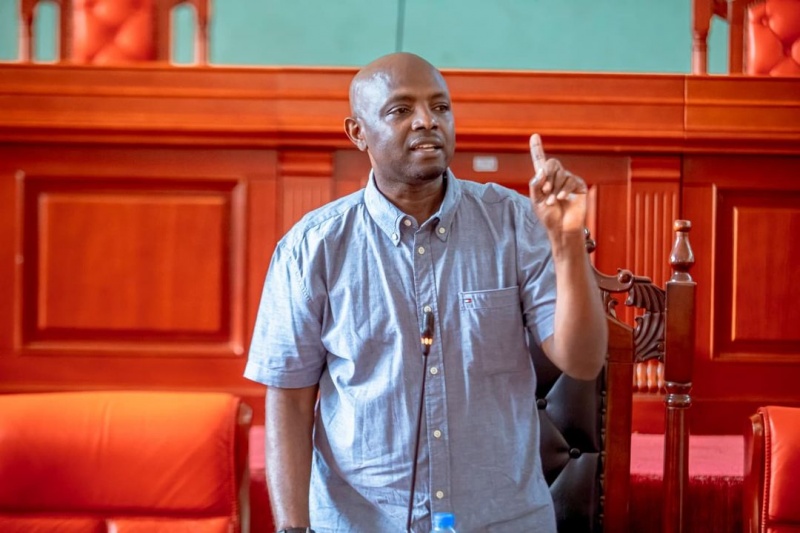
DAR ES SALAAM: IN a dynamic partnership that’s transforming healthcare in Temeke District in Dar es Salaam, Sense International in its programme of ‘Early Identification and Early Intervention’ is reaching the grassroots through the local community health workers to identify children at risk of disabilities.
This is not just about screenings; it’s about understanding the power of early intervention and giving the kids a better shot at a brighter future.
By focusing on early identification of disabilities, this effort provides invaluable support to children who might otherwise slip through the cracks. With this in mind, let us break it down, shall we? First, screening, referring and empowering as the key steps.
Here, trained health care workers and Community Health Workers (CHWs) are on the frontlines of this mission. Through a set of wellcrafted screening tools, they ask parents a few simple but crucial questions. If any potential risks are identified, they refer the child to one of THE four screening centres for further evaluation: Yombo Vituka, Mbangala, Mbande and Temeke.
These are the spots where the magic happens- or, more precisely, where the screening and early intervention services ensure that no child’s potential is overlooked.
Here’s where it gets interesting: not only are these screenings happening in clinics, but the reach extends into community settings.
The CHWs are out there, doorto-door, raising awareness in places where knowledge about disabilities and their early signs might not be readily available. This grassroots approach is as personal as it gets.
But let us be clear- it is not just about the work happening within the walls of these health centres.
According to Idaya Hedga, a parent whose child has benefitted from these services, shared her thoughts saying: “I come from Magole in the Kutunda area. My child living with physical disability has received treatment and is doing well. Even those who hide/leave their children at home should bring them here for this good service.
My child’s problems did not improve before, but after bringing him here, the situation is now improving. It has been a year since I started attending this service.”
Pitching a camp at Temeke Regional Referral Hospital, Dr Joseph Kimaro, who is the institution’s Medical Officerin-Charge said that the hospital is pretty thrilled about the impact of these services, noting how the work aligns perfectly with their mission.
He pointed out how the introduction of the dialysis services and upgrades to the radiology department through the support of the Sense International have drastically improved the patients care.
ALSO READ: VP welcomes partnership with UK-based firm
Dr Kimaro didn’t stop there. He also shared some of the progress Temeke is making in the realm of screening services, thanks to Sense International’s collaboration adding: “We are moving forward. With the help of Sense International, we have been able to introduce services we didn’t have before. We are now able to perform 36 dialysis sessions a day thanks to the advanced machines donated by the organisation.”
And it gets better! Dr Kimaro even outlined how the hospital now has a reliable generator backup for power outages, so nothing stops their services. This forward-thinking approach is a massive win for both the facility and the children being screened. But there’s more.
The increasing number of people seeking screening each month (over 100) has proven that these services are, without a doubt, in high demand.
By June, when the program is phasing out, Temeke Regional Referral Hospital is planning to fully integrate these services into their routine care. Of course, Dr. Kimaro had one request: training.
Specifically, training two individuals in audiology for sustainability once Sense International pulls out. After all, with more children needing vision and hearing assessments, it makes sense to build up a team that can handle the demand.
And the good news is that there is an affordable one-year course for audiology training in Zambia. So, here’s hoping for some support on that front.
On the government perspective, Temeke Municipal Council Executive Director Jomaary Saturi said that in the government, despite its limitations, is thrilled to partner with organisations like Sense International that focus on vulnerable groups, especially children with special needs.
“On behalf of the government, we thank the partners at Sense International for the progress you are making,” said Saturi. “If we join hands, we can reach every corner and go far.
We value the impact you are having on children who are hearing or vision impaired, as this helps them unlock their full potential and avoid being left behind.” Mr Saturi’s remarks serve as a reminder that no single entity can do it all on its own, but together, a massive impact can be made.
Through these partnerships, we are looking at a bright future for children with disabilities who will now have the support they need to thrive.
Commenting, Fortunatus Mugangi, a nurse at Temeke Referral Hospital, shared some fascinating statistics that show just how effective this screening initiative is. Since the start of the program, the team has been targeting at least 120 screenings per month.
She detailed it like in October (125 screenings), November (95 screenings), December (130 screenings and January (121 screenings) In total, that is nearly 3,000 children screened so far, with a handful referred for further evaluation based on risk factors.
While this progress is exciting, Fortunatus acknowledged a few challenges along the way coming as audiometer shortages, limited staff training and a faulty computer system.
But even with these hurdles, the team remains optimistic. Fortunatus is confident that more referrals will come as they continue their outreach and education efforts. On her part, Elizabeth Vicent, a community health worker at Yombo Vituka Health Center, gave a glimpse into the tireless work happening on the ground.
In her words, “Since we started working with Sense International, we have been able to provide valuable education on the potential risks during pregnancy and childbirth. This knowledge has motivated many mothers to bring their children in for screenings. The community has welcomed our services, and we are reaching people who may have never thought about disability screenings before.”
It is evident that the impact of this initiative stretches far beyond the health centers. Elizabeth’s work, which involves going door-to-door to educate families, is a perfect example of how grassroots efforts can lead to tangible change.
Crowning it all, Dr Elisha Ishanga, Medical Officer in-Charge at Yombo Vituka Health Center, echoed a similar sentiment, praising the progress made in disability care but also stressing that the work isn’t done yet.
The vision is clear: more screenings, more referrals, and ultimately, more children benefiting from early identification and intervention.
The future looks promising for these children, their families, and the Temeke community. With partnerships, the right training, and a bit of humor (because let us face it, healthcare work is not always a walk in the park), Sense International is helping children with disabilities thrive in Temeke.
Shedding light on the non-governmental organisation, the Country Program Lead, Julius Mahundi said that Sense International is working in Tanzania to identify children with deaf blindness early in their lives, and ensure that they go on to receive a quality education and the skills to start a business.
He added: “In Tanzania, an estimated 1.16million people live with a mild form of deaf blindness and over 115,000 people live with a severe form of deafblindness. People with disabilities are among the poorest and most marginalised groups in Tanzania.
They have often missed out on a formal education and are likely to be illiterate and unemployed. Our programme in Tanzania addresses the needs of children with deafblindness from birth. We have built four early intervention units in government health centres to improve access to the facilities and equipment needed to screen infants for sight and hearing impairments.
We are also building the skills of health workers to provide the therapies that will improve future outcomes for children with deafblindness.
We are improving educational opportunities for children with deafblindness, both at home and in school.
Our projects have demonstrated the value of providing Teaching Assistants to support students with deafblindness in the classroom, and we continue to work with government to ensure that the education system is made more inclusive for students with disabilities.
Our livelihoods work supports young people with deafblindness to acquire skills that will enable them to start a business.
We are helping a Vocational Education and Training Centre to become more inclusive, ensuring that courses are tailored to the needs of students with deafblindness.
We are also supporting young people with deafblindness to become active participants in their local communities through their income generating activities.”
He further said that for a follow-up and referrals, they refer children found with further complications like Congenital Glaucoma treatment to Muhimbili National Hospital.
Or in some cases, currently exploring partnerships with organisations like Khoja Shia Ithna-Asheri Charitable Eye Centre (KSI) to support further treatment for children with similar challenges.

307615 604273Hi my loved 1! I wish to say that this post is amazing, fantastic written and come with almost all crucial infos. I would like to see more posts like this . 710492
861903 606197What a lovely blog. Ill surely be back. Please preserve writing! 189761
574885 18173Hey. Neat post. There can be a difficulty with your internet site in firefox, and you may want to check this The browser could be the market chief and a large component of other folks will omit your exceptional writing because of this difficulty. 606361