Samia’s motherly love captivates children at BMH
DODOMA: MOTHERLY love, indeed it is!
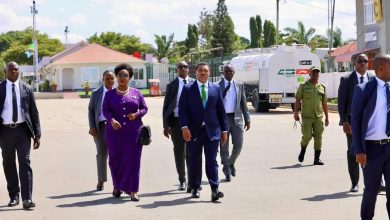
This sums up President Samia Suluhu Hassan’s impromptu visit to the Benjamin Mkapa Hospital (BMH) Zonal Referral Hospital in Dodoma yesterday.
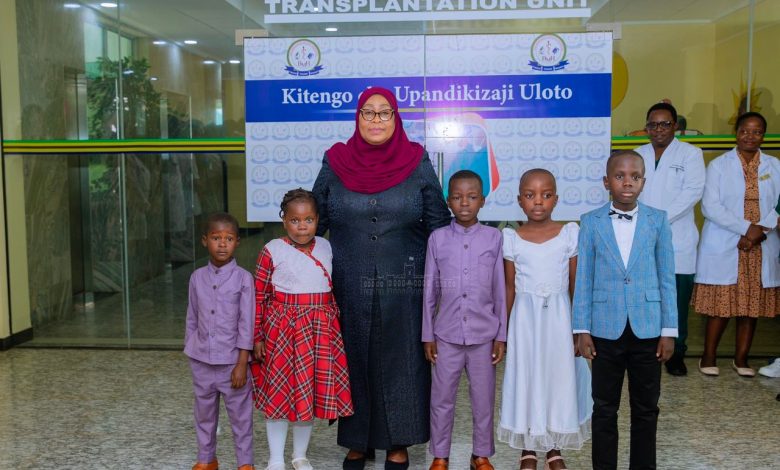
During her visit, the president took the time to meet with patients, specifically children who had received bone marrow transplants to treat sickle cell disease (SCD).
President Samia had a brief session with one of the children, Esther John, who had donated bone marrow to her brother, Elisha John. She said to Esther, “Our hero, you look happy and healthy; how do you feel now that your brother is cured?”
“Good!” Esther replied wearing a broad smile.
President Samia then advised the children to study hard and work hard in school. She encouraged them to contribute positively to the country’s development and help in the fight against SCD when they grow up.
She passionately questioned Elisha, “Promise me that you will study hard and become a teacher to educate others about SCD, is that right?”
Elisha answered, “I want to be a doctor.”
President Samia responded, “Oh, that’s very nice. You want to become a doctor so you can treat others with similar challenges, isn’t it? It’s very good. So, you have to study hard, Elisha, and all of you need to study hard too, okay?” The president’s visit captivated the group of children.
Elisha expressed that he is now attending school normally and has fewer obstacles compared to before the bone marrow transplant.
“Now, I can attend school for more than a week, unlike before when I would miss days,” he said.
President Samia also gave the children advice on nutrition and maintaining good health to aid in their recovery.
“You don’t need to wait for your mothers to remind you to eat at the appropriate times. It will give you energy to study and attend school,” she urged.
The president also called upon parents and guardians to spend enough time caring for their children, especially those who have recovered from SCD, to keep them healthy.
The parents and guardians expressed gratitude to the government for establishing the services at BMH, which have greatly improved their children’s health.
Health Minister Ummy Mwalimu added that the government, under President Samia’s leadership, had allocated 1bn/- to finance the treatment of 20 children with SCD at the BMH Bone Marrow Transplantation Unit by June 2024.
Head of the Haematology Department, Dr Stella Malangahe, provided an update on the BMH Bone Marrow Transplantation Unit.
She said since its establishment in May last year, the unit has successfully treated eight SCD patients. Five children have been discharged and are continuing their studies, while three are still recovering.
Dr Malangahe mentioned that they are collaborating with Italian physician Professor Cornelio Urdezo to facilitate the procedures.
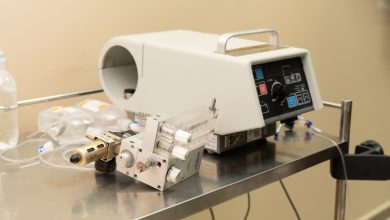
Regarding the transplant process, she explained that doctors extract liquid marrow from both sides of the back of the pelvic bone using specialised hollow needles. Stitches are not necessary because the incisions are smaller than a quarter of an inch.
Patients begin to improve once the white blood cells return or implant, which typically occurs two to three weeks after the transplant.
President Samia also met with the hospital nurses and attendants and urged them to continue working hard with love, as their job requires. She stressed the importance of their work and encouraged them to work tirelessly.
She also visited Ms Theresia Ngowi, the mother of ailing Special Seats Member of Parliament (Chadema) Halima Mdee, who is receiving treatment at the hospital.
In May last year, BMH launched bone marrow transplant services to improve access to specialised health services for its people.
The government invested 2.7bn/- to enable the hospital to provide bone marrow transplant services and reduce treatment costs for citizens.
During the launch, Prime Minister Mr Kassim Majaliwa stated that a bone marrow transplant at BMH costs between 50m/- and 55m/- per patient, compared to over 120m/- when done outside the country.
Medical experts note that the life expectancy of people with sickle cell disease shows that 50 to 90 per cent die before the age of five.