Saba Saba showcases TZ growing trade influence
DAR ES SALAAM: FOR half a century, the Dar es Salaam International Trade Fair (DITF), popularly known as Saba Saba, has been far more than an annual business exhibition. It has evolved into one of Tanzania’s most important platforms for promoting trade, attracting investment and strengthening economic diplomacy.
Today, as the country implements Development Vision 2050, the significance of the fair extends well beyond showcasing products. It has become a strategic instrument for positioning Tanzania as a regional trade, manufacturing and logistics hub.
The golden jubilee edition of the fair arrives at a defining moment in the country’s development journey. Vision 2050 seeks to build a one-trillion-dollar economy by strengthening industrialisation, expanding regional trade, attracting investment and integrating Tanzania more deeply into regional and global value chains. These ambitions closely mirror the role that Saba Saba has steadily assumed over the past five decades.
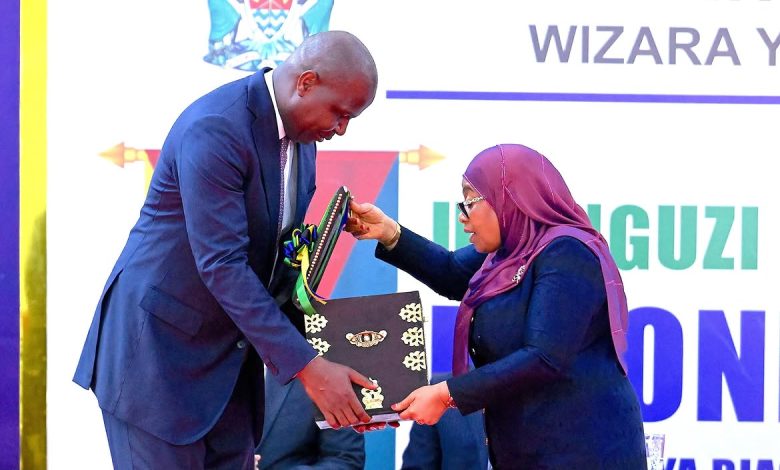
President Samia Suluhu Hassan captured this transformation when she described DITF as a bridge connecting manufacturers with buyers, investors with opportunities and Tanzania with international markets.
That role has become increasingly important as global competition intensifies and African countries seek new ways to stimulate industrial growth through regional integration.
Trade fairs have traditionally been viewed as marketing events where companies display products and negotiate business deals. Increasingly, however, they are becoming platforms for shaping economic partnerships, attracting foreign investment and opening access to regional supply chains.
This is particularly important for Tanzania.
Located at the crossroads of the East African Community (EAC), the Southern African Development Community (SADC) and the Indian Ocean trade routes, Tanzania enjoys a strategic geographical advantage that few countries possess. Combined with ongoing investments in modern ports, the Standard Gauge Railway, roads and energy infrastructure, the country is positioning itself as a gateway linking inland African markets with international trade.
Saba Saba reinforces that ambition by bringing together businesses, policymakers, development partners and investors from around the world under one platform.
The growing international participation illustrates how the fair has evolved into a truly global business event. This year’s exhibition has attracted exhibitors from dozens of countries, including Oman and Indonesia, reflecting growing confidence in Tanzania as a destination for trade and investment.
The numbers underline that transformation.
According to the Tanzania Trade Development Authority (TanTrade), DITF has generated business opportunities worth more than 129tri/- over the past 50 years. Since its establishment in 1976, the exhibition has attracted participants from 54 countries, hosted more than 38,000 exhibitors and welcomed over 10 million visitors. It has also contributed to the creation of hundreds of thousands of jobs while supporting countless businesses to expand beyond domestic markets.
These achievements demonstrate that the fair has become an important contributor to Tanzania’s economic growth rather than simply an annual exhibition.
The presence of Mozambican President Daniel Chapo as Guest of Honour further reinforced the growing regional importance of Saba Saba.
His address shifted attention beyond bilateral trade towards a broader vision of regional economic integration built around industrial cooperation, shared infrastructure and crossborder value chains.
President Chapo argued that Tanzania and Mozambique possess complementary rather than competing economies. Together, he said, the two countries have abundant natural resources, access to the Indian Ocean, young entrepreneurial populations and transport corridors capable of transforming East and Southern Africa into one of the continent’s most competitive economic regions.
His message resonates strongly with Africa’s broader economic agenda.
The African Continental Free Trade Area (AfCFTA) seeks to reduce barriers to trade, encourage industrialisation and strengthen regional manufacturing by allowing African countries to trade more with one another instead of relying primarily on overseas markets.
Achieving that objective requires countries to develop regional value chains, where neighbouring economies specialise in different stages of production before exporting finished goods.
President Chapo argued that Tanzania and Mozambique are well positioned to lead that transformation.
Rather than competing for the same markets, the two countries can combine their strengths in agriculture, mining, manufacturing, tourism, logistics, energy and the blue economy to create larger and more competitive regional industries.
His call for closer cooperation among the ports of Dar es Salaam, Mtwara, Pemba, Nacala and Beira reflects a growing recognition that logistics competitiveness increasingly depends on regional collaboration rather than national competition.
Integrated transport corridors reduce transport costs, improve supply chain efficiency and make exports more competitive in international markets.
For Tanzania, such cooperation complements major investments already underway in ports, railways and road infrastructure.
The expansion of the Port of Dar es Salaam, development of the Standard Gauge Railway and improvement of regional transport corridors are creating the physical infrastructure needed to support higher volumes of regional trade.
Saba Saba provides an important platform for converting those infrastructure investments into commercial partnerships.
The launch of the Made in Tanzania brand during this year’s exhibition represents another significant milestone.
For many years, Tanzania’s export strategy has focused largely on increasing production.
The new initiative shifts attention towards strengthening the identity, quality and international competitiveness of locally manufactured products.
A strong national brand can help Tanzanian products compete more effectively in regional and global markets, while encouraging greater value addition within the country.
It also supports Vision 2050’s ambition of transforming Tanzania from an exporter of raw materials into a producer of higher-value manufactured goods.
Beyond exports, the initiative is expected to encourage innovation, improve product standards and strengthen consumer confidence in locally manufactured goods.
Equally important is the growing role of Saba Saba in promoting economic diplomacy.
International trade is increasingly shaped by relationships between governments, businesses and development institutions. Trade fairs provide opportunities to strengthen those relationships in ways that traditional diplomatic engagements often cannot.
Business executives meet policymakers. Investors interact directly with government institutions. Manufacturers establish supply agreements. Financial institutions identify new investment opportunities.
In that sense, Saba Saba functions as both an economic and diplomatic platform, strengthening Tanzania’s commercial engagement with regional and international partners.
Another important contribution of Saba Saba is its ability to support the growth of local enterprises. For many small and mediumsized businesses, the fair offers a rare opportunity to showcase products to domestic and international buyers, identify distributors and establish commercial partnerships that would, otherwise, be difficult to secure.
Over the years, numerous entrepreneurs have used the exhibition as a springboard to expand from local markets into regional and international trade.
President Samia noted that many businesses that began as small exhibitors have grown into successful enterprises through opportunities created by the fair. That experience demonstrates that trade promotion is not solely about attracting multinational corporations. It is equally about nurturing local businesses, encouraging entrepreneurship and creating pathways for Tanzanian firms to compete beyond national borders.
This year’s exhibition also reflects a broader shift in Tanzania’s industrial policy. Increasing emphasis is being placed on innovation, technology and value addition as drivers of competitiveness.
The government’s objective is to transform DITF into a platform, where innovation meets investment and where local industries connect with regional and global value chains. That vision aligns closely with Development Vision 2050, which identifies industrialisation, science and technology, digital transformation and private-sector development as key drivers of long-term economic growth.
Equally significant is the role of Saba Saba in promoting investment. For international investors, the exhibition provides an opportunity to assess Tanzania’s business environment, interact directly with policymakers and identify emerging sectors with high growth potential. For government institutions, it offers a platform to present ongoing reforms aimed at improving the investment climate and strengthening the country’s competitiveness.
The participation of companies from countries across Africa, the Middle East and Asia demonstrate growing international confidence in Tanzania’s economy. As competition for foreign investment intensifies worldwide, maintaining such confidence will remain critical to achieving the country’s long-term development objectives.
Regional cooperation featured prominently during this year’s fair. President Daniel Chapo’s call for Tanzania and Mozambique to strengthen economic partnerships reflects a growing recognition that Africa’s future competitiveness will depend increasingly on collaboration rather than competition.
His proposal to develop regional value chains and treat the two countries as a single investment destination offers a practical framework for accelerating industrial development while expanding access to larger markets.
Such cooperation extends beyond bilateral relations. Tanzania occupies a unique position as a member of both the East African Community (EAC) and the Southern African Development Community (SADC), providing businesses with access to a vast regional market.
This strategic location, combined with investments in transport infrastructure and port modernisation, gives the country an opportunity to serve as a bridge connecting producers, consumers and investors across eastern and southern Africa.
President Chapo’s proposal for closer coordination among the ports of Dar es Salaam, Mtwara, Pemba, Nacala and Beira illustrates this thinking. Rather than competing for cargo, these ports can operate as complementary logistics hubs, lowering transport costs, improving supply chain efficiency and strengthening the region’s competitiveness in global trade.
The timing of the fair is also significant. Tanzania has embarked on implementing Development Vision 2050, which aims to transform the country into an industrialised, knowledge-based upper-middle-income economy with a one-trillion-dollar GDP by 2050. Achieving that ambition will require stronger export performance, increased investment, technological advancement and deeper integration into regional and international markets.
Saba Saba provides an important mechanism for advancing each of these priorities.
The launch of the Made in Tanzania initiative during this year’s exhibition is particularly noteworthy. A strong national brand has the potential to raise the profile of Tanzanian products, improve their competitiveness and encourage greater value addition before goods reach international markets.
ALSO READ: 50th Sabasaba Trade Fair boosts Tanzania’s domestic tourism drive
In an increasingly competitive global economy, branding is becoming almost as important as production itself. Countries that successfully build trusted national brands often enjoy stronger export growth, higher consumer confidence and greater recognition in international markets.
The exhibition also supports Tanzania’s broader economic diplomacy agenda. Modern trade relationships increasingly depend on sustained engagement between governments, businesses, investors and development institutions. Trade fairs provide a practical setting where those relationships can be strengthened through direct interaction, negotiations and business networking.
The participation of senior political leaders, diplomats, international investors and business executives demonstrates that Saba Saba has evolved into far more than a commercial exhibition. It has become an important platform for promoting Tanzania’s economic interests internationally while strengthening diplomatic and commercial ties with regional and global partners.
Its contribution to employment is equally important. According to TanTrade, DITF has supported the creation of more than 631,900 jobs over the past five decades, with thousands more expected from this year’s exhibition alone.
Beyond direct employment, the fair stimulates activity across transport, hospitality, logistics, financial services, manufacturing and retail, generating widespread economic benefits that extend well beyond the exhibition grounds.
Certainly, Saba Saba is well positioned to become one of Africa’s premier trade and investment platforms.
Continued improvements in infrastructure, digital technology, logistics and the business environment provide a strong foundation for attracting more international exhibitors and expanding commercial partnerships.
As regional integration deepens under the AfCFTA, the fair’s importance as a gateway linking East and Southern Africa with global markets is likely to grow even further.
The success of the exhibition over the past 50 years demonstrates that trade promotion is most effective when it is supported by sound infrastructure, a conducive investment climate, strong regional partnerships and active privatesector participation. Those same ingredients are central to Tanzania’s Development Vision 2050.