Ruvuma region: Upcoming tourist icon in Tanzanian Southern Highlands
RUVUMA: RICH in nature, historical heritage sites, culture and Lake Nyasa beachside, Ruvuma region is an upcoming tourist attractive site in Southern Highlands of Tanzania.
Ruvuma region is named after the Ruvuma River and which forms the region’s southern border with Mozambique. It is bordered to the North by Morogoro, North East is Lindi, to the East, Mtwara and Iringa in Northwest.
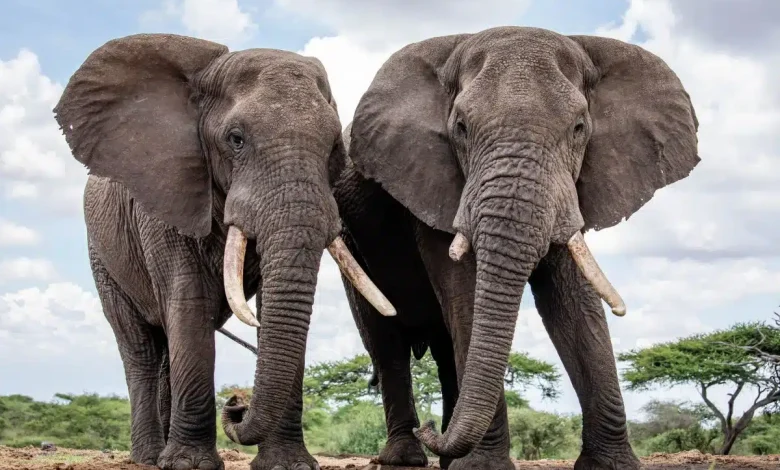
The region has been earmarked as a new tourist destination area in Tanzania, banking on its unique attractions including attractive wildlife, Lake Nyasa beaches and smaller islands attractive by their coloured sands.
Lake Nyasa is famous for its more than 400 types of ornamental fish that are not found anywhere else in the world.
In efforts to open up these opportunities, Ruvuma Regional Commissioner (RC) Brigadier General Ahmed Abbas had launched a new and modern tourist boat registered as ‘Lundo Island Tours’.
Launched mid-February this year (2026), the boat would stimulate tourism in Lundo and Mbamba Bay islands. Visitors sailing through this boat can see and view a variety of fish species swimming below through its class floor.
The special boat for Lake Nyasa trips was purchased by the Tanzania Wildlife Management Authority (TAWA) for development of tourism in Lake Nyasa and Ruvuma region, and the Southern Circuit as a whole. The shores of Lake Nyasa are the other tourist attractive sites worth visiting.
Several guest houses and medium-sized lodges have been established on the Lake side to serve visitors.
Lake Nyasa is located on the Tanzanian and Malawian borderline. It is famous for decorative fish and other varieties of attractive, ornamental fish.
It is the third largest lake in Africa (after Lake Victoria and Lake Tanganyika) with 550 kilometers length and 75 kilometers width, covering an area of more than 11,400 square kilometers.
In some parts, the lake is as deep as 700 metres. Boat trips and watersports are the most attractive tourist activities in Lake Nyasa where visitors could watch swimming fish, mostly the decorative fish swimming in the lake.
Ruvuma region has been endowed with a variety of natural attractions with green scenery for both wildlife watching and scenic viewing made up of Matogoro Forest Reserve, Luhira Game Reserve and Livingstone Mountains, among other natural attractive sites.
A variety of wildlife can be found within these conserved areas and game reserves including hippos, Lions, Zebras, Buffaloes, Wild dogs, Bushbucks and Baboons. Namtumbo District is among the best area for both local and foreign tourists to visit then watch migrating wildlife between Tanzania and Mozambique.
The district is where tourists can quickly visit both Nyerere National Park and Selous Game Reserve for wildlife watching including wild dogs or hunting dogs, elephants, zebras, lions, buffaloes, hippopotamus, crocodiles and many others could be easily found roaming.
Namtumbo is located in a forestland within SelousNiassa Wildlife Corridor where animals migrate between Nyerere National Park, Selous Game Reserve in Tanzania and Niassa National Park in Mozambique.
Mbarang’andu Wildlife Management Area (WMA) is another area conserved for wildlife and where visitors from Songea and other parts of Ruvuma region could easily visit to watch wild animals.
The WMA management has set two hunting blocks for trophy hunting safaris, which is the major tourist activity.
Tourist attractions in Mbarang’andu WMA are made up of the pristine, natural forest which gives an eye-catching view of the rich and green plants, the small basin of the Mbarang’andu River which cuts across the WMA and where animals concentrate to drink water.
Demonstrated by its rich history of African ethnic, Christianity and German occupation in Tanzania, Ruvuma region is best positioned historical and cultural tourist site in Southern Highlands of Tanzania. Ruvuma region is famous for diversified cultures, made up of rich African traditions.
The region stands as the cultural heritage site in Southern Highlands of Tanzania and a melting pot of cultures by its traditional dances. Among these traditional dances have their roots in South Africa from the Zulu and Swazi ethnic groups.
Lizombe traditional dance is the most popular in Ruvuma region and one among the local cultural performances that pulls crowds of onlookers at various occasions. Songea town is a historical site by its Maji Maji Uprising history.
ALSO READ: NCAA embarks on upgrading road network for tourists, investors, communities
It accommodates the Maji Maji War Heroes Museum at the site where 66 Wangoni chiefs and other citizens, including the local fighters were hanged by German administrators on February 27, 1906.
Every year on February 27, the Wangoni people commemorate the hanging of their freedom fighters including their chiefs who resisted German colonialism of the then German East Africa – now Tanzania, in early 1906 with a unified force to oppose the German rule.
The Maji Maji War in German East Africa started in 1905 and ended in 1907 in southern regions of Tanzania.
Chandamali Stone is also a tourist attraction in Songea. It is a place where local people visit to perform their rituals and offer sacrifices to their ancestors.
Underneath the stone (Chandamali), there is a cave where the famous Wangoni Chief, Songea Mbano, took an escape from Germans during the Maji Maji War.
The 12-metre stone was also used as a viewing point by Chief Songea and Maji Maji fighters to locate German fighters.
Songea took the stone as his commanding post, but, after his capture and hanging in February, 1906, Germans captured the stone and the cave for their military activities, including range and training exercises for their recruits.
The caves underneath the Chandamali Stone are places where Chief Songea took to hiding before he was captured by German soldiers then hanged. Today it is the place used to make offerings to propitiate spirits of the dead.
With a quick visit to Matogoro Forest, a visitor could discover the source of Ruvuma River, the famous water outflow in Southern Tanzania.
Located in Matogoro Mountains, the forest reserve is a tourist attraction not to miss while visiting Ruvuma region and the rest of the Southern Highlands of Tanzania. From the forest, one will have a nice view of Songea town while enjoying exotic plants in the forest.
The mountain and the forest are the source of the 800 kilometer long, mighty Ruvuma River. Visitors can reach Matogoro Forest from Songea Municipality, some 35 kilometres away in the north-west.
Best for picnics and viewing, Matogoro Forest has been identified as a tourist haven for both foreign and local visitors, mostly from as far as Dar es Salaam, Mbeya, Iringa and Arusha.
Inside the forest is the Fire Tower Rock in which forest conservation officers camped to view fire outbreaks far away in the forest.
The rock which looks like a big table is located on a plateau which makes part of the forest attractions. With a sharp drop, the Fire Tower Rock is yet, a best tourist attractive site in the Ruvuma region.
It provides a thrilling scenic view of villages down the forest plateau. From this rock, a visitor can view different parts of the Ruvuma region and the Matengo plateau, best known for pit farming.
Small mammals are found roaming the forest, mostly baboons and colobus monkeys Ruvuma River is another attractive natural feature in the region. It originates from the Matagoro Mountains, flowing eastward into the Indian Ocean.
It forms the boundary between Tanzania and Mozambique. Its chief tributaries are the Lugenda, Lucheringo, Likonde, Muhuwesi and Lumesule rivers.
The Ruvuma River passes over several cataracts, so that it is navigable only by small craft up to the Upinda Rapids, about 100 kilometres inland. The river is among best tourist attractions in Southern Tanzania.
Tanzania Tourist Board (TTB) is currently promoting tourism development in Southern Highlands of Tanzania as an upcoming destination for both foreign and domestic tourists.
Targeting to attract more tourist business in less developed and wildlife game reserves, Tanzania is now attracting local and international investments in lodges and accommodation services in southern areas where tourism is less developed.
Southern Tanzania is a new tourist circuit set for development through coordination of Tanzania Tourist Board, mostly targeting Regional Tourists from Malawi, Zambia, Democratic Republic of Congo, Mozambique, South Africa, Rwanda and Burundi.