Research key to saving pre-mature babies
DAR ES SALAAM: THE Muhimbili University of Health and Allied Sciences (MUHAS) has been urged to sustain research partnerships with international academic institutions to improve healthcare for premature and low-birthweight babies, who face a high risk of death in the country.
The call comes amid statistics showing that 17 out of every 100 babies born have either been delivered prematurely or have low birthweight, underscoring the needful interventions to protect their lives.
The World Health Organisation (WHO) defines low birthweight as less than 2.5 kilograms at birth.
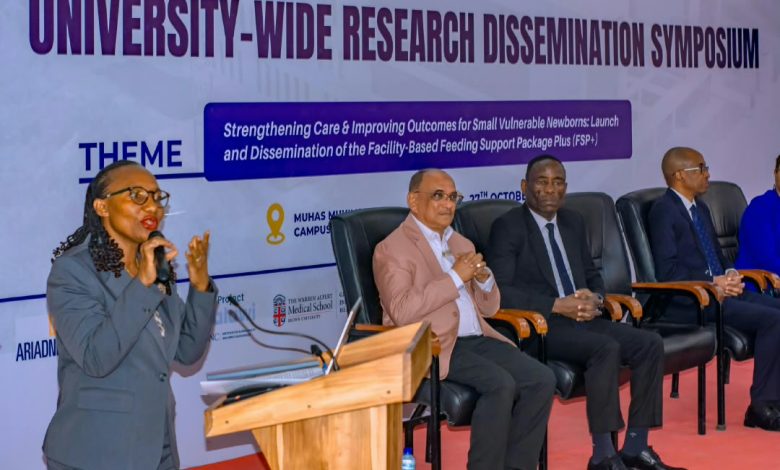
Speaking in Dar es Salaam yesterday at the 18th MUHAS University-Wide Research Dissemination Symposium, the Permanent Secretary in the Ministry of Health, Dr Grace Magembe, stressed the significance of upholding research collaboration with friendly universities outside the country to address health challenges facing Tanzanians.
The symposium presented findings from the Low Birthweight Infant Feeding Exploration (LIFE) study, which examined feeding practices and growth patterns among moderately low-birthweight infants weighing between 1.50 and 2.49 kilogrammes in Tanzania, India and Malawi.

“I encourage MUHAS to continue collaborating with international academic institutions to conduct research that will help address health challenges facing Tanzanians,” she said.
Shedding the light on the study disseminated , She said the LIFE study has come at the right time because it focuses on improving healthcare and nutrition for premature and low-birthweight babies, who face a high risk of death,” she said.
Dr Magembe said newborns account for approximately 50 per cent of all deaths among children under five, making their survival a critical factor in reducing overall child mortality.
“Reducing deaths in this group can significantly lower the overall number of children dying before their fifth birthday,” she said.
She noted that although Tanzania had reduced deaths among under-five children by more than 40 per cent, progress in curbing newborn mortality remained slow, with deaths in this category declining by only one per cent.
Premature and low-birthweight infants face complications such as low body temperature, difficulties in breastfeeding and a heightened risk of infections, necessitating specialised attention and close monitoring.
The study seeks to identify effective ways of ensuring these babies receive their mothers’ breast milk, despite their medical conditions preventing them from suckling directly.
She added that through the study healthcare workers will be trained to help mothers express breast milk and feed their infants safely, reducing reliance on breast-milk substitutes.
“The Ministry will also use the findings to revise existing policies and guidelines, incorporating practical instructions to help nurses and other medical personnel manage premature and low-birthweight infants more effectively”. She added.
Presenting the findings, the study’s coordinator in Tanzania, Professor Karim Manji, a paediatrician at MUHAS said the study In Tanzania, it covered Muhimbili National Hospital, Amana Hospital and Temeke Hospital.
He said the study identified four major challenges: delayed breastfeeding, inadequate counselling for mothers, poor clinical record-keeping and insufficient support for mothers caring for vulnerable newborns.
The study found that only 44 per cent of mothers received some form of breastfeeding counselling, leaving many without adequate guidance on feeding babies who could not suckle directly.
MUHAS Vice-Chancellor Professor Appolinary Kamuhabwa said the study was conducted in collaboration with Harvard University, adding that the institution also works with the Swedish International Development Cooperation Agency (Sida) on various research initiatives.
“We will continue conducting research aimed at addressing health challenges facing Tanzanians,” he said.