Report reveals pre-planned violence to create vacuum
DAR ES SALAAM: THE Independent Commission of Inquiry into the 2025 General Election unrest has concluded that the October violence was not a series of spontaneous demonstrations, but premeditated acts of violence to paralyse the government and disrupt the democratic process.
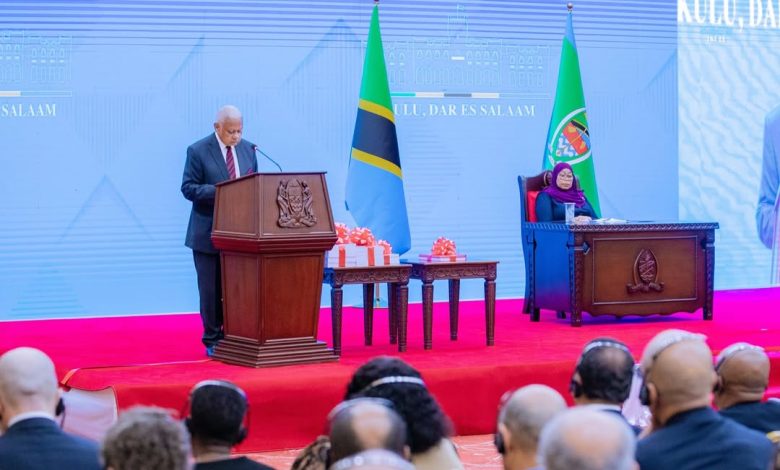
Presenting the findings to President Samia Suluhu Hassan at State House in Dar es Salaam yesterday, Commission Chairperson and retired Chief Justice, Mohamed Chande Othman revealed that the unrest followed months of clandestine preparation which included the recruitment of individuals to incite chaos and the tactical coordination of simultaneous incidents to overstretch security forces.
“The Commission has got reasonable evidence suggesting the October 29 incidents were planned, coordinated, sponsored and implemented with trained people. The coordinators utilised various techniques including mobilising people especially youth with no knowledge on the objectives of the breach of peace,” Justice Chande said.
ALSO READ: COMMISSION OF INQUIRY REPORT: Steps to national healing
“They ensured the incidents occurred simultaneously in different areas to confuse police officers.” He said that the commission has evidences that the organisers were moving around various areas including streets, markets, universities and bus stands to persuade and recruit people to participate in the violence.
“For instance, children living in vulnerable environment, motorcycle riders, petty traders told the Commission that they were given money between 10,000/- and 20,000. They were promised good lives and decent jobs,” Justice Chande explained.
He said those who were recruited appeared on the streets, while the coordinators remained out of sight. More significantly, Mr Chande noted that a youth respondent in Arusha recounted being given 50,000/- and promised 5m/- upon completion of the violent activities.
“The demonstrations involved blocking roads, burning property and the use of various non-verbal signals,” he said. He further said that some protesters were armed with stones, machetes, rifles and explosives.
The report, compiled after months of investigations involving medical experts, security agencies, government institutions and affected families, found that 518 people lost their lives while 2,390 others were injured during the unrest. Justice Chande said many of the deaths and injuries resulted from violent confrontations involving sharp objects, gunshot wounds and other serious attacks linked to the unrest.
According to the findings, civilians accounted for the majority of those affected, although members of the security forces were also among the victims. The report identified Dar es Salaam as the region most affected by the unrest, followed by Mwanza, Mbeya and Arusha. Justice Chande noted with concern that children were also among those affected by the violence.
He said the commission gathered evidence from multiple sources, including families of victims, the Registration, Insolvency and Trusteeship Agency (RITA), public and private hospitals, the Government Chemist Laboratory Authority and the Ministry of Health.
The inquiry further involved technical support from 80 specialist doctors, including pathologists, who assisted in forensic examinations and analysis of evidence collected in 11 regions visited by the commission.
According to the report, forensic investigations and postmortem examinations established several causes of death, including injuries caused by sharp objects, gunshot wounds and other medical complications.
Justice Chande said the commission also relied on DNA testing and forensic analysis to identify some victims and verify evidence gathered during the inquiry. On injuries, the report showed that by March 31, 2026, a total of 2,390 injured individuals had received treatment at public and private health facilities across the country, with many continuing to receive medical support and rehabilitation services.
He cautioned that the figures may change as investigations continue, noting that some victims may not have been officially recorded, while others reportedly fled to neighbouring countries. Addressing allegations of mass graves in the Kondo area of Dar es Salaam, Justice Chande said the commission found no scientific evidence to support the claims following detailed forensic investigations.
The commission began its investigations on November 20 last year under a 90-day mandate, but the inquiry period was later extended twice due to the volume and complexity of evidence collected.
Justice Chande said the findings would contribute to broader national efforts aimed at promoting accountability, reconciliation and strengthening Tanzania’s long-standing commitment to peace, unity and stability