Rebuilding trust after the 2025 general election
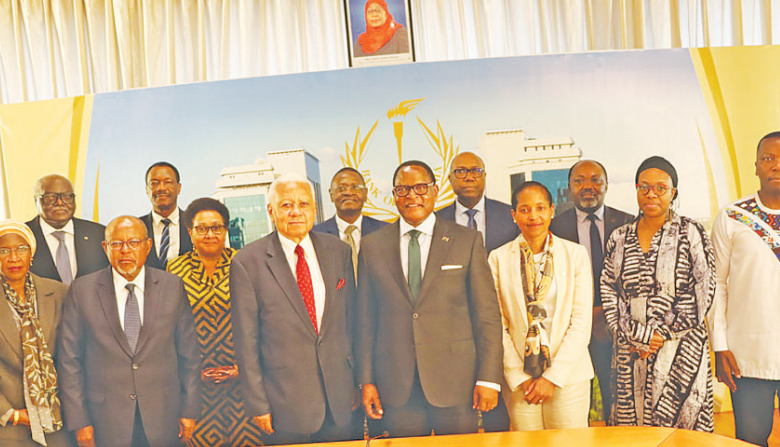
DAR ES SALAAM: THE establishment of a presidential commission in Tanzania was prompted by the aftermath of the 29 October 2025 general election. Unlike other commissions, this one was tasked with conducting a comprehensive analysis of the nation’s position amid the unanticipated turmoil and the broader social, economic and political implications for democratic legitimacy and national unity.
As a citizen of this stunning nation, reflecting on what happened demonstrates an acknowledgement that, in addition to electoral outcomes in any contested elections and this is not unique to Tanzania, the credibility of institutions and the trust between the government and citizens, as well as between those who lead and those who are led are fundamental to a stable and prosperous nation.
Hence, outside of elections, the establishment of trust between those who lead and those who are led is not automatic; rather, as diverse groups may hold differing views, it is built through a system that, regardless of perspective, demonstrates transparency, accountability, fairness, and consistent engagement.
Within such thinking, even robust economic performance, growth, or policy accomplishments may not yield social cohesion, political stability, or outcomes that both parties can be proud of when trust is compromised.
Hence, looking back at the aftermath of our 2025 general election, in my opinion, Tanzania is at a critical juncture as Tanzanians await the commission’s outcome after the 21 additional days it was extended and prepare to receive it, with most keeping their eyes and ears open.
With great desire, this presents an opportunity to transform postelection tensions into a long-term framework for democratic resilience and inclusive governance, uniting Tanzanians and re-establishing trust that seems to have begun to erode in the aftermath of the post-election events.
The emergence of trust-deficit elements, particularly in the aftermath of elections, when the pride of our nation was tarnished, caught many, including those who lead; friends and neighbours; those who are led and others, by surprise.
As the outcome surprised many, this situation was outside our norms and culture as Tanzanians. It is often thought to have resulted from a combination of factors, including a perceived lack of transparency in electoral processes, limited stakeholder engagement before and after elections, weak communication from certain institutions, unfounded concerns about fairness and equal treatment under the law and perceived polarisation among political actors and citizens.
While, like others, I am equally enthusiastic about the commission’s findings, I believe the expected outcome will provide a structured framework for diagnosing these issues and for suggesting a course of action to strengthen not only our unit but also trust.
The true measure is not only identifying issues from their perspective but also implementing reforms and mindset changes that will re-establish confidence across all segments of our society.
Despite the fact that the postelection period was challenging for the nation, for both those leading and those being led, the most critical aspect of self-assessment and self-reflection is the collective acceptance of a new beginning. A new beginning, learning from what went wrong to help the nation forge ahead as one.
As our forebears once said, “maji yakishamwajika hayazoeleki”. Looking at the aftermath of 29/10/2025, this wisdom can help us rethink how we need to move forward as a nation, as families and as relatives. I am of the opinion that, because of what transpired, it is not time to keep pointing fingers at each other; instead, it is now appropriate to seek forgiveness and come together and commence the construction of this nation by utilising the commission’s findings in whatever form it may be presented to Tanzanians as a foundation for the improvement of our nation that will be in the hands of young people in the coming decades.
This will ensure that the events that occurred after the 2025 elections are remembered as a valuable, critical lesson in the nation’s development, without assigning blame to any individual or group, pointing fingers at one another, or blaming one side for not playing their part duly and effectively.
The new era I am envisaging after the commission’s report is out needs to remind Tanzanians of the lessons the holy texts offer. While Jesus instructs in Matthew 7:24-27 (and Luke 6:47-49) that building a house on the rock requires not only hearing his words but also acting upon them, surah at Tawbah (9:109) highlights the distinction between a life founded on religiosity and one on a shaky, faithless foundation. When combined, these sage words establish a solid foundation, enabling an individual to endure life’s vicissitudes, including rain, floods and wind and conversely, disobedience results in disaster.
As we all await the commission’s outcome, we must be prepared to live by these principles and to build our nation while practising authentic forgiveness among ourselves. This is crucial because we are all aware of the circumstances that followed the elections and the results were not what we had anticipated as Tanzanians.
Given that the event was a challenging test that Tanzania had never encountered before, one that resulted in damage to individuals and society, injuries, the loss of life of some of our fellow citizens and the loss of personal and government property. Learning from what happened should allow us to raise a generation that recognises the events that occurred aren’t a reason to start pointing fingers endlessly, but rather to establish a nation of trust, one geared to learn from what happened to help us build a better tomorrow.
I would like to underscore to my Tanzanian brothers and sisters that several commissions in Tanzanian history have been established since our independence in 1961, each with a specific task to investigate the origins of issues that prompted their creation.
Reflecting back on all the past commissions, the latest of which was created by President Samia and specifically instructed to conduct a comprehensive examination of the events that followed the 29/10/2025 general election and the nation’s subsequent responses, is unique. Why? I have been privileged to develop my career under the leadership of all the presidents who have served this nation, starting with the founding father of the nation, Mwalimu Julius Kambarage Nyerere; Ali Hassan Mwinyi; Benjamin William Mkapa; Jakaya Mrisho Kikwete; John Pombe Magufuli; and Now Samia Suluhu Hassan.
In contrast to other commissions, I have encountered or read about, the commission established to investigate the events following the 29 October 2025 general election has been assigned a task I can only describe as historic in our nation’s history. A commission whose role is not only historic but whose report will also make the results of this commission unique, given the seriousness of the work they conducted during a difficult period that was likely characterised by anger and a lack of trust, particularly when many were bitter about the events that had occurred.
Given the expertise of those who have served on numerous previous commissions, the results we eagerly anticipate and the recognition that members of such commissions are individuals in their respective roles, each with their own leadership, experience, expertise and track record, I am confident that the outcome of the presidential commission established to examine in detail where our nation stood amid the uncalled-for chaos and turmoil and the broader implications for national unity and democratic legitimacy will not only provide a detailed, evidencebased account of the event but also serve as a powerful instrument for rebuilding trust and a transformational mechanism for governance reform for the future of Tanzania as a united nation.
In the future, to prevent our nation from re-entering the same predicament, our unity must be built on the promotion of transparency and open governance, the strengthening of the rule of law and justice systems, the fostering of inclusive political dialogue, the engagement of youth and citizens, the use of technology to build trust, the promotion of economic inclusion and equity, the development of strategic communication and narratives, and the implementation and follow-through of these initiatives.
Although implementation is potentially the most critical factor, learning from the past and drawing experience from other places, I can only conclude that numerous commissions fail not because of inadequate recommendations but because of inadequate execution. Hence, implementing the presidential commission’s recommendation on what transpired after the 2025 general election, in my view, will be a key gamechanger for Tanzania’s future.
Meaning, it will be imperative to establish a transparent implementation roadmap, ensure that progress is monitored and publicly reported and maintain accountability for the delivery of recommended reforms. This is crucial because trust, particularly the trust required in our nation between the government and its citizens and between those who lead and those who are led, is not established through assurances but rather through visible and sustained action. This is crucial because the relationship between rulers and the governed is fundamentally a social contract. In exchange for security, justice, opportunity and representation, citizens grant the state legitimacy.
When this contract is perceived to be breached, trust is diminished and its restoration requires mutual respect between leaders and citizens. This includes recognising citizens as partners rather than subjects and diligently pursuing leadership that is responsive, accountable and empathetic.
Trust is more likely to be placed in a government that actively listens than in one that merely communicates. Through the presidential commission to uncover what transpired after the 29th October 2025 general election, Tanzania now has the opportunity to modernise governance systems, strengthen democratic institutions and establish itself as a model of post-election reform in Africa. This can be achieved by acknowledging its shortcomings, committing to reconstructing the nation and incorporating the lessons learned to forge ahead as a united nation.
ALSO READ: Commonwealth envoys hold talks with Commission of Inquiry into Oct 29 violence
The events that transpired subsequent to the general election on October 29, 2025, underscored the significance of trust as a fundamental component of governance. The establishment of a presidential commission was a positive development; however, its success will be contingent on the willingness to implement meaningful reforms informed by the lessons learned.
Above all these, I have attempted to think above; it is crucial to bear in mind that trust is not established overnight. It is fostered by a shared dedication to national advancement, credible institutions and consistent actions. Tanzania has the potential to lay a strong foundation for the future of its young people by effectively seizing this opportunity presented by the commission’s outcome, in whatever form and the recommendations thereafter. This will result in a more unified, resilient and aligned society that reflects the principles of a modern, knowledge-based democracy.