

Rangi Gallery boosts Tanzania’s global art presence at Seoul event
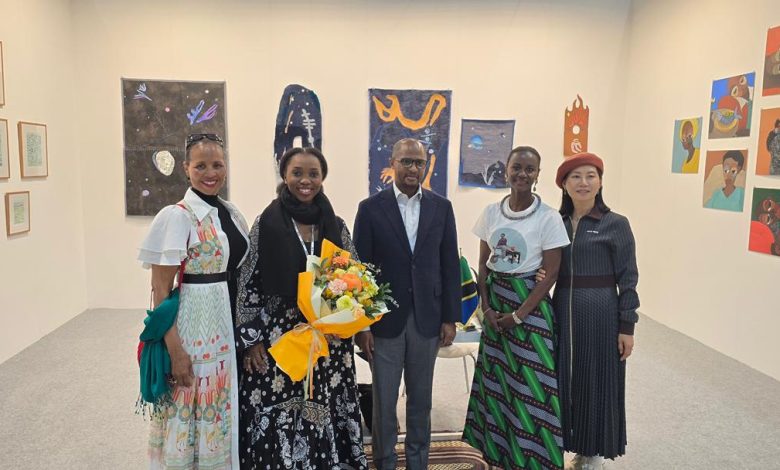
Dar es Salaam: Something remarkable happened in Seoul between April 2 and 5, at a sprawling exhibition centre in the heart of South Korea’s capital, a gallery from Dar es Salaam, Tanzania stood shoulder to shoulder with some of the most respected art institutions in the world. Rangi Gallery – founded and run by Tanzanian lawyer-turned-gallerist Lorna Mashiba Albou – became the first gallery from Tanzania to ever participate in Art OnO, one of Asia’s most distinctive international art fairs.
Let that settle for a moment. The first. Ever.
Art OnO – short for “Art One and Only” – is now in its third edition and is not your ordinary art fair. Held at Seoul’s SETEC Exhibition Center, it brought together 35 galleries and institutions from 12 countries, including established names from Japan, Germany, and Switzerland. What makes Art OnO different is its philosophy: it deliberately moves beyond the buy-and-sell model to create a space where commercial galleries and non-profit institutions meet as equals. In that kind of company, you do not show up unless your work can hold its own.
Rangi Gallery’s work held its own. And then some.
The gallery presented four Tanzanian women artists – Theresia Venance, Tulsi Patel, Valerie Asiimwe Amani, and Turakella Editha Gyindo, each bringing a different lens to what contemporary Tanzanian art looks and feels like. Theresia Venance’s figurative portraits explored womanhood and resilience with an intimacy that felt both deeply personal and universal. Valerie Asiimwe Amani’s mixed-media work reached into cosmology and cultural identity, asking the big questions in quiet ways.
Turakella Editha Gyindo’s practice sat at the intersection of ritual and transformation, her pieces evoking healing and cleansing. And Tulsi Patel turned water – its waves, its flow – into a powerful metaphor for the human body’s inner workings.
The lineup was all-women, but not by design. Mashiba Albou has been clear about that: the selection was driven by merit. The fact that four women ended up representing Tanzania on a global stage speaks volumes about the depth and force of female artistic talent coming out of this country right now.
And this is not where the story peaks. Two of these four artists — Valerie Asiimwe Amani and Turakella Editha Gyindo, will represent Tanzania at the 2026 Venice Biennale, arguably the most prestigious showcase in the art world. Lorna Mashiba Albou herself has been named curator of Tanzania’s national pavilion in Venice.
From Seoul to Venice, the thread is clear: Tanzanian contemporary art is arriving, and Rangi Gallery is holding the door wide open.
The Seoul participation also carried a significant diplomatic dimension. Tanzania’s out-going Ambassador to South Korea, Togolani Edriss Mavura, attended the fair in person to view the works on display – a visible signal that this was more than a gallery exhibition. It was a moment of genuine cultural exchange between two nations, reaching beyond formal diplomacy into something more human, more lasting.
Rangi Gallery was founded in Dar es Salaam by Mashiba Albou, who spent over a decade as a corporate lawyer before pivoting to the creative economy.
The gallery serves as a platform for emerging and established Tanzanian artists and runs the Rangi Nyumbani Residency, which connects local creatives with international networks. Art OnO 2026 marks the gallery’s second international fair, following a debut in South Africa in 2025.
Tanzania has never lacked artistic talent. What it has lacked is the infrastructure, the platforms, the bridges to connect that talent with the world. Rangi Gallery is building those bridges – one international stage at a time.


I was looking for this. Really refreshing take on the information. Thanks a lot.