Protecting our ‘loads’ from heavy ‘loads
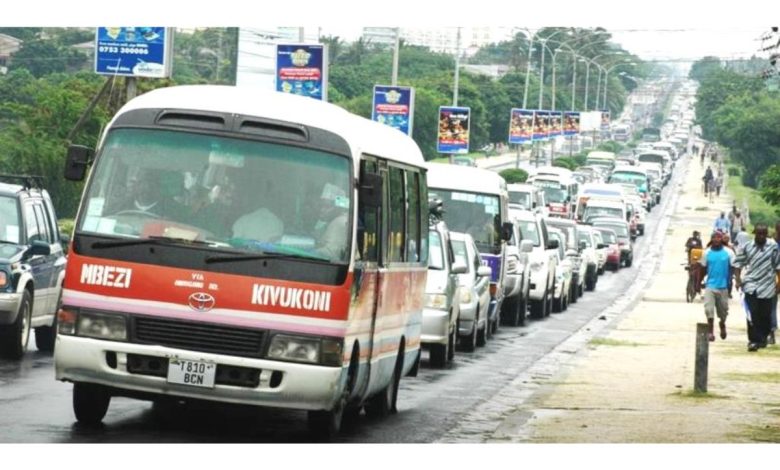
DAR ES SALAAM: Traffic congestion in the City of Dar es Salaam continues to occupy the minds of policy makers and administrators, as well as those of the general public. At least two issues cropped up for intense discussion last week.
One was the increasing numbers of ICDs (Inland Container Depots) in Dar es Salaam (especially in Temeke), and the other was the directive by the Dar es Salaam Regional Commissioner (RC) that all upcountry buses should use the Magufuli Terminal in Mbezi.
The Good Citizen of 11 August carried this front-page headline on the ICD issue: “ICD growth leaves Dar stuck in traffic”. Observers are asking about the long-planned IDP at Kwala in the Coast Region, but the same Good Citizen warns, again, in a front-page headline: “Why Kwala is not enough”.
Commenting on this in the social media, one observer had this to say: “Kwala is of no use. We need to protect our ‘loads’ from regular ‘maintanance’ ‘do’ the big ‘loads’”.
We know that in many of our maternal languages, there is little distinction between “l” and “r”. The two letters could be used interchangeably. However, that is not the case in English. It is possible that the commentator has this problem of mixing up “l” and “r”. In one sense at least, he or she was referring to “our roads”, not “our loads”. A recommended recast of the sentence is as follows:
“Kwala is of no use. We need to protect our ‘roads’ from regular ‘maintenance costs’ ‘due’ to the damage caused by heavy ‘loads’ imposed on them”.
The Good Citizen of 13 August had this headline on its page two: “Long-distance buses face shift to Magufuli Terminal amid doubts”. The writer opens up the story in the following manner:
“Dar operators and transport experts have raised ‘concerns’ over a directive that all long-distance buses operating in Dar es Salaam should ‘park’ at the John Magufuli Bus Terminal”.
The issue is not about the buses “parking” at the Terminal. A bus terminal is a designated area or hub where bus routes start or end, and where passengers get on or off buses. It is also called a bus station, coach station or bus depot.
The directive therefore, is about buses starting and terminating their journeys at the Terminal. For sure, this involves parking, but this is not what the RC had in mind. A recast of the sentence could be along these lines: “Dar operators and transport experts have raised ‘concern’ over a directive that all long-distance buses operating in Dar es Salaam should ‘start and end their journeys’ at the John Magufuli Bus Terminal”.
ALSO READ: Turning buried wealth into catalytic for Tanzania financial power
In view of the fact that many bus operators have their own depots, the writer has it that: “the RC alleged that only six companies have the permit to do so while ‘majority’ are operating illegally”. Here, the writer should have talked of “the majority” (of bus operators), not “majority” (the article “the” is missing).
The Secretary General of the Tanzania Bus Owners Association (TABOA) is quoted as saying: “Requiring all buses to terminate at Magufuli Terminal would force some passengers to make additional journeys to reach their final destinations, increasing travel time and costs”.
The writer is possibly misreporting. The directive is not just about terminating, but also about starting. At the same time, it is important to note that a bus terminal is not the beginning or end of a passenger’s journey.
In transport planning there is the concept of “the last mile”; which means: “the final leg of moving people or goods from a central hub or station to their ultimate destination. It is often the most expensive, complex and slow part of the entire network due to traffic, numerous individual stops and low efficiency”.
So, passengers have to foot costs of moving from their homes or working stations, to the Terminal. In a developing country like Tanzania, where transport infrastructure is poor, it is important to reduce this cost by encouraging operators to accommodate passengers whose journeys originate from near the operators’ yards or workshops.
This implies that in the long run, you need various terminals, not just one.
lusuggakironde@gmail.com.