

Protecting children starts at grassroots, where are you?
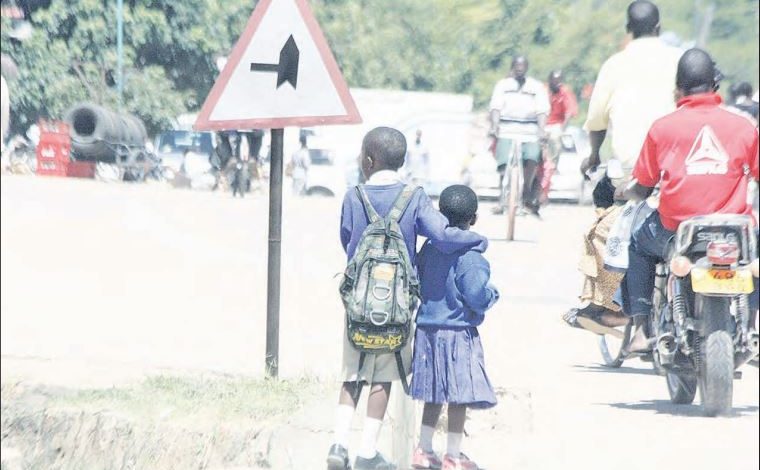
AS one of the youngest countries in the world, with nearly half of its population under the age of 18, Tanzania’s future depends on how well it protects and nurtures its children today.
The security and safety of children in the country is not only a moral obligation but a foundation for the nation’s long-term social and economic development. Here, experts say a child who grows up in a safe environment is more likely to stay in school, perform well and contribute meaningfully to society.
Conversely, those exposed to violence and insecurity often struggle with trauma, poor health outcomes and limited life opportunities. In Babati for example, a serene town in northern Tanzania, the safety and security of children are becoming increasingly urgent concerns.
As the town grows, so too does the need for comprehensive efforts to protect its youngest members from harm. The escalating issues of child labour, street begging and exposure to violence have placed Babati at a crossroads, where the safety of its children must be prioritised.
ALSO READ: ‘Children are immune to death penalties, corporal punishments’
In addressing the challenges related to security and safety of the children, Tanzania is implementing the National Multisector Early Childhood Development Programme (NMECDP) 2021/22 – 2025/26, focusing on various interventions including good security and safety of the children aged 0-8 years.
NMECDP objectives particularly in security and safety of the children is in line with the Law of the Child Act 2009 (revised in 2019) which aimed at providing adequate protection to children against any form of violence.
While the programme is ongoing, a follow-up conducted by Daily News indicates that despite the presence of relevant authorities responsible for enforcing child protection guidelines and laws, cases of violence against children continue to emerge daily.
In an interview with Daily News, the Babati Town Council Social Welfare Officer, Agatha Patris, stated that on average, they receive three to four cases related to child abuse each day. What is even more heartbreaking, she says, is that the perpetrators are often those children who trust the most are the family members and close relatives.
“These aren’t strangers,” Agatha explains, her voice heavy with concern. “In most cases, the violence is committed by someone the child knows, someone who shares their home, their meals and their daily life,” she underscores.
ALSO READ: African schoolchildren invited to join nuclear ‘Icebreaker Knowledge’
Indeed, studies support this grim picture. Across various regions, including Babati, research has consistently shown that the home typically viewed as a place of safety is the most common setting for violence against children.
National and international 60 per cent of such acts occur at home. In Babati, the issue is exacerbated by poverty, limited awareness and entrenched cultural norms that sometimes excuse abusive behaviour as discipline.
Many children suffer in silence, unable to speak out against their abusers for fear of punishment, shame, or not being believed. In such cases, the very people who should protect them become the source of their pain.
She adds that the local authorities, including social welfare officers, are doing what they can, offering counselling, intervening in severe cases and working to raise awareness in communities.
But the challenge is enormous. With limited resources and a growing number of reports, the system is often overwhelmed.
“We need the community to step in,” Agatha urges. “Neighbours, teachers, religious leaders…everyone has a role to play in protecting our children. We cannot wait for a child to be bruised or broken before we act.” she says.
Additionally, she adds that despite the darkness, there are glimmers of hope, community sensitisation programmes are slowly taking root. More children are being taught about their rights in schools. Some families are beginning to open up and seek help before situations escalate.
Speaking on efforts to curb abuse in schools where it is reported that 40 per cent of such incidents occur, Wilhelmon Mayo, the Education Officer for Babati Ward, stated that significant strides have been made to address the issue.
He says that nearly all schools in the ward, which has approximately 11 schools, have taken steps to combat abuse.
“In schools, we have suggestion boxes in place, but there are also posters displayed that strongly condemn gender-based violence and child abuse,” he stresses.
Representing parents in Babati District, Hemedi Rajabu raises serious concerns about the safety and protection of girls during their daily commute to and from school.
ALSO READ: Trump urges Congress to ban trans surgeries on children
He says that the journey, which should be routine, has become increasingly risky due to various challenges girls encounter along the way. He adds that many schoolgirls are being lured and manipulated by young motorcycle riders, commonly known as bodaboda.
As a result, a number of girls have ended up dropping out of school after becoming pregnant. In addition, Hemedi points out that the advancement of technology, particularly the widespread use of mobile phones, also contributed to the growing challenges of protecting girl children.
He says many girls misuse phones in ways that expose them to inappropriate content and communication “Mobile phones play a role in contributing to teenage pregnancies, along with the influence of young men like boda boda riders who offer lifts to these girls. Babati town has so many boda bodas,” he stresses.
Nevertheless, he urges parents to be vigilant and closely monitor the behaviour and activities of their daughters to help prevent them from being misled or falling into situations that could lead to early pregnancies while still in school.



216479 280890Great info numerous thanks sharing and reaching us your subscriber list. 47824