

Police clear way for public meetings
- Experts call for responsible political engagement
DAR ES SALAAM: THE Tanzania Police Force has announced that it will resume receiving notifications for public meetings following the stabilisation of the country’s security situation, a move political analyst have welcomed as a positive step towards strengthening democracy and safeguarding citizens’ constitutional rights.
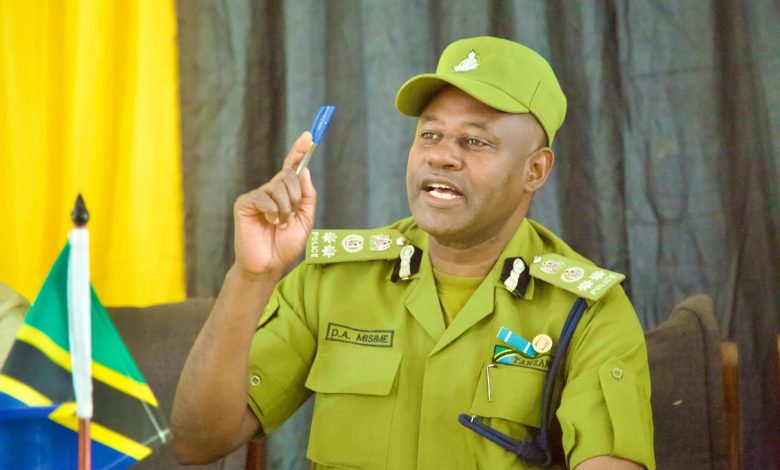
In a statement availed to the media yesterday, Police Spokesperson DCP David Misime urged organisers of public meetings to continue submitting notices to District Police Commanders in accordance with the law.
DCP Misime said the decision follows improved security conditions after law enforcement agencies thwarted alleged plans by some individuals to organise unlawful demonstrations and other criminal activities in violation of the country’s laws, regulations and established procedures.
He said intelligence reports indicated that the suspects had allegedly planned to attack people, burn schools to instil fear among parents and guardians, vandalise TANESCO transformers, block roads and disarm police officers.
According to the statement, the alleged activities were coordinated through physical meetings involving some youth groups, while social media platforms were used to spread messages and organise online meetings.
Security agencies closely monitored the activities, leading to the arrest of several suspects announced on July 9 this year. Some have since been arraigned in court, while efforts to apprehend other suspects are continuing.
DCP Misime commended members of the public for cooperating with law enforcement agencies by rejecting and reporting the alleged criminal activities, saying their support had contributed to maintaining peace and stability across the country.
“The cooperation shown by wananchi in rejecting these criminal acts gives us confidence to say that the country’s security situation is now stable,” DCP Misime said.
He said that during the period when the alleged criminal activities were under investigation, the Police also received notifications from political parties and some Members of Parliament intending to hold public meetings in different parts of the country.
“As the institution mandated to maintain security during public gatherings, we engaged the organisers and advised them to postpone the meetings due to the prevailing security concerns at the time,” he said.
ALSO READ: Tanzania suspends political parties’ public meetings due rumours of illegal demonstrations
Political analysts and stakeholders welcomed the announcement, describing it as a positive step for democracy while urging political actors to uphold the law and preserve peace.
Political analyst Hamiduni Maliseli welcomed the decision, describing the resumption of public meetings as an important step for democracy and national development.
“It is a good thing that political meetings have been allowed to continue because political parties and their activities are healthy for democracy and the development of the country,” he said.
Mr Maliseli urged political parties, their supporters and other stakeholders to conduct political activities responsibly and in accordance with the law, saying the earlier suspension of public gatherings should remind all stakeholders that democratic freedoms must be exercised within the legal framework.
He also stressed that political parties should respect the role of security organs in maintaining public order and peace.
“Democracy must take its place, but we must also understand that there are other stakeholders who are required to operate according to the law, regulations and procedures of the country,” he said.
Another political analyst and lecturer at the University of Dodoma (UDOM), Samwel Marwa, also welcomed the move, saying it strengthens democracy and protects citizens’ constitutional rights.
He said public meetings provide an important platform for citizens to engage with political leaders while giving political parties an opportunity to present their policies and programmes.
“The decision by the Police Force is a good step, but it should ensure that these meetings continue to take place in a peaceful and stable environment where citizens can exercise their rights,” he said.
Mr Marwa said security agencies should protect lawful political gatherings while taking action against individuals who threaten public order rather than suspending political activities altogether.
Former Chama cha Makini presidential candidate Coaster Kibonde welcomed the government’s decision to allow the resumption of public rallies, describing it as a significant step towards strengthening democracy.
“We commend the government for allowing public rallies. We will now prepare our schedule and continue engaging wananchi,” Kibonde said.
He urged politicians and political party leaders to use the gatherings to promote peace, love, unity and national stability, adding that public rallies also stimulate local economies by creating business opportunities for local communities.
Democratic Party (DP) National Chairman and 2025 presidential candidate Abdul Mluya described public rallies as the lifeblood of democracy and a cornerstone of good governance.
“No freedom is absolute. We must respect the laws, regulations and procedures that govern our political activities,” Mluya said, urging leaders to ensure rallies foster national unity and avoid actions that could create division. Political and diplomacy analyst Maggid Mjengwa said the Police Force has a constitutional responsibility to safeguard public safety and protect people’s lives and property.
He said the earlier restrictions on public meetings were part of measures taken to protect citizens, while the decision to lift the restrictions indicates that security agencies are satisfied the country’s security situation has stabilised.
“National security is the responsibility of the state and is not open to debate because every country has the sovereign right to protect itself,” Mr Mjengwa said, adding that lifting the restrictions would allow political parties to resume their constitutional activities and strengthen democratic participation within the framework of the law.



I love your blog.. very nice colors & theme. Did you create this website yourself? Plz reply back as I’m looking to create my own blog and would like to know wheere u got this from. thanks
I discovered your blog site on google and check a few of your early posts. Continue to keep up the very good operate. I just additional up your RSS feed to my MSN News Reader. Seeking forward to reading more from you later on!…