

New FAEO President Ohaga targets stronger engineers, innovation, infrastructure and African ownership of development
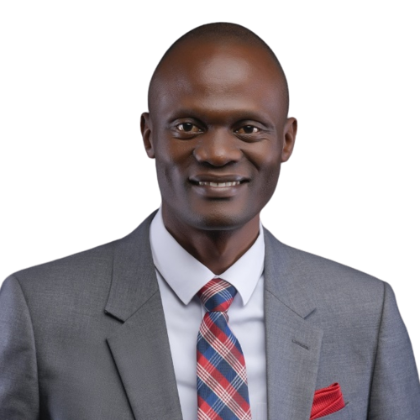
DAR ES SALAAM: Dar es Salaam recently hosted the contest for the presidency of the Federation of African Engineering Organisations (FAEO), where Engineer Erick Ohaga was elected with 83 per cent of the votes cast, securing a strong mandate to strengthen the engineering profession and position African engineers more centrally in the continent’s development agenda.
FAEO serves as the overall leader and unified voice of the engineering profession in Africa, applying engineering and technology for the benefit of humanity and the sustainable development of the continent. Representing more than 1.5 million engineering professionals across five regional blocks, the Federation provides an important link between African engineers and international institutions, including the World Federation of Engineering Organisations and the African Union.
Eng Ohaga, Director of Nuclear Infrastructure Development at the Nuclear Power and Energy Agency (NuPEA), previously served as elected President of the Institution of Engineers of Kenya from 2022 to 2024.
His election gives him responsibility for leading a diverse continental engineering community operating under different professional, economic and regulatory environments.
Describing the 83 per cent vote as both an honour and a significant responsibility, Eng Ohaga said the result represented confidence in the direction of FAEO and a mandate to deliver meaningful results for engineers across Africa.
He said his leadership would focus on listening, uniting and acting, rather than treating FAEO merely as a representative organisation.
According to Eng Ohaga, engineers expect greater opportunities for young professionals, stronger standards, mobility across African countries, meaningful participation in major infrastructure and industrial projects, and greater recognition of engineering as a driver of economic transformation.
His priorities centre on three broad areas: developing African engineering capacity, increasing African participation in major projects, and strengthening collaboration among engineering institutions across the continent.
He said continuous professional development, mentorship and leadership development would be strengthened, with particular attention to young engineers and women in engineering. He also called for closer collaboration between universities, professional institutions and industry to ensure engineering education remains aligned with Africa’s development needs.
A second priority is ensuring African engineering expertise is placed at the centre of infrastructure and industrial projects involving energy, transport, water, manufacturing and digital infrastructure. Rather than limiting African professionals to providing engineering labour, Eng Ohaga wants greater local capacity to design, manage, finance, construct and maintain major projects.
This, he said, requires stronger local engineering firms, technology transfer, innovation and the development of African engineering enterprises.
His third priority is strengthening cooperation among engineering organisations. FAEO, he said, can become a stronger platform for knowledge sharing, harmonising professional practices, facilitating mobility and providing a coordinated engineering voice on continental priorities.
Such cooperation would involve governments, industry, academia, development institutions, the African Union and international engineering organisations.
Eng Ohaga also argues that Africa’s diversity should be treated as a strength rather than a weakness. With more than 1.5 million professionals represented by FAEO, he said unity should not mean that every engineer holds the same opinion. Instead, the profession should develop a shared purpose around professional excellence, mobility, youth development, innovation, infrastructure and industrialisation.
He proposes equitable regional representation in committees and technical working groups, rotating opportunities to host FAEO programmes, and dedicated platforms through which smaller and emerging engineering organisations can present their priorities.
Digital platforms, he added, can broaden participation while mentorship between engineering organisations with different levels of institutional capacity can facilitate the sharing of expertise, professional systems, technology and opportunities.
Eng Ohaga also wants FAEO’s performance to be measurable. He proposes establishing a baseline during the first 100 days and publishing an annual performance dashboard supported by verifiable evidence.
Among his targets are active participation by all member organisations in at least one FAEO programme or technical platform each year, five continent-wide technical initiatives during his term, and a continental mentorship programme reaching 5,000 young engineers. He also aims to establish at least 10 strategic partnerships involving engineering organisations, universities, industry and development partners.
For Eng Ohaga, Africa’s infrastructure deficit is not simply a consequence of insufficient engineers. He identifies a wider gap between engineering talent and the systems required to transform expertise into completed infrastructure.
Financing, project preparation, procurement, regulation, technology and institutional capacity can all affect delivery. He argues that engineers should be involved throughout the project cycle, from conception and design to financing, construction, operation and maintenance.
He similarly believes Africa must move beyond technology transfer towards technology creation. Stronger links between universities, industry, engineering institutions and governments, combined with investment in research and development, innovation, prototyping, commercialisation and intellectual property, could help African engineers develop and export solutions suited to the continent’s needs.
On major infrastructure projects, Eng Ohaga maintains that foreign expertise can continue to play a role, particularly where specialised technologies are involved, but should complement rather than replace African capability. Skills and technology transfer should form part of such partnerships.
For ordinary citizens, he says engineering is already part of everyday life, whether through electricity, clean water, roads, telecommunications or safe buildings. FAEO’s role is to strengthen professional standards, competence, ethical practice and innovation so that these services become safer, more reliable and affordable.
He also stresses accountability. When infrastructure fails prematurely, responsibility should be established through evidence rather than automatically assigned to one party. Engineers, contractors, governments and project owners each have responsibilities within their respective mandates, and independent technical assessments should establish the causes of failure.
Eng Ohaga also advocates engineering approaches that reduce infrastructure costs through efficient design, local materials and skills, standardised and modular solutions, appropriate technology, digital tools, reduced waste, durability and maintainability.
As Director of Nuclear Infrastructure Development, he places nuclear energy within the wider conversation about Africa’s long-term energy security and industrialisation.
He describes nuclear power as potentially important for providing reliable, scalable and low-carbon electricity while complementing variable renewable sources such as solar and wind.
However, he stresses that nuclear power is not a universal solution. Each country must determine its appropriate energy mix based on demand, grid capacity, economics, financing, resources, safety and institutional readiness.
On public concerns about nuclear safety, Eng Ohaga argues that confidence must be built through engineering, regulation and transparency. Modern nuclear facilities rely on multiple layers of protection, radiation monitoring and strict regulatory controls.
He points to Three-Mile Island, Chernobyl and Fukushima as different lessons in human factors, design weaknesses, safety culture, external hazards, loss of power and emergency preparedness.
African nuclear programmes, he says, should incorporate these lessons from the beginning rather than simply adopting technology without developing the institutions needed to operate it safely.
He also emphasises that nuclear capability must be developed before nuclear plants are built. This requires expertise in nuclear engineering, reactor physics, radiation protection, safety, instrumentation and control, cybersecurity, regulation, maintenance, safeguards and emergency preparedness.
Training should extend beyond classrooms to include internships, simulator programmes, operational experience, regulatory exposure and progressive transfer of responsibility. International partnerships, he says, should ultimately build the capacity of African institutions and professionals to regulate, operate and lead nuclear programmes.
Public education and transparency are equally important. Communities should receive accessible information about radiation, health effects, environmental impacts, radioactive waste, safety systems and emergency preparedness. Public engagement should begin before major decisions are made, allowing communities to ask questions and raise concerns.
For Eng Ohaga, the broader objective is clear: African engineers should not merely participate in the continent’s development but increasingly become its architects and leaders.
His 83 per cent FAEO mandate therefore comes with an agenda focused on professional development, inclusion, infrastructure, innovation, technology, energy and stronger continental cooperation. The measure of his presidency, he says, should ultimately be tangible progress more engineers trained and connected, stronger institutions, greater cross-border collaboration and demonstrable engineering influence on Africa’s development agenda.
His position on nuclear energy similarly reflects the wider philosophy underpinning his leadership: technological choices should be assessed objectively, systems should be designed around reliability, affordability, sustainability and resilience, and development should be supported by strong African technical capacity.
With that approach, the FAEO presidency provides Eng Ohaga with a continental platform to advance an engineering profession that he believes must be central to solving Africa’s infrastructure, energy, technological and industrial challenges.


Si vous lisez actuniger , vous risquez de devenir intelligent , soyez prudent , Gaby annale vous surveille .
Four Palestinians, including child, killed in Israeli attacks across Gaza2hr
Iran retains initiative in Strait of Hormuz despite US claims: Armed Forces 2hr
Yemeni army targets sensitive sites in Saudi capital, Aramco facilities in Yanbu3hr
Barzegari’s silver lifts Iran to five medals at 2026 World Poomsae Championships3hr
VIDEO | Pakistan, China co-chair historic SCO bank framework talks3hr
VIDEO | Press TV’s news headlines3hr
VIDEO | News Review: US accused of understating troop deaths in war on Iran4hr
Trump’s ‘war of choice’ against Iran ‘a disaster’: House Democratic leader 4hr
MORE
RELATED ARTICLES