

New economic signal for East Africa
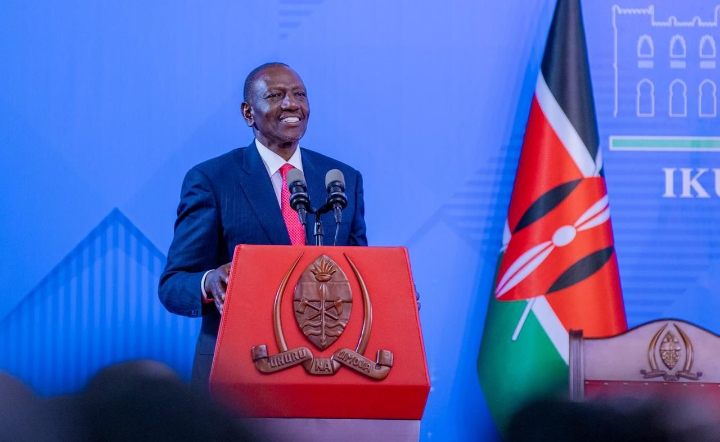
DAR ES SALAAM: KENYAN President William Ruto’s historic address to Tanzania’s Parliament in Dodoma on Tuesday signifies more than just a diplomatic achievement; it signals a strategic shift in East Africa’s economic stance amidst a growingly fragmented global environment.
As the first Kenyan leader to address Tanzania’s legislature, he underscored the need to strengthen bilateral relations and to advance the broader goal of regional integration within the East African Community (EAC).
The speech and the related state visit primarily aimed to enhance trade, boost infrastructure connectivity, promote energy cooperation, and support private sector-led growth.
The many bilateral agreements signed during this visit demonstrate a deliberate effort to convert political goodwill into tangible economic partnerships.
As an analyst, I interpret Ruto’s speech as a strong indication that regional integration continues to be East Africa’s primary growth strategy.
Historically, trade between Tanzania and Kenya has experienced occasional tensions, such as nontariff barriers and regulatory challenges.
Ruto’s direct address to Parliament emphasises the significance of high-level political cooperation. Economically, this reflects a renewed push to align trade policies, simplify border crossings, and enhance intra-EAC trade.
With intra-regional trade in East Africa remaining below 20 per cent of overall trade, greater integration could bring significant advantages.
Easing trade restrictions would lower costs for companies, expand markets, and encourage cross-border investments.
In Tanzania, there is an opportunity to leverage Kenya’s advanced financial and logistics infrastructure, while Kenya benefits from Tanzania’s rich natural resources and strategic ports.
Over time, this could foster the creation of a more integrated regional market, allowing both countries to compete globally as a collective rather than as individual nations.
A primary focus of the visit is on infrastructure collaboration, particularly in transport corridors, energy and logistics.
Ruto has consistently promoted infrastructure as a catalyst for economic growth, and his engagements with Tanzania emphasise the importance of cross-border projects.
The economic impact is evident and substantial: Improved infrastructure reduces transaction costs.
For instance, efficient transportation links between Dar es Salaam and Nairobi can significantly lower shipping expenses within the region.
This benefit goes to manufacturers, farmers, and exporters alike. Moreover, aligning infrastructure planning helps avoid duplication and boosts regional efficiency.
ALSO READ: Rising global demand for strategic minerals opens new economic doors for Tanzania
For example, coordinating port development strategies between Mombasa and Dar es Salaam could position East Africa as a major logistics hub for the continent and beyond.
Over time, this kind of coordination may draw foreign direct investment (FDI) since investors prefer areas with dependable infrastructure and smooth market access.
Energy cooperation became a central focus of the visit, especially considering ongoing and planned regional projects such as pipelines, gas infrastructure, and power generation.
Energy remains a significant barrier to industrial development in East Africa, with high costs and unreliable supplies impeding manufacturing and value addition. Ruto’s partnership with Tanzania signals progress toward shared energy solutions through enhanced regional cooperation.
The economic impact is significant. Collaborative energy projects can leverage economies of scale, reduce costs, and improve energy security.
For instance, merging gas supplies from Tanzania with Kenya’s industrial requirements could strengthen regional value chains in manufacturing, fertilisers, and petrochemicals.
The Bloomberg report on refinery plan tensions highlights a major challenge: Balancing national interests within a regional framework.
Without careful management, competition over strategic projects could obstruct cooperation.
East Africa’s economic future depends on its ability to align individual national objectives with collective advantages.
Ruto’s overall economic approach, commonly described as shifting Africa ‘from aid to investment,’ was subtly reflected in the Dodoma speech.
This shift greatly affects East Africa. Rather than relying on donor funding, the region is now aiming to become a centre for investments by emphasising private capital, public private partnerships, and harnessing local resources.
In Tanzania and Kenya, this strategy emphasises attracting FDI into infrastructure and industry, strengthening financial markets to boost domestic savings, and utilising development finance institutions to promote private sector investment.
It aligns with global trends, as capital tends to move toward regions offering transparent investment environments and scalable prospects.
Ruto’s speech subtly highlights the crucial importance of the private sector, particularly SMEs, in driving economic growth.
In East Africa, SMEs represent most of the workforce but often struggle to obtain financing and reach markets.
By promoting regional integration and infrastructure development, the speech indirectly addresses these constraints. A broader, more cohesive market allows SMEs to grow internationally, while improved logistics contribute to reducing operational costs.
For example, an agro-processor in Tanzania can more easily access markets in Kenya, while a Kenyan manufacturer can expand into Tanzania without encountering major barriers.
This cross-border cooperation is essential for generating jobs, particularly for the growing youth population in the region. Beyond short-term economic effects, the address has broader geopolitical implications.
East Africa is gradually developing as a significant economic group both across Africa and on the world stage.
Ruto’s active diplomatic initiatives, along with Tanzania’s growing economic power, suggest an aim to enhance the region’s global standing.
This has several economic implications, such as enhancing bargaining power in international trade negotiations, attracting global investors looking for markets, and strengthening the ability to coordinate responses to global shocks like energy crises or supply chain disruptions.
As alliances shift and economic uncertainty increases, regional blocs are becoming more important. East Africa’s ability to collaborate could be vital for its long-term competitiveness. While the speech conveys optimism, several risks remain.
First, political support does not always translate into policy action. Past examples in the EAC show that agreements can be postponed or blocked due to domestic pressures and bureaucratic delays.
Secondly, differences in structures such as regulatory frameworks, industrial capacity, and fiscal policies among member states can hinder integration. Without harmonisation, the benefits of cooperation may not be distributed fairly.
Third, funding large regional projects continues to be challenging. Although development banks and private investors can contribute, the needed investment scale is substantial.
Overall, Ruto’s Dodoma speech signifies a pivotal moment for East Africa. It reflects a recognition that the region’s economic prospects hinge on greater integration, collaboration, and strategic investments.
If the commitments made during the visit are executed effectively, East Africa has the potential to evolve into a more industrialised and diverse economic region, boost intra-regional trade, decrease reliance on external markets, and draw substantial investment in infrastructure and energy sectors.
This could generate millions of jobs by expanding SMEs and adding value.
Conversely, if words are not translated into action, it could worsen current issues like fragmented markets, inadequate infrastructure, and slow industrial development.
President Ruto’s speech to Tanzania’s Parliament is more than a diplomatic formality; it conveys a strong economic message about East Africa’s future.
It underscores the need to boost regional integration, highlights the significance of infrastructure and energy cooperation, and advocates for a shift toward growth fuelled by investments.
For Tanzania, Kenya, and the broader region, the key message is clear: Collaboration is crucial for advancement. The true challenge is in implementing these efforts effectively.
If East Africa can synchronise its policies, attract investment, and maintain political dedication, it could become one of Africa’s most vibrant economic hubs.
In this light, the Dodoma speech may be remembered not just as a historic address but also as a turning point in East Africa’s economic growth.


İstanbul seyahatlerinizde en seçkin VIP model kataloglarını, otel karşılama ve gece hayatı rehberlerini incelemek için ilçe portallarımızı ziyaret edebilirsiniz:
Fatih VIP Escort |
Bostancı Escort |
Levent VIP Escort |
Pendik Escort |
Kartal Escort |
Zeytinburnu Escort |
Bahçelievler Escort |
Bağcılar Escort |
Kağıthane Escort |
Beyoğlu Taksim Escort |
Florya Escort |
Nişantaşı VIP Escort |
Beşiktaş Escort |
Kadıköy Escort |
Şişli Escort |
Bakırköy Escort |
Ataşehir Escort |
Beylikdüzü Escort |
Maltepe Escort |
Ümraniye Escort |
Üsküdar Escort |
Mecidiyeköy Escort |
Sarıyer Escort |
Göktürk Escort |
İstanbul VIP Escort |
Taksim Gece Hayatı
Faydalı paylaşım için teşekkür ederiz! [ftapiblvvyfzpxzeiq]