

Never forget the MV Bukoba tragedy
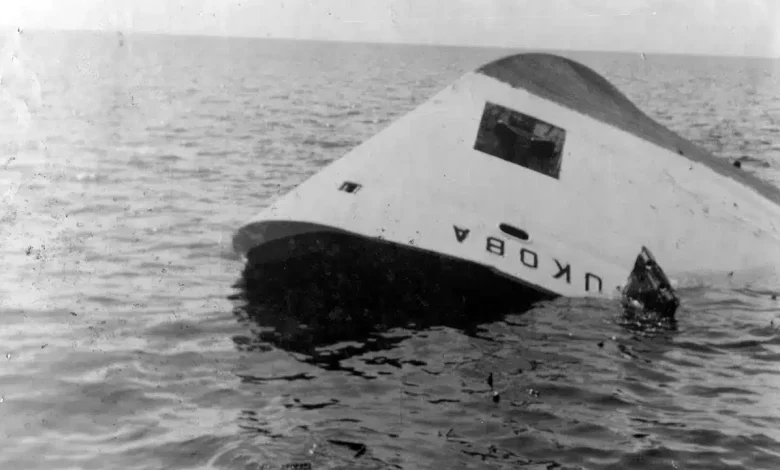
BUKOBA: EXACTLY 29 years ago, on May 21, 1996, Tanzanians woke up to one of the darkest chapters in the nation’s maritime history.
The MV Bukoba, a steamer ferry that routinely transported passengers from Bukoba via Kemondo to Mwanza, never made it to its final destination.
It capsized just eight kilometres from Mwanza City, killing an estimated 1,000 people. Yes, a staggering number, nearly half the size of a small town, wiped out in the blink of an eye.
While some tragedies slowly fade from memory, this one remains etched in the hearts of survivors and the families left behind.
And as each year passes, it raises a haunting question: Have we done enough to remember and learn? One of the few who lived to tell the story is Jasson Mutalemwa, now 56, a resident of Bulembo village in Muleba District.
On that fateful day, Mutalemwa was travelling from Bukoba to Dar es Salaam on a business trip. As fate would have it, his journey turned into a nightmare.
“I was awakened around 6 am by a terrified co-passenger who told me something was wrong. The steamer had lost stability,” he recalls, with a vividness that makes your coffee go cold. In a snap decision that likely saved his life, he grabbed a nearby life jacket.
Moments later, a loud bang was heard and he was thrown deep into the waters of Lake Victoria a watery world where confusion reigned and death lurked. He believes he lost consciousness for a few minutes.
When he came to, the steamer was gone, swallowed by the lake.
“Bodies had already started floating. It was horrific,” he says. Mutalemwa was rescued five hours later at 11 am, alive but traumatised. He has never boarded a ship again.
“Since 1996, I travel only by road,” he says. Who can blame him? Out of the approximately 1,000 people onboard, only 114 survived. The government recovered 332 bodies, which were returned to families for burial, while another 391 were buried at a government site in Igoma, Mwanza.
The numbers still don’t fully add up many remain unaccounted for, their final resting places hidden in the depths of the lake. Families were devastated.
The Lutanjuka family from Rukulungo village in Kiziba Division lost 23 members, who had just attended a funeral and were returning to Dar es Salaam.
Salum Mawingu, a former striker for Balimi FC, lost 18 relatives who were heading to Dar, some even preparing to return to work in Saudi Arabia and Kuwait. Joyful occasions like weddings and send-offs turned into long, tragic farewells.
Many, including survivors like Mutalemwa, have been calling for May 21 to be marked as a national holiday a day of remembrance, reflection and hopefully, change.
He suggests the government build a monument at the Mwanza Regional Commissioner’s office, engraved with the names of all who perished and those who survived.
Because let’s face it we build statues for politicians and rename streets faster than you can say “safari,” but where’s the dignity for the 1,000 lives lost in this national tragedy? Though nearly three decades have passed, the government hasn’t been sitting idle.
ALSO READ: MV Bukoba ‘painful death’
Minister for Works Abdallah Ulega has been vocal about addressing the transport challenges in regions affected by the disaster.
He emphasised the need to connect border regions with better roads and revive water transport in a safer, smarter way.
Projects like the MV Mwanza “Hapa Kazi Tu” steamer are part of the plan to restore confidence in water transport. Meanwhile, a significant infrastructure project the 50-km Nkwenda–Omurushaka Road is being constructed to improve road access in the Kagera region.
“This road will transform Kagera. I understand the hardships since the MV Bukoba sank, but we’re turning the tide,” said Minister Ulega in Dodoma.
And if the words weren’t convincing enough, the project’s price tag of 94.3 billion shillings shows the government is serious.
A Chinese contractor, Shandong Luqiao Group Co Ltd, has already received 9.1 billion shillings in advance to get rolling.
Kagera is not just another dot on the map it’s a gateway to four East African Community (EAC) nations: Rwanda, Burundi, Uganda and Kenya, with trade access to DRC and South Sudan as well. With better infrastructure, the region could become an economic powerhouse.
Roads, ships and trade routes aren’t just concrete and metal they’re pathways out of poverty. According to Engineer Ntuli Mwaikokesya from TANROADS, Kagera’s road network covers 1,966 km, including major trunk and regional roads.
The effort now is to make sure even the feeder roads get some love especially the remaining 11km to Omurushaka, which will be improved using the Roads Fund.
As Tanzania looks ahead with ambitious roads and shiny new steamers, we must also look backward honestly and humbly.
Tragedies like the MV Bukoba disaster should not be buried in the footnotes of our history books.
These are not just numbers; they were mothers, fathers, children, students and workers lives lost, dreams dashed and families forever changed.
If nothing else, let May 21 remind us of the price of complacency, the need for accountability and the power of national memory. A monument costs little compared to the lives lost.
A day of mourning won’t stop the economy. But the absence of both? That costs us something far greater our humanity.
So, next May 21, before you rush into your daily hustle, pause. Think. Light a candle. Share a story.
Or maybe even write to your MP and say: “Hey, how about that MV Bukoba memorial?” Because the lake may have taken the ship, but we must never let it sink the memory

570275 44701Wow you hit it on the dot we shall submit to Plurk in addition to Squidoo effectively done انواع محركات الطائرات | هندسة نت was fantastic 659788