How a teachers’ dream became a thriving financial institution
DAR ES SALAAM: FOR decades, teachers in Tanzania have played a vital role in shaping the nation’s future by educating generations of citizens, yet many have faced significant challenges in accessing reliable and affordable financial services.
The establishment of Mwalimu Commercial Bank (MCB) a decade ago marked a turning point for the teaching profession, providing a dedicated financial institution designed to address the unique economic needs of teachers.
By offering accessible savings products, affordable loans and tailored banking solutions, MCB has empowered thousands of teachers to improve their livelihoods, invest in personal development, educate their children and engage in income generating activities that strengthen household economies.
The bank’s growing success reflects its important contribution not only to teachers but also to the wider national economy. Since its establishment, MCB has continued to strengthen its operational and financial performance, recording customer deposits worth 75.1bn/- and a loan portfolio of 70bn/-.
These achievements demonstrate the confidence that customers have placed in the institution and its ability to support economic growth.
By enabling teachers and other customers to access capital for business ventures, housing, agriculture and other productive investments, the bank has helped stimulate local economic activities, create employment opportunities and improve living standards.
As Tanzania pursues inclusive economic development, MCB stands out as a strategic institution that continues to transform the lives of educators while contributing to the country’s broader development agenda.
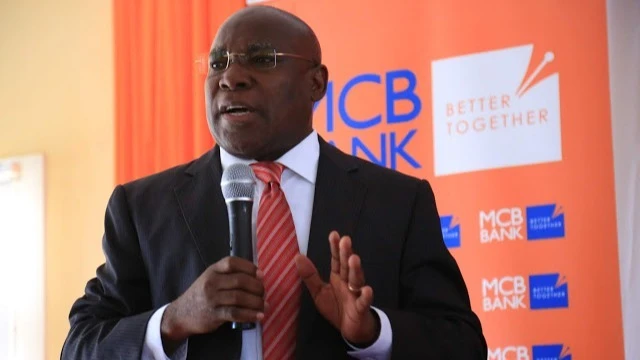
Speaking in Ilemela municipality recently during the MCB’s 10th Annual General Meeting of Shareholders, the bank’s Chief Executive Officer, Mr Richard Makungwa said the bank recorded a pre-tax profit of 500m/- in 2025, surpassing the projected profit of 440m/- budgeted for the year.
According to him, the bank has registered significant growth in its lending portfolio and balance sheet, with total assets increasing from 30bn/- to 100bn/- over the past few years, reflecting a strong upward trajectory in its financial performance.
“Six years ago, we were recording substantial losses, but three years ago we started making profits and have continued to improve ever since,” he said.
He said the bank has successfully completed a capital-raising exercise this year, noting that MCB was established primarily to provide teachers with easier access to affordable loans.
Speaking on the implementation of Tanzania’s National Development Vision 2050, Mr Makungwa said MCB has developed a Five-Year Strategic Plan (2026–2030) aligned with the objectives of the national vision.
“We have already focused on advancing digital payment systems and promoting a cashless economy. Our major goal is to continue improving our financial service delivery platforms,” he said.
He explained that the bank has prioritised agricultural financing through partnerships with various institutions supporting the sector.
ALSO READ: Mwalimu Bank leads DSE with strong surge
“Currently, we are working closely with small and medium-sized enterprises while continuing to serve teachers, who remain the foundation of the bank and a significant segment of our customer base,” he added.
He said the bank has recorded solid growth in its financial position in the year 2025, which was driven by an increase in assets and improved income generation, alongside continued efforts in cost management.
For financial assets, according to him, total assets grew by 9.25 per cent in 2025 compared to 9.64 per cent recorded in 2024, mainly due to increased cash, customer loans and improved asset location a situation that reflects strengthened liquidity and overall financial stability.
He said the loan book grew by 13.9 in 2025 to 65.5bn- compared to a decline of 8.05 per cent to 57.5bn/- in the same time frame in 2024.
“This growth was largely supported by improved liquidity driven by an increase in customer deposits and short-term borrowing from financial institutions,” he said.
He said the customer deposits also grew by 9.3 per cent in 2025 slightly lower than the 12 per cent growth recorded in 2024 noting that the bank has maintained a strategic focus in increasing customer deposit base.
“In 2025, the bank recorded a positive shift in income composition, with non-interest income contributing approximately 42.7 per cent of total income, compared to 27.7 per cent in 2024, this demonstrates successful efforts to diversify revenue streams and reduce reliance on interest income,” he explained.
In the area of cost efficiency, Mr Makungwa said the cost to income ratio remained slightly on the higher side at an average of 94.6 for the year, although it improved slightly from 96.9 per cent from 2024.
“The Bank has put in place strategies to ensure this ratio continues to decline over time in line with strategic and regulatory expectations,” he said, adding, “When I joined, the bank was honestly not yet making a profit; it was operating at a loss. My main responsibility was to put the bank on a path toward profitability.”
He explained that the bank focused on four key priorities: Mobilizing sufficient deposits to enable lending to teachers and closely monitoring the bank’s income and expenditures.
“We held discussions with our customers and renegotiated our contracts. We improved customer service and strengthened our banking services. Later, we joined the Visa network, which enabled our customers to access services through other banks’ ATMs. We also revived our Mwalimu Mobile platform, allowing teachers to access banking services through that channel,” he said.
MCB Board Chairman Mr Francis Ramadhan said the bank’s assets had reached 97.7bn/- while it continued to enjoy strong customer confidence despite various operational challenges. He said earnings per share increased to 5.7 per cent from 2.1 per cent, reflecting improved profitability.
“Despite these achievements, retained earnings remain relatively low because the bank is still rebuilding its capital base following losses incurred in previous years,” he said.
Mr Ramadhan noted that the bank’s share price had risen significantly from 310/- per share to 1,600/- per share by April this year, despite experiencing periods of fluctuation.
He added that in 2025 the bank strengthened corporate governance by enhancing internal control systems, including anti-money laundering measures, information security and customer data protection.
“These initiatives were aimed at reducing operational risks and enhancing transparency and accountability across all bank operations,” he said.
The Minister of State in the Prime Minister’s Office responsible for Labour, Youth, Employment and Persons with Disabilities, Mr Deus Sangu, commended MCB for its contribution to improving the livelihoods of Tanzanians, particularly women, and for supporting the education sector through various social responsibility initiatives.
He said the bank’s 10th anniversary theme, ‘10 Years, Growing Stronger Together’, reflects the commitment of the Sixth phase government under President Dr Samia Suluhu Hassan to promote unity, collective responsibility and citizen participation in national development.
“This theme clearly demonstrates that success cannot be achieved through the efforts of one individual alone, but through cooperation among shareholders, directors, management, employees and other stakeholders,” he said.
Mr Sangu said stronger collaboration would enable the bank to achieve its goals of serving communities and contributing to national development.
He urged MCB to use its 10th anniversary celebrations as an opportunity to support the implementation of Tanzania’s National Development Vision 2050 by expanding access to financial services.
“The bank should develop robust strategies to increase access to loans and financial products for teachers, youths, women and small-scale entrepreneurs in order to stimulate economic growth and reduce poverty,” he said.
He encouraged the bank to continue investing in the education sector by expanding education loan schemes, supporting teachers’ housing projects and promoting programmes that improve teaching and learning environments across the country.
Stakeholders’ views Retired teacher Mr Gratian Mkoba, the originator of the idea to establish MCB Bank, says that when the bank was being founded, he was serving as President of the Tanzania Teachers’ Union (CWT).
He recalls that the idea emerged one day while he was in the office of the then CWT Secretary General, Yahya Msulwa.
He said a teacher went to the office seeking a loan of three million Tanzanian shillings to pursue a master’s degree in education.
“When the teacher came, Mr Msulwa told him that we did not have that amount of money to lend him. After the teacher left, an idea came to my mind that teachers were coming to the office looking for loans and leaving empty-handed,” he explained.
He added: “Why don’t we think about establishing a bank? Once the bank takes off and begins operations, teachers can obtain loans under the bank’s lending conditions. If teachers come to borrow, they will not miss out on funds except when they fail to meet the required conditions.”
Mr Mkoba said they presented the idea to the CWT General Assembly, which accepted it and after approving the proposal, the assembly agreed that those who had conceived the idea should continue overseeing its implementation. Fortunately, they were re-elected into leadership positions.
“We then committed ourselves to raising capital, tightened our belts, and eventually established the bank,” he said.
Former Teachers’ Union Chairman Mr Herman Kessy said that his first task was to mobilise funds, and after teachers contributed, they found themselves with 12 billion Tanzanian shillings.
“Later, they asked me how much capital was required to establish a bank. I told them 500 million shillings. They replied that that’s easy we already have more than enough capital,” he said.
He said they eventually realised they had more than twice the required capital, with money still remaining.
“I am proud that the work I did was not in vain because the bank is now operating in the market and performing well. I believe the public is satisfied with its services.”
He urged teachers to support and engage more closely with their bank because it has the potential to grow into one of the largest banks in the country. “There is no other bank with as many shareholders as the Teachers’ Bank,” he said.
Head of the Credit Department and one of the bank’s first departmental heads Blandina Palipo said when MCB was launched, it was initially operated with only one branch in Dar es Salaam city.
“We were serving shareholders from almost all over Tanzania. In terms of loans, a customer had to fill out an application form wherever they were and either send it to the bank’s headquarters or travel to Dar es Salaam for processing. This took a very long time before someone could receive a loan,” she explained.
She explained that while other banks could process loans within one to three days, MCB’s process initially took one to two weeks.
“Today, things have changed significantly. We now have digital systems. A customer can fill out a loan application on a mobile phone and submit it electronically. They can receive a loan on the same day or the following day.”
She noted that the bank has undergone substantial transformation since its establishment a decade ago.
“There have been major improvements since this bank was founded 10 years ago,” she said.