Mkinga farmers embrace a new tide of opportunity

MKINGA: FOR years, seaweed farmers along the shores of Mkinga relied on the sun, the tides and patience, often watching part of their harvest spoil before it could reach the market. Today, that story is beginning to change.
In Boma and Moa villages, the hum of modern drying and grinding machines now signals a new chapter, one defined by efficiency, value addition and renewed hope for better incomes.
“We expect to reduce post-harvest losses and add value by producing various products from seaweed,” said leader of the seaweed farming groups, Ms Mwanamvua Ali.
“What used to take days now takes just four hours. We can dry four tonnes of seaweed at once. This is a big liberation,” she added.
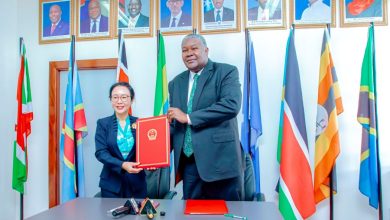
The two, all valued at 62.2m/-, were handed over under a government-backed marine security enhancement programme coordinated by the Prime Minister’s Office. Implemented by the Institute of Rural Development Planning (IRDP) – Lake Zone Centre in collaboration with the United Nations Development Programme (UNDP), the project reflects a broader push to transform coastal livelihoods through sustainable economic activities.
According to Project Coordinator, Dr Bonamax Mbasa, the initiative goes beyond equipment support to address the entire seaweed value chain while promoting marine conservation.
“The IRDP, in collaboration with UNDP, is supporting sustainable seaweed farming and marine protection in Tanga to boost local livelihoods,” he said.
He explained that the programme focuses on training farmers, providing modern processing equipment and promoting value addition, including production of seaweed-based products such as soap, to diversify income sources and strengthen resilience among coastal communities. The initiative is not limited to Mkinga alone.
Dr Mbasa noted that similar interventions have been implemented in coastal areas such as Ushongo, Pangani and Kigombe, with a strong focus on empowering women and youth groups.
Efforts are centred on cultivating commercially viable seaweed species, including Eucheuma denticulatum (spinosum) and Kappaphycus alvarezii (cottonii), which have high demand in international markets.
At its core, the programme aims to gradually transition fishing-dependent communities toward sustainable, nature-based livelihoods, reducing pressure on overexploited marine ecosystems.
Training provided under the project includes improved farming practices, such as shifting seaweed cultivation from shallow intertidal zones to deeper subtidal areas.
This approach helps farmers manage challenges such as disease outbreaks and heat stress linked to changing ocean conditions. Indeed, climate change remains one of the biggest threats to seaweed farming.
“Rising sea temperatures and pathogens have affected production, making it necessary to build farmers’ resilience through better techniques and technologies,” Dr Mbasa explained.
The intervention also aligns with Tanzania’s broader blue economy agenda, which seeks to balance economic development with conservation of marine resources.
Speaking during the handover, Deputy Minister in the Prime Minister’s Office (Policy, Parliament and Coordination), Ummy Nderiananga, said the government is committed to ensuring agriculture, including seaweed farming, becomes a profitable sector.
ALSO READ: Destructive fishing threatens Mkinga’s seaweed industry
“Our strategy is to uplift agriculture through value addition. These machines will improve processing and productivity, and we expect to see positive changes from production to marketing,” she said.
Her remarks reflect a shift already being felt on the ground. While farmers in Mkinga currently sell raw seaweed at between 1,200/- and 1,400/- per kilogramme, processed seaweed products such as powder can fetch up to 60,000/- per kilogramme in other regions. For farmers like those in Boma and Moa, the difference is transformative.
Beyond boosting incomes, the programme also includes plans to strengthen maritime security, with proposals to deploy patrol boats to safeguard marine resources amid emerging regional challenges.
Ms Nderiananga urged communities to take ownership of the project by protecting the machines and ensuring their sustainable use.
“This is an investment for both present and future generations. The government will continue supporting farmers to address challenges from production to market access,” she said.
She also called for greater involvement of youth, describing seaweed farming as a viable pathway to self-employment. Development partners are equally optimistic about the future.
UNDP Programmes Director, Amon Manyama, encouraged the formation of Agricultural Marketing Cooperative Societies (AMCOS) and the establishment of a seaweed processing company that farmers can collectively own.
“This will help ensure efficient use of the machines while strengthening farmers’ position in the market,” he said.
IRDP Principal, Professor Juvenal Nkonoki, noted that the project was designed following an assessment that identified critical gaps, including lack of infrastructure and weak market linkages.
Meanwhile, Mkinga District Executive Director, Rashid Gembe, believes the initiative will significantly transform the district’s economic landscape.
“This project will enhance value addition and enable our farmers to earn better incomes through improved quality products,” he said.
As Tanzania deepens its commitment to the blue economy, initiatives like this are emerging as a powerful link between environmental protection and livelihood improvement.
And in Mkinga, that transformation is already underway, one machine, one harvest and one opportunity at a time.