Minister challenges VETA to close Tanzania’s skills gap

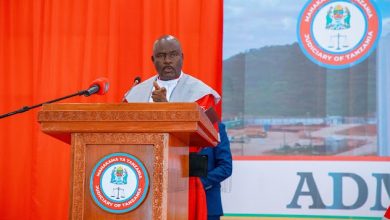
DODOMA: The Minister for Education, Science and Technology, Prof Adolf Mkenda, has launched Vocational Education and Training Authority (VETA) Training Advisory Committees and tasked them with ensuring vocational training responds to changing labour market and production needs.
Speaking during the launch in Dodoma, Prof Mkenda said the committees should serve as a link between VETA, the government, employers and the private sector to improve the quality and relevance of vocational education and training.
He said committee members must ensure training programmes equip graduates with skills required in the workplace.
“Vocational education and training should not focus on issuing certificates alone. It should prepare graduates with skills, competence and creativity to work, create employment, use technology and increase productivity,” he said.
ALSO READ: TARURA adopts stone bridge tech to cut costs
The minister directed the committees to advise VETA on aligning training programmes with labour market demands, identifying emerging skills and recommending curriculum improvements or introducing new programmes.
He identified information and communication technology (ICT), construction, energy, agriculture, manufacturing, tourism and hospitality as sectors offering employment and self-employment opportunities.
Prof Mkenda said vocational education and training was essential to implementing the Tanzania Development Vision 2050, noting that the country could not build a strong economy without a skilled workforce capable of operating modern technologies and systems.
He also urged committee members to serve as VETA ambassadors in their respective sectors by strengthening cooperation with employers in curriculum development, practical training, research and technology.
The minister’s directive places greater emphasis on ensuring vocational training remains responsive to technological change and industry requirements, while enabling graduates to secure employment, establish businesses and contribute to national productivity.
The committees are therefore expected to strengthen the connection between training institutions and the workplace, helping ensure that vocational education produces graduates equipped for both current and emerging opportunities.