Mining sector accelerates growth through reforms, investment
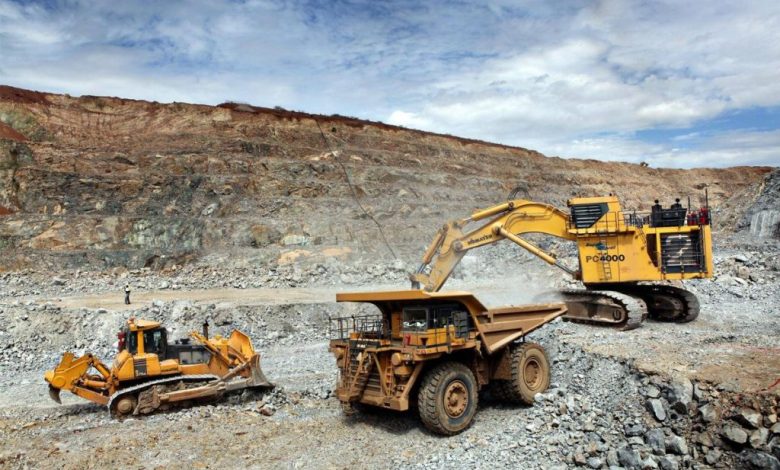
ARUSHA: THE Ministry of Minerals has collected 411bn/- in the first quarter of the 2026/27 financial year, exceeding its revenue target by 17 per cent and reflecting progress in implementing the government’s mining sector development agenda during the first year of President Samia Suluhu Hassan’s second term.
The collection represents 117 per cent of the 351bn/- target set for the July–September 2026 period. For the entire financial year, the ministry has been tasked with collecting 1.4tri/-.
Achieving nearly a third of this target within just three months signals strong revenue performance and continued improvements in the management of the mining sector.
The achievement has largely been attributed to the contribution of small-scale miners, who have become important players in government revenue collection through payment of taxes and other statutory charges.
The trend raises optimism that the Ministry could surpass its annual revenue collection target.
The achievement comes as President Samia continues to direct government leaders to strengthen the management of key economic sectors and increase their contribution to national development.
During the swearing-in ceremony of her Cabinet and outlining her government priorities in the second term, President Samia commended the Ministry of Minerals for its performance in the country economic growth.
The President’s remarks encouraged the ministry’s leadership and its entire team to strengthen their efforts towards achieving government targets and ensuring that the mining sector continues to make a significant contribution to the national economy.
To strengthen the management and trade of Tanzanite, the Ministry of Minerals has introduced various strategies aimed at improving mining operations, promoting the use of modern mineral identification technologies and creating a favourable business environment.
Between July and September this year, Tanzanite weighing 274,632.32 grammes, which valued at 3.23bn/- generated revenue for the government after being sold by miners.
Mirerani Zone Resident Mines Officer, George Kaseza, based in Simanjiro District, Manyara Region, said the achievement was attributed to effective supervision by the Ministry of Minerals and cooperation from mine owners in reporting Tanzanite production within the Mirerani security wall.
He said production of Tanzanite Beads stood at 8,622,049.36 grammes, valued at 95.83m/-, while Tanzanite Clive weighed 20,562.35 grammes and was valued at 16.73m/-.
Mr Kaseza said the completion of the Mirerani security wall in April 2018 and the establishment of the mineral market in 2021 had strengthened the supervision and trading of Tanzanite. He added that the area is equipped with 310 closed-circuit television (CCTV) cameras and 573 security lights.
In 2026, the government also ordered 12 safety helmets fitted with cameras for officers supervising underground mining activities.
Regarding Tanzanite trade during the 2025/26 financial year, Mr Kaseza said an auction for smallscale traders held on May 15 this year enabled the sale of 2,809.31 grammes of the gemstone, valued at 271.270bn/-.
He said another auction for large-scale traders, held on May 21 this year, facilitated the sale of 10,174.92 grammes valued at 721.750bn/-.
To improve trading services and bring auctions closer to miners, Mr Kaseza said the government had constructed a mineral trading centre known as Tanzanite City Centre in Mirerani at a cost of 5.4bn/-.
He said the modern five-storey building was constructed to bring mineral buying and selling services closer to mining sites and facilitate national and international auctions.
The initiative, he added, aims to enable Tanzanite traders and smallscale miners to benefit more from the country’s precious gemstone.
For his part, Manyara Regional Miners Association (MAREMA) Chairperson, Elisha Mnyawi, said Tanzanite miners and traders had become increasingly committed to cooperating with the government, including paying the required taxes whenever they conducted business.
He said traders were now more aware of the importance of complying with business regulations and avoiding illegal transactions, which deprive the government of revenue despite the favourable business environment it has created.
Meanwhile, Mirerani Branch MAREMA Chairperson, Samwel Rugemalila thanked the government for various initiatives aimed at improving the sector, including bringing auction services closer to the Mirerani Township Authority.
For her part, Chairperson of Mineral Traders within the Mirerani Wall, Magreth Nelson, said the reinstatement of mineral auctions has enabled traders to sell their gemstones transparently and under competitive pricing arrangements.
Another member of the mineral traders’ association, Victor Kunyara, urged the government to introduce regulations requiring miners to reserve 10 per cent of their mineral production for local traders, enabling them to earn income and pay taxes.
In another development, the Mining Commission collected 315.4bn/- during the first quarter of the 2026/27 financial year.
Additionally, 2,356.413 kilogrammes of gold were refined at Mwanza Metals Refinery. According to the Ministry of Minerals, the government is also planning to purchase a specialised helicopter for mineral exploration activities.
The move is expected to improve the identification of gold deposits and increase government revenue from the sector. The mining sector’s achievements have also been supported by the performance of institutions operating under the Ministry of Minerals.
These include the Geological Survey of Tanzania (GST), State Mining Corporation (STAMICO), Mining Commission, Tanzania Extractive Industries Transparency and Accountability Committee (TEITI), and Tanzania Gemological Centre (TGC), based in Arusha.
At TGC, alongside ongoing efforts to strengthen the institution through infrastructure development, the centre has opened a specialised shop selling gemstone jewellery and other ornamental products at the Arusha International Conference Centre (AICC).
The development brings the number of its outlets to two, including another shop located at Kilimanjaro International Airport (KIA).
The mining sector has continued to create employment opportunities for Tanzanians, with direct jobs currently exceeding 19,356, of which 97 per cent are held by Tanzanians.
In addition to these employment opportunities, Tanzanians continue to occupy various senior positions in mining companies and provide essential services, including the manufacturing of mining equipment.
The development is stimulating domestic economic growth and increasing local participation in mining activities.
The government has strengthened access to reliable markets for small-scale miners through mineral buying centres.
ALSO READ: MINEXPO Tanzania unlocks doors for global investors, firms engaged in mining equipment
The initiative aims to enable miners to secure better prices and fair returns while controlling the smuggling of minerals outside the formal trading system. Currently, Tanzania has 44 mineral markets and 114 mineral buying centres across the country.
In strengthening international relations, the Ministry of Minerals, in collaboration with its institutions, has signed cooperation agreements with several countries, including the United Kingdom, Sweden and Finland.
The partnerships aim to promote skills development, strengthen technological capacity and facilitate access to capital for the development of the mining sector and increased national benefits.
The government, through the Ministry of Minerals, has begun implementing measures to improve Tanzanite mining and trading systems following reports and recommendations from commissions and committees established to examine challenges facing the sector.
The measures aim to improve the business environment, strengthen supervision, increase production and add value to the world’s rare gemstone.
During his inspection tour of Tanzanite mining and trading activities in Mirerani, Minister for Minerals, Anthony Mavunde visited mines owned by Franone Mining & Gems Co. Ltd and Chusa Mining Limited, as well as a small mineral market, valuation centre and Tanzanite trading building.
The minister gave mediumscale Tanzanite miners two weeks to submit reports detailing the steps they were taking to adopt modern exploration technologies.
He stressed that science and technology were essential in identifying underground mineral deposits and increasing production of the rare gemstone, instead of relying on speculative mining due to a lack of accurate geological information.
On access to capital, the minister said miners could benefit from affordable loans through financial institutions as the government continued strengthening credit guarantee systems.
He said the Credit Guarantee Scheme Corporation, through the Bank of Tanzania, had already been established and registered and was expected to help miners access financing to expand their operations.
To strengthen mine supervision and safety, the government has announced the introduction of camera-fitted safety helmets in Mirerani mines.
The technology will enable monitoring of mining activities even underground, with implementation beginning at Franone Mining & Gems Co. Ltd before being extended to other mines.
The initiative aims to improve efficiency, accountability and monitoring of mining operations. Meanwhile, the government has commended Mirerani stakeholders for participating in mineral auctions and contributing to various social services.
However, it has warned mineral dealers against using foreigners to conduct business in violation of established regulations.
The measure aims to protect government interests, strengthen supervision of mineral trading and ensure that the country’s natural resources benefit Tanzanians.