Meet the women who grow more than crops
MOROGORO: WHEN Agnes Simon Elias walks through her flourishing sunflower fields in Chakwale Ward, Gairo District, it is hard to imagine that only a few years ago the same land yielded barely five bags of sunflower each season. Today, the one-and-a-half acre farm tells a different story.
Thanks to modern farming practices, improved seeds and the correct use of fertiliser, Agnes now harvests more than double what she once produced.
The increased productivity has enabled her to move beyond selling raw sunflower seeds. She now processes and markets sunflower cooking oil and sunflower seed cake, adding value to her harvest while increasing her income. But perhaps the most remarkable transformation is not what happens on her farm, it is what her success has inspired in her community.
Her farm has become an open classroom where she trains at least ten aspiring farmers on modern agricultural practices. During harvesting seasons, she employs three men and two women, creating jobs while demonstrating that agriculture can be a profitable business capable of lifting families out of poverty.
“I used to harvest only five bags before I received training in modern farming techniques, today my harvest has more than doubled because I use improved seeds and recommended fertilisers that are also resilient to climate change. Agriculture has completely changed my life,” Agness recalls.
The income she earns has given her financial independence and enabled her to educate her children in better schools.
“I also believe success means giving back, that is why I train other farmers, donate exercise books to schoolchildren and buy sanitary pads for girls from disadvantaged families so they can continue with their education,” she says.
Agnes is among thousands of young Tanzanian women whose lives have been transformed through the CAMFED Association (CAMA), a network of women who once benefited from CAMFED’s educational support and have since become entrepreneurs, mentors and community leaders.
ALSO READ: Sugar shortage sends prices soaring
Their stories demonstrate that educating a girl is only the beginning. With continued mentorship, leadership training and economic empowerment, those same girls are becoming employers, innovators and role models capable of transforming entire communities.
CAMFED, a pan-African movement working to tackle poverty, inequality and injustice through girls’ education and women’s leadership, partners with the Tanzanian government, schools, parents and local communities to ensure vulnerable girls remain in school and realise their full potential.
Unlike many education programmes that conclude once students graduate, CAMFED continues investing in young women through CAMA, equipping them with leadership, entrepreneurship and life skills that enable them to become agents of change.
Across rural Tanzania, that investment is bearing fruit. Several kilometres away in Iringa Region, another inspiring story is unfolding. For Stumai Mahenge, disability has never defined her future.
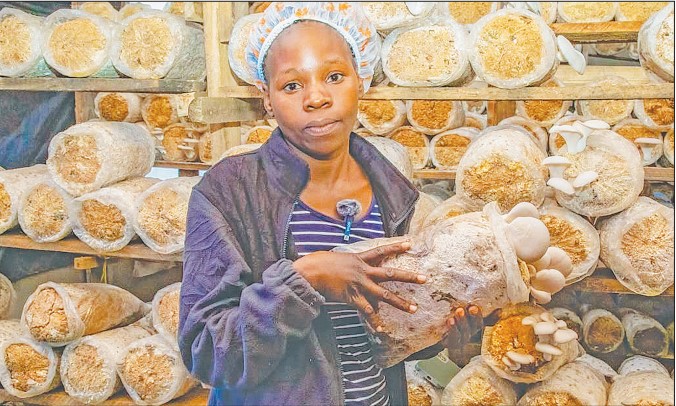
Supported by CAMFED from Form One through Form Four, she ventured into mushroom farming last year after receiving financial support from the organisation.
Today she manages approximately 900 mushroom growing units and supplies fresh mushrooms to customers in Zanzibar and several hotels within Tanzania. Because mushroom farming requires less physical labour than many traditional farming activities, it has provided an ideal enterprise through which she has achieved economic independence.
Currently harvesting around 15 kilograms of mushrooms every week, Stumai has set herself an ambitious target of increasing production to 100 kilograms weekly.
Her journey, however, began long before she entered the mushroom business. “I developed an interest in agriculture while growing up in my village. I later learnt different farming techniques, joined a cooperative society and even studied Information Technology because I believed technology could help improve agriculture.” After completing her studies, she joined the Kijiji Trust programme, where she combined agriculture with community development and agribusiness.
Today, besides managing her own enterprise, she trains urban youth and women in affordable mushroom production techniques using locally available materials such as sawdust, maize stalks and soil.
“We promote simple and environmentally friendly methods that anyone can adopt without spending a lot of money,” she says, adding that agriculture enables families to produce food, earn income and improve their quality of life. Her success demonstrates that physical disability need not be a barrier to entrepreneurship when individuals are equipped with skills, confidence and opportunity.
In neighbouring Mvomero District, another CAMA member is helping redefine what agriculture means to young Tanzanians. Safiki Adrian Mpiluka, from Malowa Village in Kibati Ward in Morogoro district, grew up watching her parents farm. Initially, agriculture was simply a hobby. That changed after she received support from CAMFED.
Since 2024, she has ventured into commercial horticulture, specialising in irrigated production of cucumbers, tomatoes and bell peppers. Today, she not only manages her own farm but also trains other women in modern farming practices.
ALSO READ: Heart screening camp opens path to India treatment
“Many people still believe farming is only for poor people or those who have failed elsewhere. That perception must change. Agriculture is a business. If it is done professionally, it can create wealth, employment and financial independence,” Safiki says.
She believes that empowering women economically benefits entire communities.
“When women earn an income, they invest in their families. They educate their children, improve nutrition and contribute to community development.” Her message resonates with many young women who are increasingly viewing agriculture as a viable career rather than a last resort.
The stories of Agnes, Stumai and Safiki represent a much broader vision behind CAMFED’s work in Tanzania. Since establishing operations in the country in 2005, CAMFED has partnered with government institutions, schools, parents and community groups to identify vulnerable girls and provide the financial, educational and emotional support they need to complete school.
However, the organisation’s investment does not end at graduation. Young women automatically become eligible to join CAMA, where they receive leadership development, entrepreneurship training and opportunities to mentor younger girls.
Today, CAMA members mentor students in primary and secondary schools, advocate against child marriage, promote gender equality, support vulnerable children to remain in school and establish businesses that create employment opportunities.
Many have become respected community leaders whose influence extends well beyond their own enterprises. The organisation has also strengthened collaboration with the government through strategic national initiatives, including support for the recently approved Climate Education Module, demonstrating how partnerships can produce sustainable solutions for education and youth development.
The experiences of these young women also align closely with Tanzania’s broader development agenda. Agriculture remains the backbone of the country’s economy, employing millions of people while contributing significantly to food security and poverty reduction.
Yet many young people continue to migrate to urban areas believing that farming offers limited opportunities. The success of CAMA members challenges that narrative. Instead of viewing agriculture as subsistence farming, they are embracing it as agribusiness, combining improved technologies, value addition, climate-smart practices and entrepreneurship to generate income and employment.
Their work also demonstrates how women can become central players in achieving national priorities such as food security, climate resilience, youth employment and rural industrialisation.