Mama Fatma Karume: A legacy of unity, Union and women’s rights
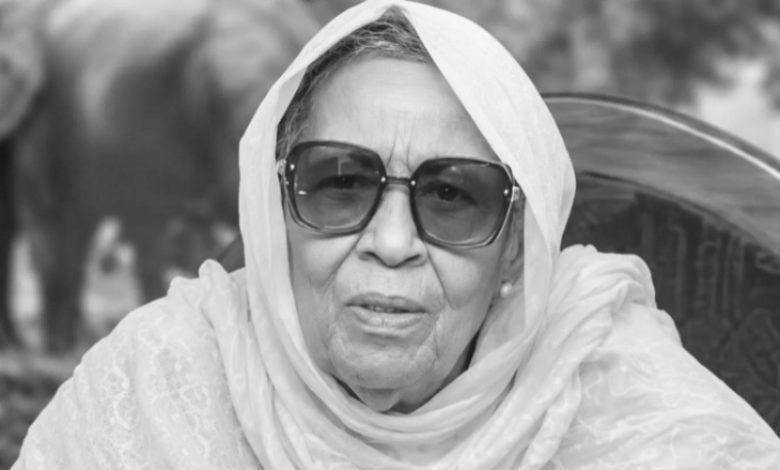
ZANZIBAR: FATMA Karume, widow of Zanzibar’s first President, the late Sheikh Abeid Amani Karume, has died at the age of 97, leaving behind a legacy closely associated with the defence of the Union between Tanganyika and Zanzibar and the advancement of women’s rights.
Her death was announced on Monday night by Zanzibar’s Second Vice-President Hemed Suleiman Abdulla, who told viewers through Zanzibar Broadcasting Corporation (ZBC) that Mama Karume had died at her home in Mbweni, Unguja.
For many Tanzanians, particularly in Zanzibar, Mama Karume will be remembered not only for her place in the country’s political history, but also for her outspoken defence of the Union and her longstanding advocacy for women’s participation in public life, including their right to vote and hold leadership positions.
The Union established in 1964 between Tanganyika and Zanzibar was one of the issues on which she remained particularly firm.
In her view, the Union was more than a political arrangement. It was a bond that had created opportunities for Tanzanians on both sides to live, travel, work and learn from one another.
Speaking in a recent special interview with a team of journalists from Tanzania Standard (Newspapers) Limited (TSN) special programme titled Former Leaders’ Bench with the Daily News, Ms Karume strongly defended the Union and rejected arguments that it had undermined Zanzibar.
“At least for the past six decades of the Union, I have seen the bad side of it,” she said, referring to what she viewed as a lack of evidence that the Union had harmed Zanzibaris.
Instead, she argued that the Union had opened opportunities for people in different ways and strengthened social, political and economic connections between Zanzibar and the Mainland.
“The Union remains strong and has a very good connection. We are free to live and travel to any part of the Union. It has also helped in sharing experience as many people from Zanzibar learn from their counterparts in the mainland,” she said.
Her conviction was also rooted in her personal connection to the history of the Union.
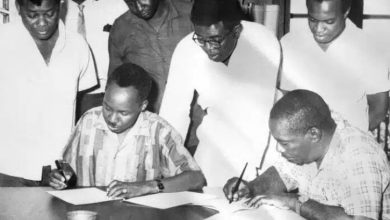
As the wife of Abeid Amani Karume, one of its founding figures, she lived alongside a generation closely involved in the events surrounding its establishment.
She said the Union’s founders, Mwalimu Julius Nyerere and Abeid Amani Karume, were motivated by what they considered to be the broader interests of the people rather than personal ambitions.
According to Ms Karume, the founders considered the aspirations of the people when creating the Union and even envisioned wider regional integration involving neighbouring countries.
She also recalled a story she had heard from her husband in which Mwalimu Nyerere suggested that Karume become the first President of the Union, but Karume declined and instead urged Nyerere to take the position.
For Ms Karume, the story illustrated what she regarded as the spirit in which the Union was created, a willingness by its founders to place broader national interests above individual positions.
She acknowledged that disagreements had emerged over the years, particularly over issues concerning the relationship between Zanzibar and the Mainland.
However, she argued that such differences should not be allowed to undermine the foundations of the Union.
She attributed some of the more divisive debates to developments following the deaths of Karume and Nyerere and the return of multiparty politics.
Ms Karume nevertheless maintained that the principles she associated with the founding of the Union: Unity, freedom, love, peace, stability and dialogue should continue to guide Tanzania.
“It is true that disputes will emerge, but the best way to address them is dialogue,” she said.
She also recognised that Zanzibar and Mainland Tanzania are distinct entities within the Union, a reality that can sometimes produce disagreements and frustrations.
ALSO READ: Mama Fatma Karume dies at 97
Rather than treating those differences as grounds for division, however, she advocated dialogue and practical solutions.
She particularly called for the reduction of unnecessary barriers affecting citizens and traders, including non-tariff barriers at entry points, arguing that leaders on both sides remained committed to strengthening the Union.
“We should all pray for the Union to continue and last,” she said.
Her message throughout the interview was that the future of the Union depended not only on constitutional arrangements and political leaders, but also on the willingness of Tanzanians to protect the values of peace, unity, mutual respect and dialogue.
Championing women’s participation Beyond the Union question, Ms Karume’s public life was also marked by her support for women’s rights and participation in national affairs.
She stood for women’s right to participate fully in public life, including voting and holding leadership positions, at a time when women’s political participation was an important part of the country’s broader development conversation.
Her advocacy reflected a wider belief that women should have an equal opportunity to contribute to the political, social and economic development of the country.
In remembering Fatma Karume, Tanzania is therefore also remembering a woman whose life was closely connected to two enduring national conversations: The place of the Union in the country’s history and the role of women in shaping its future.
Her death closes another chapter in the living memory of the generation associated with the formation of the Union. But the issues she spoke about unity, dialogue, equality, women’s participation and the future of the Union remain part of Tanzania’s continuing national conversation.