Malaria fight gains new tools, but elimination remains distant
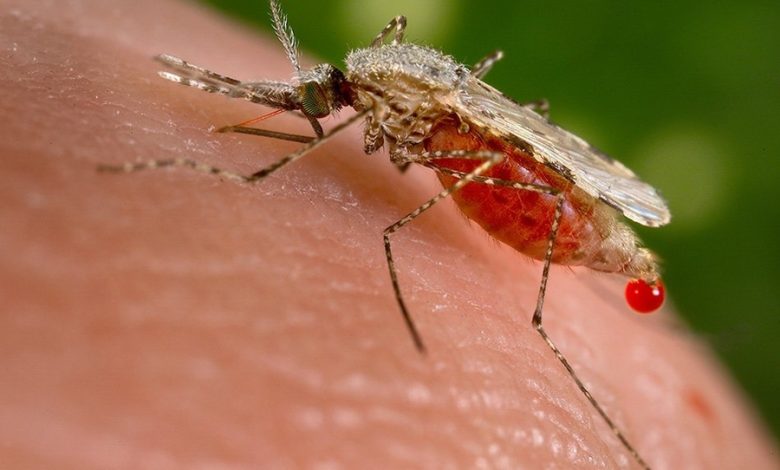
DAR ES SALAAM: THE fight against malaria is entering a new phase, with improved mosquito nets, preventive medicines and vaccines offering fresh hope of reducing infections and deaths across Africa.
But the growing range of interventions also exposes a difficult reality: scientific progress will not automatically translate into elimination.
Malaria remained one of the world’s major public health challenges in 2024, causing an estimated 282 million cases and 610,000 deaths. Most victims were African children, particularly those under five years of age.
A review published in The New England Journal of Medicine argues that malaria prevention is undergoing a transformation after years of stalled progress.
However, it warns that sustaining existing gains and moving towards elimination will require more than introducing new technologies.
Countries must combine interventions according to local transmission patterns, strengthen surveillance and take greater responsibility for financing and managing their programmes.
The scale of the challenge is considerable. Global efforts between 2000 and 2024 are estimated to have prevented 2.3 billion malaria cases and 14 million deaths.
In Africa, insecticide-treated mosquito nets played a major role, accounting for 68 per cent of the reduction in cases between 2000 and 2015.
That success is now under pressure. Mosquitoes are increasingly resistant to commonly used insecticides, particularly pyrethroids, weakening the effectiveness of conventional nets.
Resistance to medicines used in preventive treatment also threatens the ability to protect vulnerable populations.
The response is shifting towards more effective combinations of tools. New-generation mosquito nets, introduced from 2023, combine pyrethroids with additional insecticides designed to improve protection against resistant mosquitoes.
The World Health Organisation (WHO) and the Global Fund have been prioritising these dual-ingredient nets in mass distribution campaigns. Preventive medicines are also reaching more children.
Seasonal malaria chemoprevention protected 54 million children in 19 sub-Saharan African countries in 2024.
The intervention involves giving children preventive antimalarial treatment at regular intervals during periods when transmission is highest.
The review reports that the treatment reduced malaria related illness and deaths by 59 per cent compared with no preventive treatment.
Its estimated full economic cost is about four US dollars per child annually, although costs vary between countries. Vaccination adds another important layer of protection.
Two malaria vaccines, RTS,S/ AS01 and R21/Matrix-M, have received WHO prequalification and are being introduced across Africa.
Both reduce malaria incidence by about half during the year after vaccination, although they are currently recommended for young children. By April 2026, 25 African countries had introduced malaria vaccination.
ALSO READ: Tanzania calls on African nations, health stakeholders to bolster anti-malaria campaign
Evidence from the first two years of implementation in Ghana, Kenya and Malawi showed that uptake of at least three doses of RTS,S reached between 62 and 66 per cent.
This was associated with a 32 per cent reduction in hospital admissions for severe malaria among vaccine-eligible children.
These developments are encouraging, but they should not create the impression that malaria can be defeated through a single intervention.
Vaccines do not replace mosquito control or preventive medicines. Nor do they protect all age groups and malaria parasite species. The next generation of prevention tools could widen the options further.
Researchers are testing long-acting injectable medicines that could provide protection for several months, reducing the burden of repeated oral treatment.
Monoclonal antibodies have also shown promising results in clinical studies, particularly among young children.
Other approaches seek to prevent mosquitoes from transmitting the parasite, including transmission-blocking vaccines and genetic techniques designed to reduce mosquito populations or make them unable to spread malaria.
However, several of these technologies remain under development and raise regulatory, environmental and community-acceptance questions.
The central challenge is therefore not simply developing more tools, but deciding where, when and how to use them effectively.
The review highlights a shift away from a uniform approach towards interventions tailored to local conditions.
Mosquito species, insecticide resistance, seasonal transmission, access to healthcare and the distribution of infections differ between and within countries. A strategy effective in one district may produce weaker results elsewhere.
This makes reliable surveillance essential. Governments need timely information on infections, mosquito behaviour and resistance patterns to direct resources where they can achieve the greatest impact.
Without such capacity, expensive interventions risk being poorly targeted or difficult to sustain.
Financing presents another serious concern. International donor support is contracting just as countries are being urged to expand access to vaccines, medicines and improved mosquito-control technologies.
National governments will consequently face harder choices about which interventions to prioritise and how to maintain them. Stronger regulatory institutions and local manufacturing capacity will also matter.
African countries need the ability to assess and approve quality-assured products, while more reliable regional supply chains could reduce dependence on external suppliers.
Local production will not necessarily make medicines cheaper, but it can improve supply security.
For Tanzania and other malaria-endemic countries, the message is clear: new scientific tools create opportunities, but their impact will depend on national capacity to implement them consistently and equitably.
Prevention must reach remote communities and vulnerable households, not remain concentrated where health services and infrastructure are strongest.
Malaria elimination will not be achieved by vaccines alone, more mosquito nets or additional medicines.
It requires an integrated and adequately funded response, guided by local evidence and sustained political commitment. The scientific advances offer renewed hope.
Turning that promise into fewer infections and deaths will depend on whether countries can make the right interventions available to the people who need them most.