

Making Dira 2050 everyone’s story
DAR ES SALAAM: THE advertisers were leaving. Inside a radio station in Mbeya, the question was becoming increasingly difficult to ignore. The station had listeners. People tuned in. Its programmes were being heard across the community. Yet the advertisements that filled the airwaves were failing to produce the results businesses expected.
Why were people listening but not buying?
The answer would eventually change Jacqueline Lawrence Mwakyambiki’s understanding of broadcasting, and, perhaps more importantly, offer a lesson on the role communication can play in Tanzania’s journey towards Development Vision 2050, popularly known as Dira 2050.
When Ms Mwakyambiki and her colleagues established Mbeya Highland FM, the ambition appeared straightforward. Mbeya needed a media outlet, they believed, and a commercial radio station could attract audiences, advertisers and eventually become a successful business.
“We started like an ordinary, ordinary commercial radio,” recalled Ms Mwakyambiki, the station’s Managing Director. “We had an idea. We said, Mbeya has no media, so we will open one. People will listen and things will change.” For a while, everything appeared promising.
ALSO READ: UNESCO trains Arusha teachers in digital technology
The station was the first media outlet in the area and quickly attracted attention. Listeners came. Advertisers followed. But the apparent success did not last. One after another, advertisers began withdrawing. The management had to investigate.
“We started asking why. What’s happening?” Ms Mwakyambiki recalled during a discussion on ‘Building Tanzania’s Development Narrative in the Digital Age: Experience of a Media House in Rural Communities’. The research produced an uncomfortable answer.
The people were listening, but they were not buying what was being advertised.
“They were telling us: They are not buying what we’re selling. They just listen, but they are not buying,” she said.
Further investigation revealed why. The station was trying to sell products that had little connection with the economic realities of much of its audience.
“We were trying to sell luxury drinks to people who didn’t have money,” she explained.
The problem was not that rural people did not listen to radio. Neither was it necessarily that advertising did not work.
The station had simply failed to understand the people whose attention it was trying to attract. It had failed to understand their story. That discovery marked a turning point.
“We had to find the story. What is the story?” Ms Mwakyambiki said. Instead of seeing the audience merely as listeners waiting to receive information, Mbeya Highland FM began creating opportunities for communities to speak. The station organised five forums that brought together ordinary citizens and government representatives.
“We let the people tell their story and we let the government tell their story,” she said.
The experience demonstrated that some development challenges do not arise simply because there are no ideas, policies or resources. Sometimes, the problem is that those experiencing the challenges and those expected to solve them are not communicating effectively.
By creating a platform for dialogue, the radio station helped communities explain their realities while giving government representatives an opportunity to explain their positions and plans. It is a lesson with significant implications as Tanzania looks towards 2050.
“The future of Tanzania in 2050 should be the job of the whole ecosystem of communication in Tanzania towards 2050,” she said.
That ecosystem is far bigger than government communication departments or traditional newsrooms. It includes radio and television stations, newspapers, digital platforms, social media networks and content creators. It includes businesses, civil society organisations, educational institutions and government agencies.
Above all, it includes ordinary Tanzanians. That same principle was reflected in remarks by Dr Blandia Kilama, Deputy Executive Secretary for Trade and Innovation at the National Planning Commission. Dr Kilama argued that Tanzania needs a stronger force of people and institutions capable of telling the country’s story from its own perspective. Storytelling, she suggested, should no longer be treated merely as publicity.
It is a tool for changing mindsets, showcasing achievements and positioning Tanzania for greater opportunities in the global economy.
“We have to start to engage,” she said.
One of the major questions, she added, is how Tanzania can change its mindset about the way it packages its ideas, products and achievements. Good ideas can fail to make an impact if they are poorly communicated or presented in a format that does not connect with the intended audience.
“When it comes to storytelling, that is what is going to matter,” she said. But telling Tanzania’s story does not mean abandoning critical thinking. Dr Kilama calls for greater appreciation of homegrown products, innovations and initiatives, while insisting that local origin alone should never be used as an excuse for poor standards.
“We need to have a preference to showcase and appreciate things that come from within,” she said.
Her message carries an important implication for the development narrative Tanzania wants to build. Patriotism should inspire excellence, not lower expectations. If Tanzanian entrepreneurs, innovators and industries are to tell compelling stories about their achievements, those stories must be supported by credible results.
Dr Kilama also offered a warning to young people, entrepreneurs and organisations constantly searching for financial support.
ALSO READ: Economic growth raises demand for OSHA services
“Don’t become addicted to funding,” she cautioned. The statement drew attention to a challenge familiar to many innovators and organisations. The search for grants and external financing can sometimes become a permanent way of operating. Institutions may receive relatively small amounts of funding year after year but fail to develop sustainable models capable of supporting their activities independently.
Development partners, investors and financiers remain important. But sustainable transformation cannot depend entirely on waiting for the next funding opportunity.
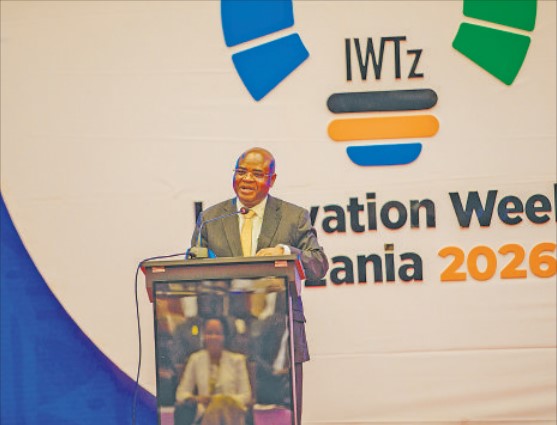
The interconnectedness of these issues was also evident in remarks by Funguo Programme Manager, Joseph Manirakiza during the ongoing Innovation Week Tanzania 2026. The 12th edition of the event has placed innovation at the centre of discussions about Tanzania’s journey towards Dira 2050.
The week-long gathering features about 59 sessions, while more than 7,200 participants had registered since registration opened. Mr Manirakiza said the event brings together innovators, government institutions, the private sector and other stakeholders to explore how new ideas and technologies can accelerate economic and social transformation.
“This year, our focus is aligned with Vision 2050, we believe things must be done differently.” he said.
Innovation, he argued, is already demonstrating its ability to create employment and transform lives. A programme that has supported about 88 startups, with the number expected to reach 100, has collectively generated more than 10,000 jobs, according to Mr Manirakiza.
The potential becomes even more striking when considered at a larger scale. If fewer than 100 innovative enterprises can generate thousands of jobs, what might happen if Tanzania successfully supports hundreds or even thousands more? That is one of the questions lying behind the country’s growing emphasis on innovation.
The answer, however, will not depend on innovators alone. It will require a development environment in which businesses can invest, expand and take risks. Minister of State in the President’s Office responsible for Planning and Investment, Prof Kitila Mkumbo, underscores the importance of strengthening the partnership between government and the private sector.
The central argument was that Tanzania’s economic transformation cannot be driven by government alone. The country needs a stronger private sector capable of investing, innovating and creating employment. This requires a fundamental shift in the relationship between government and business.
Private-sector development, the Minister argues, must be reflected not merely in statements but in plans, policies, reforms and implementation. Businesses should be involved in discussions about the reforms and conditions necessary for them to invest and grow.

Thank you for posting this well-written article. The content is informative and offers helpful guidance. I appreciate the time and effort invested in creating it.
Thank you for publishing this informative update. The explanations are simple and useful for readers. I appreciate your effort in maintaining this educational website.