LCOY Tanzania pushes for comprehensive youth inclusion in climate change decision-making
DODOMA: THE Tanzanian government has underscored the critical need for comprehensive youth inclusion in climate change decision-making and implementation processes.
Officials emphasize that young people should not merely be viewed as passive inheritors of environmental challenges, but as essential architects of sustainable solutions.
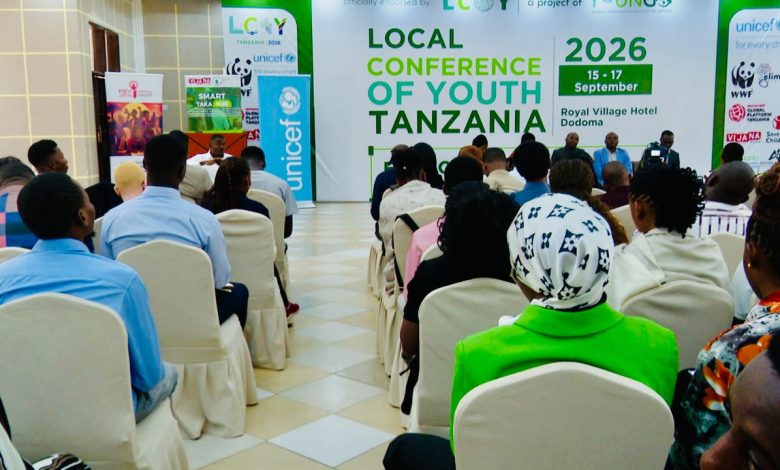
Speaking during the opening of the Local Conference of Youth on Climate Change (LCOY Tanzania) in Dodoma, Amina Mbarouk, the Director of the Environment Department in the Vice President’s Office, stated that youth engagement must transcend tokenistic consultation. She urged stakeholders to grant young people a permanent seat at the decision-making table where they can initiate ideas and drive action.
Mbarouk warned that the impacts of climate change are no longer a distant threat to Tanzania. The country is already experiencing severe disruptions, including erratic rainfall patterns, prolonged droughts, devastating floods, ecosystem degradation, and negative impacts on agriculture and livelihoods.
“Youth should not only be seen as the generation that will inherit the problem,” Mbarouk said. “They must be recognized as the generation that creates and executes the solutions.”
She added that the government values the energy, creativity, technological savvy, and community mobilization skills that young people bring to national environmental priorities.
The conference addresses critical themes including clean energy adoption, biodiversity conservation, ecosystem restoration, climate-resilient agriculture, climate-related loss and damage, and the integration of digital technologies. Mbarouk urged participants to view these challenges as avenues for economic and sustainable development.
The deliberations at the conference will culminate in a national youth declaration detailing the priorities, needs, and expectations of Tanzanian youth ahead of the COP31 global climate summit. Government representatives noted that this declaration should serve as a powerful advocacy tool for engagement with the private sector, development partners, and international bodies.
Arif Fazel, the Youth Programs Coordinator for ActionAid Tanzania, challenged the youth to utilize the forum to pitch actionable recommendations that can influence local, regional, and international climate frameworks. He highlighted the urgent need for investments in flood-resilient infrastructure, improved drainage systems, and scalable alternatives to charcoal and deforestation.
James Silvester Magesa, the Founder of Regen Action Tanzania, noted that approximately 150 young leaders are attending the event. He highlighted that because youth make up the demographic majority in Tanzania, their use of digital tools and social media is vital for raising environmental awareness and scaling nature-based solutions and artificial intelligence (AI) in conservation.
Additionally, Dr. Happiness Ngonyani, Director of Girls Education for Climate Action, highlighted that empowering women, girls, and youth with climate education is a prerequisite for accelerating community-led adaptation and mitigation strategies across the nation.