Kenya’s fiscal squeeze: Why current economic trends threaten the future of public services
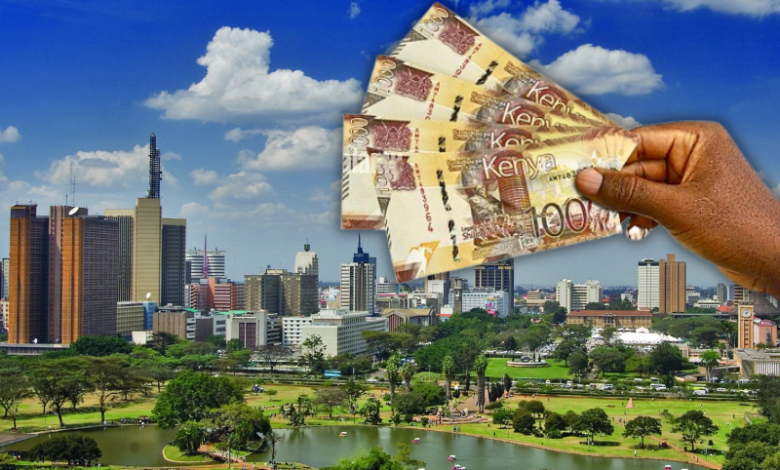
NAIROBI: DESPITE Kenya’s efforts to establish the robust economy that Kenyans were promised during the campaign that propelled the current government to power, a comprehensive examination shows that the promise has not been fulfilled.
The country’s economy and the actual performance of all economic indicators shows that the promise of a robust economy, amongst other pledges to provide employment opportunties to young Kenyans has not been fulfilled, particularly in light of the current focus on the upcoming 2027 elections.
Analysis of the World Bank report, the IMF, and the Kenya National Bureau of Statistics (KNBS), including reports from the Kenya National Treasury (visit treasury.co.ke for annual public debt to 2024-2025), all indicate that since September 2022, Kenya’s economy has navigated a complex path of stabilisation, adjustment, and rising public anxiety.
While inflation has moderated and growth projections remain positive, thanks to President Ruto’s vision of making Kenya Singaporelike, deeper fiscal and structural trends reveal mounting pressures that could undermine Kenya’s capacity to finance essential public goods in the years ahead.
Reports from the World Bank, the IMF, and the Kenya National Bureau of Statistics (KNBS), when examined critically, reveal a concerning pattern: high public debt, persistent fiscal deficits, and constrained revenue growth, all of which, in my view, converge amid rising social demands.
The implications for healthcare, education, infrastructure, and social protection are profound, especially for Kenya’s young population.
A simple analysis of the reality on the ground shows that Kenya’s public debt, according to the annual public debt report 2024/25 has risen sharply over the past decade, but the burden has become particularly pressing since 2022.
Treasury and World Bank data indicate that public debt now stands at nearly 69 per cent of GDP, placing the country in a high-risk debt distress category according to IMF assessments.
In my view, debt in itself is not inherently harmful when borrowed funds finance productive infrastructure or growth-enhancing investment, the long-term benefits can outweigh the costs.
But, speaking to experts in Nairobi last weekend ahead of the meeting to be held in Arusha sometime this month, the concern in Kenya’s case lies in the growing share of revenue consumed by debt servicing.
Some highly respected scholars in Kenyan academic circles at the University of Nairobi believe that interest payments now absorb a substantial share of ordinary government revenue, thereby limiting the fiscal space available for development expenditure. This dynamic creates what, economists, can call or describe as “crowding out.”
Instead of expanding access to hospitals, upgrading rural schools, or strengthening climate resilience, government revenues are increasingly directed toward servicing domestic and external creditors.
In any nation, learned brothers would agree that when debt servicing consumes nearly half of ordinary revenue, the long-term implications are unavoidable: the state’s capacity to deliver public goods weakens, which may raise distrust amongst the electorate.
To address rising deficits, the administration has introduced aggressive tax measures through successive Finance Acts.
While the intent has been fiscal consolidation and compliance with IMF supported programmes, the effect on households and businesses has been contentious.
Higher VAT on fuel and other goods, expanded digital taxation, housing levies, and PAYE adjustments have increased the tax burden at a time when real incomes remain under pressure.
Although inflation has fallen to within the Central Bank’s target range, hovering between 3 and 5 per cent in recent data, the cost of living remains elevated relative to wage growth.
The World Bank’s Kenya Economic Update highlights a crucial concern: fiscal consolidation that relies heavily on taxation without a proportional expansion in productive sectors risks dampening private-sector investment and consumer demand.
For small and mediumsized enterprises (SMEs), which account for most employment, higher taxation and compliance costs reduce profitability and expansion capacity.
This, in turn, weakens job creation, the very foundation of sustainable tax revenue growth. In effect, Kenya risks entering a cycle in which higher taxes suppress growth, slower growth reduces revenue growth, and debt obligations continue to mount.
A closer look at the statistics shows that unemployment in Kenya has remained relatively stable at around 5-6 per cent, according to KNBS and international modelling estimates.
Yet these figures mask deeper structural realities on the ground: youth unemployment and underemployment remain widespread, and most job creation occurs in the informal sector. Formal sector employment growth has been sluggish.
The Federation of Kenya Employers (knbs.or.ke) previously reported significant job losses during periods of heightened operating costs.
When businesses face higher taxes, energy costs, and borrowing rates, hiring slows. A nation where more than 70 per cent of the population is under 35 cannot afford prolonged stagnation in employment creation. Public goods, particularly education and vocational training are meant to translate into productive work opportunities.
If fiscal pressures constrain investment in education or industrial expansion, the demographic dividend risks turning into demographic strain because the relationship between fiscal stability and employment is direct.
Sustained deficits and heavy domestic borrowing elevate interest rates, crowding out private investment. Without robust private sector growth, unemployment pressures will persist, and this is not good for Kenya’s future.
Unquestionably, Kenya has invested heavily in infrastructure over the past decade—from roads and ports to energy generation. However, maintaining and expanding these assets requires sustained fiscal commitment.
ALSO READ: Looting of KSh11 billion from Kenya’s SHA causes deep vulnerabilities in Kenya
The IMF has repeatedly cautioned that debt sustainability hinges on ensuring that borrowed funds generate sufficient economic returns.
If future borrowing is directed primarily toward plugging budget gaps rather than financing high-return projects, infrastructure momentum will not only stall but also have long-term multiplier effects. Moreover, climate change is imposing rising costs.
Droughts, floods, and agricultural disruptions require investment in adaptation and disaster response. Without fiscal flexibility, Kenya’s capacity to manage climate shocks weakens, putting rural livelihoods and food security at risk.
In Kenya, as in many other EAC nations, public goods healthcare, education, security, and infrastructure are the backbone of long-term economic development.
Their provision depends on reliable revenue streams and sustainable borrowing. Yet the current trajectory in Kenya, even as heard from some members of the Kenyan parliament, presents three warning signs. Debt servicing crowds out social spending, and high taxation risks slowing economic expansion.
Employment growth remains insufficient to broaden the tax base. As an economist, It is believed that if this pattern continues, the state will struggle to improve service delivery even as population demands grow.
Healthcare expansion, including universal health coverage initiatives, requires capital and operational funding. Education reform, including digital infrastructure and teacher hiring, depends on budget stability.
Security modernisation and regional peacekeeping also draw from the same constrained fiscal pool. When fiscal consolidation prioritises short-term stabilisation without structural growth acceleration, long term development will falter.
The World Bank projects moderate GDP growth for Kenya, but sustaining higher growth above 6 per cent annually would be critical to meaningfully reducing the debt-toGDP ratio.
Hence, growth must come from productivity improvements, manufacturing expansion, further digital innovation, and agricultural modernisation.
Without broad-based expansion, fiscal arithmetic becomes unforgiving: rising interest costs that will outpace revenue gains.
Don’t get me wrong, Kenya’s advantage lies in its entrepreneurial population, regional trade links, and strategic infrastructure. Leveraging these strengths requires policy predictability, business-friendly reforms, and prudent debt management.
But the way the alignment for the 2027 general election is gaining momentum raises a million questions about what lies ahead, based on what contestants lining up for the race are preaching in rallies and churches.
President Ruto’s administration, in my view, inherited complex fiscal challenges shaped by global shocks, pandemic recovery, and previous borrowing cycles.
Stabilisation efforts have achieved some success, particularly in moderating inflation and maintaining currency stability.
However, stabilisation alone is not enough. The longterm test is whether Kenya can transition from debt-dependent financing to growthdriven revenue expansion. In an economists opinion, the following are necessary for Kenya’s future.
First, strengthen domestic revenue administration without burdening SMEs; second, prioritise high-return public investment; third, improve transparency in public debt management; fourth, increase export competitiveness to boost foreign exchange earnings; and support job-rich sectors such as manufacturing and agro-processing.
Much as all eyes and ears are now on the 2027 election, it is critical to remember that without such reforms, Kenya risks a prolonged fiscal squeeze in which debt servicing competes directly with classrooms, clinics, and community infrastructure.
A key message to my fellow Kenyans is that economic policy is ultimately about choices. Borrowing can finance an opportunity or defer it. Taxation can stabilise finances or suppress growth.
The balance Kenya strikes over the next three years will determine whether it secures sustainable development or faces recurring fiscal stress.
The warning signs are clear. High debt levels, constrained fiscal space, and persistent employment challenges create vulnerabilities that cannot be ignored, especially in the eyes of Kenyan learned Gen Z.
If current trends persist without structural transformation, Kenya’s ability to deliver public goods, healthcare, education, infrastructure, and social protection will be increasingly strained.
It is crucial to emphasise that the future economy depends on disciplined fiscal management and inclusive expansion, rather than solely on growth projections.
The coming years in Kenya are not merely an economic adjustment period; they are a defining chapter for the sustainability of its public sector and the well-being of its citizens.