Kenya SGR and overpriced tag: Who is to blame or just the politics of blame?
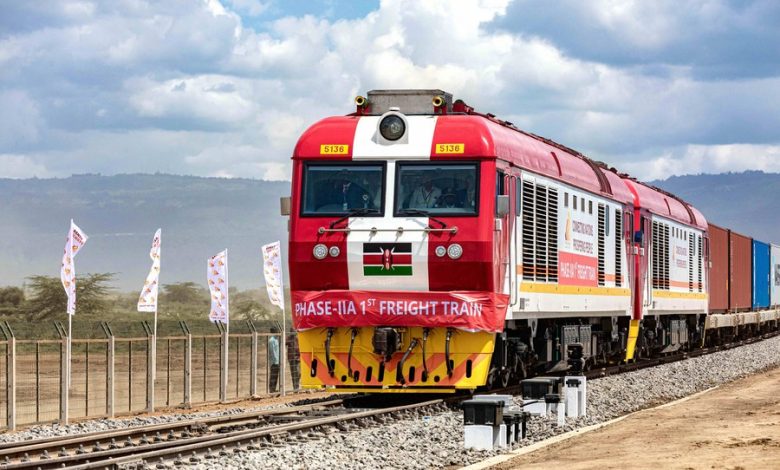
NAIROBI: AMONG other things, the President of Kenya, William Ruto who served as the chairperson of the session at the EAC summit in Arusha last month, praised Tanzania’s SGR, describing it as a model for the benefits Tanzania is gaining from this significant strategic investment.
I was compelled to ask a fundamental question upon reflection of such endorsement: Who is responsible for Kenya’s SGR and the related costs, which have become the centre of contention, especially as parties rally to mobilise supporters and voters for next year’s general election?
The Standard Gauge Railway (SGR) was hailed as a transformative infrastructure project when it was launched in Kenya in 2017, symbolising economic ambition, regional integration and modernisation.
The railway, initially meant to connect the port city of Mombasa to Nairobi and later extend to Naivasha, was anticipated to lower transport costs, boost commerce and position Kenya as the logistics hub of East Africa.
However, almost a decade later, the SGR has emerged as one of the most contentious infrastructure initiatives in Africa.
A persistent concern at the heart of the debate is whether the railway was overpriced, and if so, who is responsible.
The SGR, primarily financed through loans from China’s Exim Bank, was built at an estimated cost of around one billion dollars. Despite this, it continues to operate unobtrusively.
The Kenyan government at the time justified the expenditure by forecasting significant cargo traffic and long-term economic gains.
The message conveyed was that Kenya would serve as a model for this type of transport within the EAC region.
It was expected that the railway would enable the transfer of goods from roads to rail, reduce congestion, and generate enough revenue to settle its loans.
Nevertheless, these predictions have not materialised as expected.
The railway has been unable to reach profitability due to lower-than-anticipated cargo volumes.
As a result, the government has been forced to subsidise operations and raise tariffs.
Allegations that the SGR was not only economically flawed but also grossly overpriced have been worsened by the gap between promises and reality.
Critics, who are analysts and researchers, argue that Kenya paid a considerably higher price per kilometre than similar railway projects in the region.
While terrain, standards, and financing terms can influence cost differences, analysts and policymakers have highlighted more significant structural issues.
The absence of competitive procurement is one of the most common concerns raised.
Instead of an open tendering process, the Kenyan government chose a government-togovernment agreement with China, directly awarding contracts to the China Road and Bridge Corporation (CRBC).
ALSO READ: Electrified SGR hailed as milestone in EAC integration
This arrangement involved the contractor conducting the feasibility study, building the railway, and, most importantly, operating it.
Regarding transparency, this vertical integration raises serious concerns about inflated costs and conflicts of interest.
Even more alarming are allegations from a former government auditor that Kenya may have overpaid by as much as KSh 777 billion, with the total project costs potentially surpassing KSh 1 trillion—an amount significantly higher than the official figures.
Although these claims are still subject to debate, they highlight the widespread scepticism about financial transparency and emphasise that there is still more to be revealed in Kenya.
Although many are unaware, the SGR controversy is fundamentally rooted in a governance issue.
To expedite the undertaking, the decision was made to forgo competitive tendering.
Nevertheless, it also limited accountability and oversight, allowing critical decisions to be made behind closed doors.
Members of parliament frequently expressed concern that contracts were not fully disclosed to the public, loan disbursements were made directly to Chinese contractors, bypassing Kenyan systems, and parliament and oversight bodies had limited insight into the agreements.
This opacity fostered suspicion and, possibly, mismanagement.
Furthermore, Kenya’s own policy advisory body had warned that the railway might not be financially viable given the expected traffic volumes.
Nonetheless, these warnings were allegedly ignored in favour of the contractor’s more optimistic forecasts.
The involvement of Chinese lenders and contractors cannot be ignored, despite the visible failures in domestic governance.
Critics have criticised China’s financing model, which is often linked to Chinese contractors.
This model is known for its practices of promoting non-competitive procurement, linking loans with construction contracts, and limiting local participation and independent verification.
The SGR initiative was funded by China Exim Bank, with CRBC responsible for construction and operations.
This model is commonly used in Belt and Road Initiative (BRI) projects and aims to reduce risk for lenders.
However, Kenyan critics argue that it can also raise project costs, reduce transparency, and shift bargaining power away from the borrowing country.
Nevertheless, many academics advise against oversimplifying the issue by calling it “Chinese exploitation.”
Research shows that these projects are often influenced collectively by creditor decisions, with African governments playing a vital role in negotiating terms and approving projects.
However, Kenya’s domestic politics may be the most significant factor in the SGR saga, as reflected in the economy and recent decisions. Strong political incentives are often linked to major infrastructure projects.
They act as signs of progress and growth. These projects can be completed within electoral cycles and often create opportunities for patronage and rent-seeking.
The SGR was a flagship initiative of the Jubilee administration, and its rapid implementation was politically advantageous.
Nevertheless, this urgency may have resulted in a lack of due diligence.
The project has since become a political flashpoint, with successive leaders criticising it even as they inherit its financial burden.
The railway has become a symbol of “corruption and greed among the political elite,” as one observer noted. In terms of economic reality, debt, and sustainability, the SGR’s greatest challenge is its economic sustainability, which is determined by assessments that go beyond the cost issue.
Kenya continues to service billions of shillings in annual repayments, despite the railway’s inability to generate sufficient revenue.
Both debt servicing and operations are being effectively subsidised by taxpayers. Key structural challenges include a lack of regional connectivity, competition from road transport, and limited cargo volumes (e.g., the delayed extension to Uganda as previously intended).
Economists contend that the railway’s sustainability is contingent on its status as a regional corridor connecting landlocked nations such as Uganda and the Democratic Republic of the Congo.
The SGR is at risk of remaining underutilised without this expansion. So, who is responsible? It is not easy to determine who is responsible for the SGR’s purported overpricing. The reality is more intricate and communal.
In our capacity as analysts, Kenyan policymakers bear the primary responsibility for approving the project despite concerns about its viability, choosing non-competitive procurement, and neglecting to ensure transparency and accountability.
Chinese entities may have had reasons to inflate costs, assume multiple roles (consultant, constructor, operator), and benefit from opaque contracting while operating within a commercial framework, as shown by Chinese contractors and lenders.
However, the outcome was significantly influenced by a broader governance environment that prioritises megaprojects over economic rigour, as well as feeble institutions and oversight bodies, such as Parliament and audit institutions, that were either unable or unwilling to exercise sufficient scrutiny.
What lessons can be learned from the Kenyan case for the rest of the East African region and beyond?
The SGR experience offers valuable insights not only for Kenya but also for the entire region, including Tanzania, which is currently developing its own railway network.
Tanzania is the only country where procurement is widely transparent and fully endorsed by Parliament, along with other processes that have received all necessary approvals.
However, the Kenya SGR case emphasises the importance of transparent procurement processes, the need for independent feasibility studies, careful management of public debt and project viability, and strengthening institutional oversight.
Infrastructure remains essential for development; however, the SGR demonstrates that the financing and management of initiatives are equally important as the construction of the infrastructure.
The Kenyan SGR and its exorbitant price tag, along with the ongoing blame game, serve as a costly wake-up call.
Kenya’s Standard Gauge Railway is neither a complete success nor a total failure. It has improved passenger travel and offers a long-term chance for regional trade.
However, these achievements are overshadowed by the high costs, debt issues, and governance controversies.
The “overpriced” label may never be conclusively proven or disproven.
Still, it is clear that the SGR points to deeper structural problems in political decision-making, financing, and governance.
Ultimately, the inquiry is not only about the individual responsible but also about how well the lessons have been learned.
The cost of making the same mistakes again could be even higher, as the next round of megaprojects is already underway across Africa.