JKCI marks 10-year excellence in cardiac service
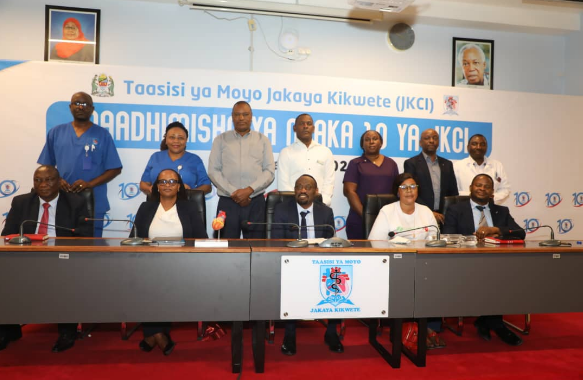
DAR ES SALAAM: JAKAYA Kikwete Cardiac Institute (JKCI) has set a trailblazer of hopes for people with heart complications across the continent as it celebrates its 10 years of excellent service.
The institute has today saved lives and billions of dollars that patients or countries could spend on seeking cardiac services outside the continent.
But it was not easy to start it as it came after painstaking efforts.
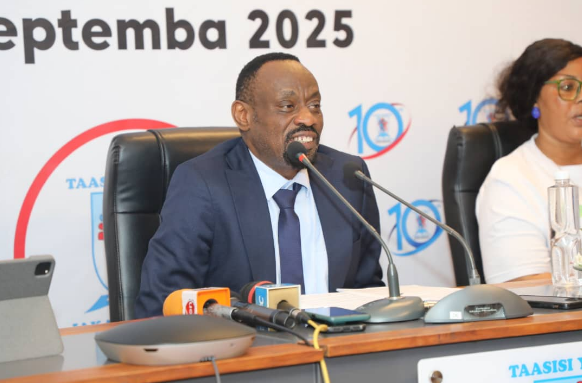
“It started as an idea of the first president, Mwalimu Julius Nyerere, and has now become a great help to the African continent and outside the African continent as services have been improved and become more modern,” explains the Director of JKCI, Dr Peter Kisenge.
Speaking during the 10th anniversary of the institution, Dr Kisenge says the idea of establishing it began in the 1970s, but could not be successful during that period.
He cites the reasons for its failure as a lack of sufficient resources, equipment, locations, and the economic situation.
He notes that in the 1990s, the idea was revived after two doctors, Prof William Mahalu and Prof William Makene, were sent to England to study so that they could return and establish the institution.
“In 2000, the Ministry of Health formed a special group on how to establish a heart institute because people with heart complications were increasing, and many patients were being sent abroad; the government was spending a lot of money.
He adds, “The group was able to travel around various countries in Africa, India, Israel, Asia, and they went to African countries that had established and failed, and those that had succeeded and came up with something to do so that we could succeed”.
Dr Kisenge says the experts came with a report that enabled the service to start; however, in 2010, President Kikwete went to China, where he met with the Chinese president and requested the establishment of the institute.
“The foundation stone was laid in 2008, a team of doctors, nurses, and mechanics went to India to study, about 28 of them studied and returned to establish a heart unit in Muhimbili.
He says the JKCI building officially began construction in 2014, and the institution began operating in 2015
“After its establishment, it has done great things, it has become the best in East and Central Africa, but it is the third largest in performing major bypass surgery and major heart surgery in Africa,” he discloses.
He also says the number of patients who have received care for bypass surgery is more than 14,000 patients, major heart surgery is 16,000 patients and outpatients are more than 948,000.
Dr. Kisenge says that in addition to treating Tanzanians, they have crossed borders and performed heart surgery, where more than 20 different countries have come to be treated at JKCI.
“We have helped Zambia, Malawi, Congo, Rwanda, and elsewhere. We have crossed borders, we get patients from 20 countries, even outside Africa, coming here, we have seen patients from the United States, the United Kingdom, and others,” he emphasizes.
Dr. Kisenge says the patients come because of the infrastructure invested in good medical equipment similar to developed countries, and specialists trained from various countries in the world.
JKCI has now officially begun strategies to expand its services, including establishing a heart transplant service.
ALSO READ: JKCI to officially start heart transplant services
To achieve this, it has formed and launched a special committee of 10 experts that will be under the chairmanship of Dr. Evarist Nyawawa, also involving specialists from various cadres who will oversee the coordination of the strategy.
“Using the existing experts, the institution is planning to start making preparations for heart transplants so that within the next five years Tanzania will be performing heart transplants.
“Today, as we celebrate our 10th anniversary, we are going to open a special committee that will work for five years to carry out heart transplant work. This is a great achievement as an institution for heart transplants,” he says.
He says that countries that perform heart transplants in Africa include South Africa, Egypt, and some North African countries, so with that step, it will be the first country in the East African region.”
“The need is great, heart diseases are increasing rapidly and young people are especially getting heart muscle diseases, where the heart is tired and if you are under 50 years old, why lose your life early, that is why we as an institution want to protect the health of the citizens so that they can be treated,” emphasizes Dr Kisenge.
Dr Kisenge says they have continued to reach out to the people through President Samia Suluhu Hassan’s pocket medicine, where more than 23,000 citizens from all regions have received education and testing services.
“But we have also gone to the people of Comoros, we saw 2,000 people providing services, we have reduced referrals by more than 95 percent, we have saved a lot of money,” he notes.
He says they have done innovative major chest surgery for children, replacing blood vessels, repairing problematic chambers, we have replaced valves without opening the chest, this step is a great success.
“Now we have branches of Dar Group, Kawe, Oysterbay, and Geita, and we will go to build on what we have achieved
Dr Kisenge says they will build a large children’s heart hospital in Mloganzila.
In addition to that, he says they will also build a more modern hospital for tourism medicine in the Mikocheni area in Dar es Salaam, where citizens will also receive services.
“We are going to sign a memorandum of understanding with the Lutheran Hospital in Arusha,” he said….