Investing in young scientists key to Tanzania’s innovation drive
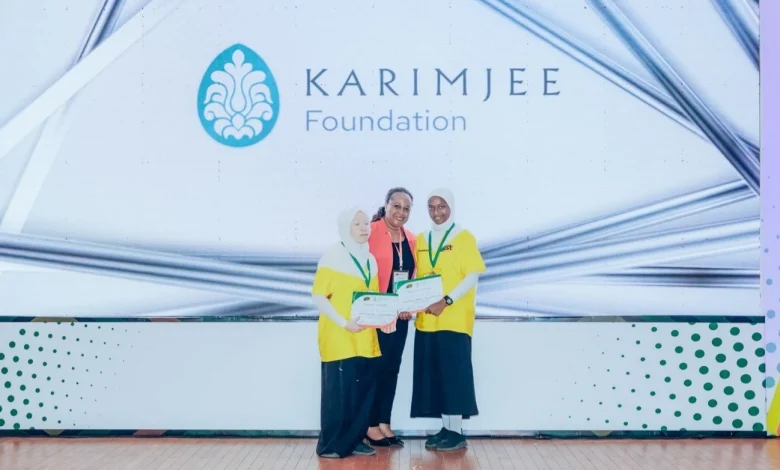
DAR ES SALAAM: AS Tanzania accelerates implementation of Vision 2050, experts say one of the country’s greatest investments will not only be in roads, railways and industries, but in nurturing a generation of young scientists capable of developing home-grown solutions to national challenges.
From climate change and food security to renewable energy, digital technology and public health, today’s young innovators are increasingly demonstrating that science can provide practical answers to problems facing communities.
However, unlocking this potential requires sustained investment in science education, mentorship and research opportunities.
One initiative that has steadily contributed to this goal over the past 15 years is Young Scientists Tanzania (YST), supported by the Karimjee Foundation.
Through nationwide outreach programmes, teacher training, science competitions and scholarships, the initiative has helped cultivate scientific curiosity among secondary school students across the country.
Science education specialists note that while classroom learning provides theoretical knowledge, innovation flourishes when students are encouraged to investigate real-life problems and develop practical solutions.
Young Scientists Tanzania adopts this approach by exposing students to research methods, innovation and scientific inquiry before they participate in national competitions.
According to YST Cofounder Dr Gozibert Kamugisha, the programme enables students to identify challenges within their own communities and use scientific knowledge to develop workable solutions.
“Our approach is to make science relevant to everyday life. Students are encouraged to solve problems affecting agriculture, health, environmental conservation, climate change, water management and technology,” he explains.
This practical orientation has become increasingly important as Tanzania seeks to build a competitive economy driven by innovation and technology.
Experts argue that developing scientific talent from secondary school level strengthens the country’s future workforce while reducing dependence on imported technologies.
Equally important is empowering teachers. Without adequately trained science teachers, students often struggle to translate classroom concepts into research and innovation.
Recognising this gap, Young Scientists Tanzania has invested heavily in teacher capacity building.
Teachers participating in the programme receive specialised training in research supervision, scientific inquiry, experimental design, project development and student mentorship.
By this year, more than 3,189 teachers from across Tanzania had benefited from the programme, creating a nationwide network capable of sustaining innovation beyond annual competitions. The impact has also been reflected in student participation.
Since its inception, the programme has reached nearly 19,908 students across all 31 regions of Tanzania, providing opportunities that many schools previously lacked.
ALSO READ: Young scientists laud Samia scholarship initiative
Many of the projects developed through the programme address challenges directly affecting local communities.
Students have designed innovations ranging from renewable energy technologies and environmental conservation projects to digital systems that improve transport management and technologies that promote sustainable fishing.
Such innovations demonstrate that young people are capable of contributing to national development when provided with appropriate guidance and resources.
The annual Young Scientists Tanzania National Exhibition has become an important platform where these ideas are presented to researchers, policymakers, universities, industry leaders and development partners.
Beyond recognising excellence, the exhibition encourages knowledge sharing while exposing students to professional scientific standards.
The Karimjee Foundation says its continued support reflects the belief that investing in young innovators is essential for Tanzania’s long-term development.
Executive Officer Caren Rowland says the Foundation has remained committed to creating opportunities that allow young people to explore their scientific potential and transform ideas into practical solutions.
She notes that the partnership has evolved into one of Tanzania’s most significant youth science initiatives by combining outreach, mentorship, exhibitions and scholarships into one continuous development pathway.
Financial barriers often prevent talented students from pursuing higher education, particularly in science and engineering disciplines.
To bridge this gap, the Foundation has established a scholarship programme targeting outstanding innovators emerging from Young Scientists Tanzania.
So far, 53 students have received university scholarships through the initiative, while four more scholarships will be awarded during the 2026 exhibition, bringing the total to 57 beneficiaries.
Many scholarship recipients have gone on to pursue degrees in engineering, medicine, technology and other STEM-related fields, creating a growing pool of professionals expected to contribute to Tanzania’s socio-economic transformation.
As the country advances towards becoming a knowledge-based and industrial economy, initiatives that nurture innovation from an early age are expected to play an increasingly strategic role.
Building laboratories and improving science curricula remain important, but equally critical is creating environments where young people are encouraged to ask questions, conduct research and develop solutions that respond to Tanzania’s development priorities.
The experience of Young Scientists Tanzania demonstrates that when schools, the private sector and development partners work together, science education can become a powerful catalyst for innovation, entrepreneurship and sustainable national development.