Infrastructure bonds in offing

DODOMA: THE government has announced plans to undertake extensive road construction projects across the country, supported by innovative financing mechanisms aimed at strengthening infrastructure development and accelerating economic growth.
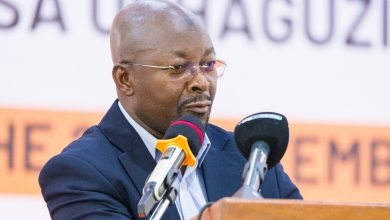
Presenting the Ministry of Works budget estimates for the 2026/27 financial year in the National Assembly in Dodoma yesterday, the docket minister Mr Abdallah Ulega said the government will utilise funds to be raised through infrastructure bonds to finance the construction of strategic roads.
In the budget estimates, Mr Ulega said the ministry is seeking approval of 2.5tri/-, out of which 2.4tri/- is earmarked for development expenditure. Of this amount, 1.54tri/- will come from domestic sources and 922.5bn/- from external financing. He said 97bn/- is allocated for recurrent costs.
He said the proposed budget reflects the government’s continued commitment to prioritising infrastructure development as a key driver of economic growth, improved service delivery and national integration.
The emphasis, he said, will be on improving transport efficiency, easing mobility challenges and opening up economic opportunities nationwide.
He said the new financing approach will enable the government to implement priority road projects more effectively, while enhancing resource mobilisation for development initiatives.
“In this budget I am presenting, we will begin constructing all essential roads that are critical to our national economy. We now have clear strategies to mobilise additional funding and I assure MPs that no citizen or area will be left behind in development due to geographical location,” he said.
Mr Ulega noted that the adoption of infrastructure bonds represents a significant shift in financing public infrastructure, enabling faster implementation of key development projects.
According to the minister, construction sector has emerged as Tanzania’s secondlargest contributor to the national economy, highlighting the increasing role of infrastructure investment in driving growth, employment creation and regional connectivity. Mr Ulega said the sector contributed 11.9 per cent to Gross Domestic Product (GDP) in 2025. He said the sector also recorded steady growth, expanding by 4.0 per cent in 2025 compared to 3.0 per cent in 2024.
“The construction sector has continued to play a key role in strengthening the national economy, while creating employment opportunities for Tanzanians,” he said.
Mr Ulega added that the sector generated 18,988 jobs in 2025 for contractors, consultants, technicians and suppliers of construction materials, with a significant share benefiting youth and women.
He said the government had made notable progress in implementing strategic infrastructure projects across the country.
Between July 2025 and April 2026, the government completed 243.13 kilometres of tarmac roads under the Tanzania National Roads Agency (TANROADS), while 94.36 kilometres of gravel roads were rehabilitated.
In addition, nine major bridges were completed during the period, while 11 bridges are currently under construction and preparations for 13 additional bridges are underway.
ALSO READ: TACTIC injects 33bn/- into upgrading roads, markets and coastal infrastructure
According to Mr Ulega, the implementation of these projects has opened up economic zones and improved efficiency in other transport systems, including railways, ports and airports.
Mr Ulega said the ministry’s priorities for the 2026/27 fiscal year include continued construction of roads aimed at reducing congestion in rapidly growing urban centres, expansion of road networks linking regional headquarters, neighbouring countries and strategic economic zones, as well as rehabilitation and maintenance of trunk and regional roads.
Other priorities include strengthening ferry transport infrastructure, enhancing the capacity of local contractors and construction experts and continuing construction of government buildings and affordable housing projects.
On airport infrastructure, the minister said 119.9bn/- has been allocated for construction and rehabilitation works across the country. Key projects include continued construction of Kigoma, Tabora, Sumbawanga and Shinyanga airports, as well as Msalato International Airport in Dodoma Region.
Rehabilitation works will continue at Songwe, Mwanza and Mtwara airports, while development of regional airports in Iringa, Musoma, Lake Manyara, Tanga, Geita and Songea will also proceed.
He said the Contractors Registration Board (CRB) plans to register 1,600 new contractors and inspect 3,450 construction projects during the 2026/27 financial year.
The board will also continue facilitating joint venture partnerships, coordinating stakeholder engagements and operating the Contractors Assistance Fund (CAF) through bid and advance payment guarantees.
“The government is continuing to empower local contractors to participate more effectively in major construction projects through technical training, project management support and promotion of joint ventures,” Mr Ulega said.
He further noted that the ministry is prioritising the participation of women and youth in the construction sector through training programmes, internships and allocation of 20 per cent of road maintenance contracts to special groups.
Through the Electrical and Mechanical Services Agency (TEMESA), 115 youth have been employed under contractual arrangements, while 13 technicians have been offered practical training opportunities.
Similarly, the National Housing Corporation (NHC) continues to implement affordable housing projects in Dar es Salaam and Dodoma targeting youth and newly employed public servants, with the projects expected to generate about 815 jobs.
Mr Ulega said the overall focus of the 2026/27 budget is to build modern, resilient infrastructure, particularly roads and bridges, to meet growing demand and address the impacts of climate change