Tanzania, Russia sign key agreements
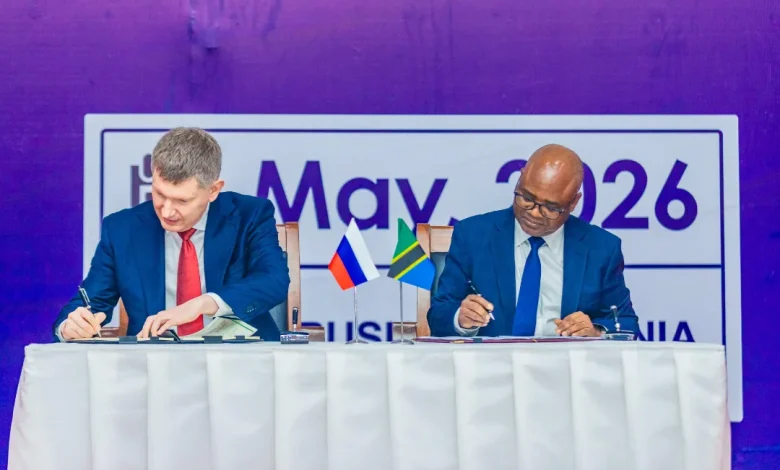
ARUSHA: TANZANIA and Russia have signed cooperation agreements covering 12 key sectors, including language, health, agriculture, energy, tourism, education, science and technology, transport and logistics.
The development was revealed yesterday in Arusha by Minister of State in the President’s Office for Planning and Investment, Prof Kitila Mkumbo, during the third meeting of the Joint Intergovernmental Russia-Tanzania Commission on Trade and Economic Cooperation.
Prof Kitila said the two countries had agreed to work on at least 22 legal agreements under the areas of cooperation, with several already signed, including agreements on language cooperation.
Under the arrangement, Swahili will be taught in universities and educational institutions in Russia, while the Russian language will be taught in educational institutions in Tanzania.
“This is one of the important cultural areas of cooperation between our two countries and it was fortunate that the Minister for Information, Culture, Arts and Sports, Paul Makonda, witnessed the signing of the agreement,” said Prof Kitila.
He said Tanzania, through the Muhimbili University of Health and Allied Sciences (MUHAS), also signed cooperation agreements with two Russian institutions in the areas of healthcare services and pharmaceutical production.
According to him, additional agreements are expected to be signed in Moscow during President Samia Suluhu Hassan’s official visit to Russia next month. Prof Kitila said agriculture remains another major area of cooperation, with the two countries agreeing to focus on increased agricultural productivity through greater use of fertilisers and improved crop processing.
“Our cooperation in agriculture will focus on increasing productivity and ensuring Tanzanian agricultural products are exported after value addition,” he said.
He added that Tanzania and Russia have also strengthened cooperation in the energy sector, particularly in gas exploration, extraction, processing and sales through collaboration between the Tanzania Petroleum Development Corporation (TPDC) and Russian companies.
“This sector is important because nearly 60 per cent of our electricity is generated from gas,” he said.
Prof Kitila further noted that the two countries have agreed to continue cooperation in nuclear energy over the next 10 years, especially through the Mantra uranium project.
He said Russia’s experience in nuclear power generation will help Tanzania to expand its future energy capacity.
On education, science and technology, Prof Kitila said the two countries have maintained long-standing cooperation, with many Tanzanians trained in Russia in sectors such as health, agriculture and education.
He said Russia has so far provided more than 20,000 scholarships to Tanzanians, enabling many citizens to pursue studies in the country.
Tourism was also identified as a strategic area of cooperation, with Russia now emerging as one of Tanzania’s major tourist markets.
To support the sector, the two countries are finalising discussions to enable Air Tanzania Company Limited (ATCL) to operate direct flights from Dar es Salaam and Zanzibar to Moscow.
Prof Kitila said the flights are expected to begin before the end of this year and will help increase the number of Russian tourists visiting Tanzania.
On transport and logistics, he said Russian companies have shown interest in investing in port expansion and infrastructure development.
“We have instructed the Tanzania Ports Authority (TPA) to continue discussions with Russian companies and the talks are progressing well,” he said.
Meanwhile, Russia’s Minister for Economic Development, Maxim Reshetnikov, said Russia is ready to expand cooperation with Tanzania in agriculture, energy, transport, logistics and industrial development.
“Our companies are ready to invest in these sectors. Russia is also prepared to supply fertilisers, soil fertility technologies, veterinary medicines and cooperate in seed and livestock breeding programmes aimed at improving agricultural productivity and boosting Tanzania’s export potential,” he said.