In this city, mobile phones are demigods

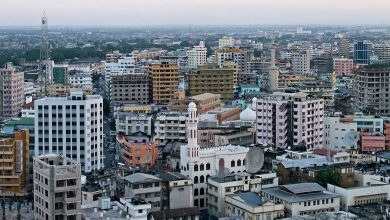
DAR ES SALAAM: I GREET you with deep affection and respect from the noisy, restless shores of Dar es Salaam and I hope this letter finds you and everyone at home in Ukumbisiganga in good health and good spirit.
Above all, I pray that you are all living peacefully under the wide and watchful protection of our Nyamwezi ancestors, guided by the wisdom and strength of the mighty Chief Mirambo himself, whose name still walks proudly across our land.
May Limatunda continue to guard your days and your nights, bless your work and keep harmony among the people of our beloved village.
My dear nephew, even from far away, my heart remains tied to Tabora and no distance can untie that knot.
Please greet everyone on my behalf, our elders, our relatives and all who we were together when we came for Christmas celebrations.
Here in the confused city of Dar es Salaam, life continues my son, though I must confess it is not always easy.
Your aunt and little sister Neema are doing their best to stay strong in this confused and overcrowded city.
My dear son, this confused city is a place that never truly rests.
From early morning to late at night, there is always noise, engines roaring, horns crying out in anger or impatience and people rushing as if they are chasing something invisible that is always just out of reach.
The traffic jam, my dear nephew, has become a daily battle.
What used to be a short journey can now steal hours from a man’s life.
You sit in a bus or car, barely moving, watching the same shop or tree for what feels like half a day.
People grow angry, drivers shout, conductors bang on the sides of buses and yet nothing moves.
Sometimes I think a person could walk faster than the vehicles in this confused city.
By the time you arrive where you were going, your strength is already half gone and your spirit feels tired before the real work even begins.
My dear boy, as if the traffic were not enough, the heat here has become almost unbearable.
Dar es Salaam’s sun does not joke, my nephew.
It presses down on you like a heavy hand, making even simple tasks feel like hard labour.
At night, sleep is often disturbed, as the walls seem to hold the day’s heat and release it slowly, refusing to let the body rest.
Your little sister complains often and even your aunt, who is usually patient, sometimes shakes her head and says she misses the cool evenings of home.
I cannot blame her. There are days when I would give anything to sit under a tree in Ukumbisiganga, feeling the breeze instead of this thick, hot air.
What irritates me most about city life, however, is not only the heat or the traffic, but the strange habits of many city dwellers.
These people, my son, love their mobile phones more than they love their own hands.
I am not exaggerating when I say that many of them would rather lose their right hand than lose their phone.
The phone has become their second heart, always held close, always checked, always demanding attention.
You will see people walking on the street with their eyes glued to small screens, bumping into others without even saying sorry.
In buses, in offices and even in places where silence and respect should rule, the phone is king.
Sometimes I wonder if these people are still living in this world or in some other world hidden inside their screens.
Let me give you a few examples so that you may understand the madness I witness every day. First, there is the strange habit they call taking a “selfie.”
A group of grown men and women will suddenly stop, stretch out their arms and twist their faces into expressions that look more like stomach pain than happiness.
Lips are pushed forward, eyes are widened and heads are tilted at unnatural angles.
They take many pictures, checking each one carefully, deleting some, retaking others, all while blocking the path of everyone else.
After all that effort, they walk away smiling at their phones, satisfied, as if they have achieved something truly important.
Then there is the habit of taking pictures of food before eating it.
Imagine this, my dear nephew, a plate of food is placed in front of a person who is clearly hungry.
Instead of eating, even before thanking God for the food, first they reach for their phone.
They move the plate closer to the window or the light, adjust it this way and that and take several pictures.
Sometimes the food even gets cold while they are busy capturing it. Only after the phone is satisfied do they finally eat.
I often shake my head and think of home, where food is respected and eaten with gratitude, not photographed like a visiting celebrity.
Even more troubling my son is how these phones follow people everywhere.
In public places, people sit together but are completely alone, each one scrolling through their phone as if the person next to them does not exist.
Conversations are interrupted by buzzing sounds and attention is constantly divided.
ALSO READ: Retirees to verify status via mobile phones
What pains me deeply is seeing this behaviour even in church. While prayers are being said and hymns are being sung, some people are busy scrolling, typing, or secretly checking their screens.
It is as if the phone has become a new god, demanding worship even in the house of God. Sometimes I feel like a stranger in this city, holding on to old ways that no longer seem to matter here.
Yet I remind myself that not everything modern is bad and not everything old is useless.
I try to keep balance, to use what is helpful without losing myself completely.
I tell your little sister often that no matter where we live, we must remember who we are and where we come from.
Our roots are in Ukumbisiganga, in the land of the Nyamwezi, shaped by the courage of our ancestors and the wisdom of those who came before us.
My dear son, I hope you are learning well from the elders, listening to their stories and respecting their guidance.
The world is changing fast, even in the villages and it is important that you carry our values with you as you grow.
One day, you too may travel far from home and when that time comes, I want you to remember these words and laugh, perhaps, at how your uncle complained about traffic and mobile phones.
Give my greetings to everyone at home. Tell them we miss them dearly and that, God willing and with the blessings of Limatunda, we shall return to visit. Until then, remain strong, humble and proud of who you are.